
What is Cuckoo Search Algorithm?
A metaheuristic optimization algorithm inspired by nature, the Cuckoo Search Algorithm (CSA) imitates the brood parasitism behavior of cuckoo birds. This algorithm, which was created in 2009 by Xin-She Yang and Suash Deb, uses a randomized search technique based on Lévy flights to effectively tackle complicated optimization problems. Cuckoo birds lay their eggs in other host species’ nests, frequently destroying the eggs that are already there to improve their own chances of surviving. The cuckoo will have to find a new home if the host bird finds the foreign egg and discards it or leaves the nest. The algorithm to determine the best answer in a search space models this behavior. Main Features of Cuckoo Search Algorithm are:
- Population-Based Search: Throughout its iterations, the algorithm keeps track of a collection of potential solutions, or nests.
- Levy Flight-Based Exploration: Lévy flights are used to produce new solutions, enabling effective worldwide search.
- Selection and Replacement Mechanism: New, possibly superior solutions are used to replace subpar ones (eggs in nests that have been found).
- Easy Yet Effective: Needs fewer parameters and successfully strikes a balance between exploitation (local refinement) and exploration (global search).
The new solution x(t+1) is generated from the current solution x(t) using the Lévy flight equation:
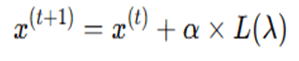
Where:
- α is the step size (scaling factor),
- L(λ) is a Lévy distribution that provides random jumps for exploration.
Why Use Cuckoo Search?
- In comparison to other evolutionary algorithms like Genetic approach (GA) or Particle Swarm Optimization (PSO), this approach is very effective at addressing complicated optimization issues including function optimization, machine learning, and engineering design. It also converges quickly and is simple to implement.
- Therefore, Cuckoo Search is a potent, bio-inspired optimization technique that uses Lévy flying behavior and natural selection to identify the best answers in big search fields.
Introduction of CSA
Xin-She Yang and Suash Deb created the effective nature-inspired optimization technique known as the Cuckoo Search technique (CSA) in 2009. It uses Lévy flight-based random walks to find the best answers to challenging optimization problems and is based on the brood parasitism behavior of cuckoo birds. Because they lay their eggs in other birds’ nests, Cuckoos are well-known for their brood parasitism. When they find alien eggs, some host birds either throw them away or leave the nest. The Cuckoo Search Algorithm’s exploration and exploitation mechanism is inspired by this natural selection process. Key Mechanisms of Cuckoo Search are,
- Lévy Flight for Exploration: Large jumps and effective worldwide search are made possible by Lévy flights, which are used to develop new solutions (cuckoo eggs). Small local steps (fine-tuning solutions) and huge jumps (exploring new regions) are balanced by the Lévy distribution.
- Randomized Nest Selection & Replacement: Newly created solutions are used to randomly replace a portion of the poorest nests (solutions). This is similar to how host birds identify and get rid of foreign eggs.
- Selection of the Best Solutions: The algorithm can evolve toward the ideal solution if only the fittest solutions—eggs with higher survival chances—are kept across generations.
The new solution is generated using Lévy flight as:
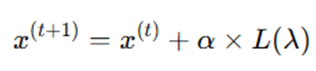
Where:
- x(t) is the current solution,
- α is the step size,
- L(λ) is a Lévy-distributed random step.
The probability of discovering and replacing a nest is controlled by pa (discovery rate), which helps balance exploration and exploitation.
Why is Cuckoo Search Effective?
- A faster rate of convergence than previous metaheuristic algorithms.
- Easy implementation with little restrictions.
- Lévy flights enable an effective worldwide search.
In the Cuckoo Search Algorithm is a potent, naturally inspired optimization technique that effectively searches vast search areas and identifies the best answers by combining special Lévy flights and selection mechanisms.
Detailed Cuckoo Search Algorithm
The Cuckoo Search Algorithm (CSA) is a population-based metaheuristic optimization method that uses Lévy flights for exploration and imitates the brood parasitism behavior of cuckoo birds. We include mathematical definitions and a thorough description of each algorithmic step below.
Step 1: Initialization
- Define the objective function f(x) to be optimized.
- Initialize a population of n host nests (candidate solutions), represented as:

- Set algorithm parameters:
- pa: Discovery probability (typically pa≈0.25)
- α: Step size for Lévy flight
- Max Iterations: Stopping criterion based on the number of generations.
Step 2: Generate New Cuckoo Solutions
One egg at a time, each cuckoo deposits its eggs in a nest that is chosen at random. Lévy flight, which permits big leaps and keeps the algorithm from being trapped in local optima, is used to build the new solution. Lévy Flight express as,
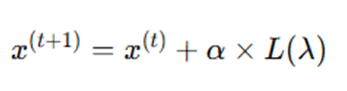
Where, x(t) is the current solution. α is the step size (scaling factor). L(λ) follows a Lévy distribution, defined as:

Where, s is the step length and λ is usually between 1.5 and 2.0.
Step 3: Evaluate Fitness
- Compute the fitness value f(x) for each newly generated cuckoo egg.
- Compare the new cuckoo’s fitness with a randomly chosen existing solution.
- If the new solution has a better fitness, it replaces the old solution.
Step 4: Abandon Worst Solutions with Probability pa
- With probability pa, a fraction of the worst-performing nests are replaced by new randomly generated solutions.
- This ensures diversification and prevents premature convergence.
A new solution is generated as:

Where,
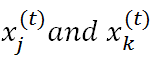
are two randomly chosen solutions, β is a random step size drawn from a uniform distribution.
Step 5: Rank and Select the Best Solutions
- Rank all the nests based on their fitness.
- Retain the best nests to the next generation.
- Repeat Steps 2-5 until convergence or the maximum number of iterations is reached.
Algorithm Pseudocode
1. Initialize population of n nests (solutions) X
2. Define algorithm parameters: step size α, discovery probability pa
3. While termination condition is not met:
a. Generate a new cuckoo solution using Lévy flights
b. Evaluate fitness of the new cuckoo
c. Select a random existing nest and compare fitness
d. If the new solution is better, replace the existing one
e. Replace worst nests with new solutions with probability pa
f. Rank and select the best solutions
4. Return the best solution found
Complexity Analysis
- The computational complexity per iteration is O(nlogn) due to the ranking step.
- The overall complexity depends on the number of iterations, typically O(nTlogn).
Using Lévy flights and randomized nest replacement, the Cuckoo Search Algorithm effectively strikes a balance between exploration and exploitation. It is reliable, easy to use, and successful in resolving a variety of real-world optimization issues. CSA has an edge over other metaheuristic algorithms since it uses Lévy flights, which provide a variety of solution searches.
The Cuckoo Search Algorithm’s foundation is this thorough, step-by-step description, which makes it an effective tool for global optimization.
Advantages and Limitations of Cuckoo Search Algorithm
A potent metaheuristic optimization algorithm, the Cuckoo Search Algorithm (CSA) offers a number of benefits over conventional optimization methods. Like any algorithm, it does have certain drawbacks, though. A thorough explanation of its benefits and drawbacks may be found below.
Advantages :
- Efficient Global Search Capability: Lévy flights enable CSA to conduct an efficient worldwide search and break out of local optima. CSA more efficiently searches the search space than Particle Swarm Optimization (PSO) and Genetic Algorithms (GA).
- Fewer Control Parameters: The population size n, step size α, discovery probability pa, and other parameters are the only ones that CSA may be adjusted. When compared to other metaheuristic algorithms, this makes it simple to implement and configure.
- Fast Convergence Rate: Because CSA employs an adaptive technique to choose the optimal solutions, it usually converges more quickly than GA and PSO. The nest replacement mechanism keeps solutions diverse and avoids stagnation.
- Strong Balance Between Exploration and Exploitation: Through Lévy flights, exploration (global search) is managed. The best options are chosen in each iteration to improve exploitation (local search).
- Versatility and Wide Range of Applications: can be used to solve scheduling issues, wireless sensor networks, image processing, machine learning, engineering optimization, and more. performs well in optimization situations that are discrete or continuous.
- Robust and Adaptable: The basic nest-update process used by CSA is in contrast to GA, which necessitates crossover and mutation operators. Complex, nonlinear, and multimodal situations are easily handled by it.
Limitations
- Sensitivity to Parameter Selection: For best results, the step size α and the discovery probability pap_apa must be properly selected. Premature stagnation or sluggish convergence might result from poor parameter selection.
- Computational Complexity for Large-Scale Problems: The computational complexity of CSA is O(nlogn) every iteration since it necessitates sorting and ranking of solutions in each iteration. This can become computationally costly for high-dimensional issues or very large datasets.
- Lack of a Dedicated Local Search Mechanism: For exploration, CSA mostly uses random walks, or Levy flights. CSA may need to be hybridized with local search methods in situations that call for exact fine-tuning.
- Risk of Premature Convergence: In certain situations, particularly when population variety is low, CSA may converge to a local optimum too soon. Multimodal functions with numerous local minima frequently experience this problem.
- Randomness Dependency: Randomization is essential to CSA performance, but it can occasionally produce inconsistent results over several runs. Using numerous independent runs and averaging the data helps to alleviate this problem.
Comparison with Other Metaheuristic Algorithms,
| Feature | Cuckoo Search (CSA) | Genetic Algorithm (GA) | Particle Swarm Optimization (PSO) |
| Exploration | High (Lévy flights) | Moderate | Moderate |
| Exploitation | Moderate | High | High |
| Parameter Tuning | Low (few parameters) | High (many parameters) | Medium |
| Convergence Speed | Fast | Slow | Medium |
| Handling Multimodal Problems | Good | Good | Moderate |
| Computational Complexity | O(nlogn) | O(n2) | O(n) |
An efficient and potent optimization method, the Cuckoo Search Algorithm provides quick convergence, ease of use, and robust global search capabilities. Its drawbacks, however, include computational expense for large-scale problems, premature convergence, and parameter sensitivity. To get over these problems, CSA can be used in conjunction with other optimization strategies (such as local search algorithms or hybrid with GA) to enhance its performance for particular problem domains.
Applications of Cuckoo Search Algorithm
Because of its effective global search capabilities, quick convergence, and versatility, the Cuckoo Search Algorithm (CSA) is frequently employed in many different industries. Some of the most important uses of CSA in various fields are described below.
- Engineering Optimization: CSA is widely used for solving complex engineering design problems where traditional methods often fall short. In structural design optimization, it helps optimize truss structures by reducing weight without compromising strength, and it supports the enhancement of structural materials. In electrical and mechanical engineering, CSA is applied to optimize power system networks and electrical circuit designs. It can also improve gear train configurations to reduce wear and increase efficiency. For control system optimization, CSA is effective in tuning PID controllers for robotics and industrial automation, especially when integrated with neural networks and fuzzy logic systems.
- Machine Learning and Feature Selection: CSA significantly enhances machine learning models by optimizing feature selection and hyperparameters. In feature selection for classification problems, it improves model accuracy by identifying the most relevant attributes from datasets, with applications in medical diagnostics, image recognition, and text classification. CSA is also valuable in neural network training optimization, where it fine-tunes weights and biases in deep learning architectures like CNNs and RNNs, leading to better-performing hybrid AI models.
- Image Processing and Computer Vision: In the field of computer vision, CSA is used for tasks such as image segmentation, edge detection, and object recognition. For medical image analysis, it supports tasks like tumor detection, X-ray enhancement, and CT or MRI image segmentation. In satellite and remote sensing image processing, CSA contributes to climate change research, vegetation analysis, and land-use classification by enhancing image clarity and classification accuracy.
- Wireless Sensor Networks (WSNs) and IoT: CSA plays a critical role in network optimization, particularly in energy efficiency and security for IoT and sensor-based applications. In energy-efficient routing, CSA prolongs the lifespan of battery-powered sensor networks by optimizing data transmission paths. It also helps in optimal sensor placement, which is crucial for environmental monitoring, disaster detection, and smart city applications by ensuring effective deployment of sensors.
- Bioinformatics and Medical Applications: CSA has valuable applications in bioinformatics, particularly in DNA sequence analysis, disease prediction, and drug discovery. It assists in gene selection and disease diagnosis by identifying key genetic markers for conditions such as diabetes and cancer, thus supporting more personalized treatment plans. In protein structure prediction, CSA aids in analyzing protein folding patterns and forecasting interactions, which is essential in vaccine development and new drug formulation.
- Financial and Business Applications: CSA is utilized in areas such as portfolio optimization, fraud detection, and business risk management. For stock market prediction, it helps develop better trading algorithms and forecast trends in markets, including cryptocurrency. In supply chain and logistics optimization, CSA improves route planning for delivery systems, reduces fuel costs, and enhances efficiency in logistics and e-commerce platforms.
- Scheduling and Planning: CSA is highly effective in solving scheduling problems across industries, education, and workforce management. In job scheduling within manufacturing, it helps optimize job distribution and production line operations, minimizing delays and resource waste. It is also employed in university timetabling and exam scheduling, ensuring efficient allocation of classes, exams, and faculty schedules, thereby minimizing conflicts and improving overall management.
- Robotics and Autonomous Systems: In robotics, CSA supports path planning and navigation, ensuring optimal movement in dynamic environments. In robot path planning, it is used in self-driving cars, drones, and industrial robots for efficient navigation and obstacle avoidance. Additionally, in swarm robotics, CSA optimizes coordination among multiple robots in scenarios such as warehouse automation and rescue missions.
- Energy Systems and Renewable Energy Optimization: CSA is instrumental in optimizing power generation and smart energy systems. It helps in solar and wind energy optimization by determining the best placement for solar panels and wind turbines, thereby maximizing power output. In smart grid load balancing, CSA enhances the efficiency of electricity distribution and demand-response management, reducing power outages and improving the stability of energy systems.
With several uses in engineering, artificial intelligence, healthcare, finance, and logistics, the Cuckoo Search Algorithm (CSA) is a strong and adaptable optimization tool. Because of its strong worldwide search capabilities, it is the best option for resolving challenging real-world issues when conventional approaches fall short.
Conclusion
Based on the brood parasitism behavior of cuckoo birds and Lévy flight random walks, the Cuckoo Search technique (CSA) is a potent and effective nature-inspired metaheuristic optimization technique. CSA was created in 2009 by Xin-She Yang and Suash Deb, and it has shown great success in resolving challenging optimization issues in a variety of fields, such as bioinformatics, wireless networks, engineering, artificial intelligence, and image processing. CSA’s robust global search capabilities, which makes use of Lévy flights to effectively traverse the search space and steer clear of local optima, is one of its main advantages. With just a few parameters needed, the algorithm is straightforward but efficient, making it simple to use and modify for different applications. Furthermore, CSA shows quick convergence and frequently outperforms more conventional optimization methods like Particle Swarm Optimization (PSO) and Genetic Algorithms (GA). Its diverse uses show its versatility across a range of industries, including feature selection, scheduling, robotics, energy systems, and financial modeling. Although CSA has many benefits, there are drawbacks and restrictions as well. These include computational complexity in high-dimensional problems, premature convergence, and sensitivity to parameter adjustment. Ongoing research aims to address these problems by applying CSA to new domains like deep learning optimization, quantum computing, and biomedical engineering; improving parameter tuning mechanisms to increase adaptability across a variety of problem sets; and hybridizing CSA with other optimization techniques (e.g., GA, PSO, or local search algorithms). One of the most promising bio-inspired optimization methods is still the Cuckoo Search Algorithm, which strikes a good balance between exploration and exploitation. It is a useful tool in contemporary optimization research and applications due to its high efficiency in solving difficult real-world issues.
Frequently Asked Questions (FAQs)
Q1. How does the Cuckoo Search Algorithm work?
The Cuckoo Search Algorithm (CSA) is inspired by the brood parasitism of cuckoo birds. It works by:
- Generating new solutions (cuckoo eggs) using Lévy flights for global search.
- Selecting and comparing new solutions with existing ones.
- Replacing weak solutions with better ones based on a discovery probability pap_apa.
- Iterating until the optimal solution is found or a stopping condition is met.
Q2. What are the advantages of Cuckoo Search over other algorithms like Genetic Algorithm (GA) and Particle Swarm Optimization (PSO)?
CSA offers several advantages:
- Faster convergence due to Lévy flight-based exploration.
- Fewer parameters to tune, making it easier to implement than GA and PSO.
- Better global search ability by avoiding premature convergence.
- Robust performance in solving both continuous and discrete optimization problems.
Q3. What are the key parameters of the Cuckoo Search Algorithm?
The main parameters of CSA are:
- Number of nests (population size, n) – Determines the number of candidate solutions.
- Discovery probability (pa) – The probability of replacing a solution (typically 0.25).
- Step size (α) – Controls the movement in Lévy flights for generating new solutions.
Q4. Where is the Cuckoo Search Algorithm used?
CSA is widely applied in various fields, including:
- Engineering Design – Optimizing structural designs, control systems, and electrical networks.
- Machine Learning – Feature selection, hyperparameter tuning, and neural network optimization.
- Image Processing – Edge detection, segmentation, and object recognition.
- Wireless Sensor Networks – Energy-efficient routing and sensor placement.
- Finance – Stock market prediction, portfolio optimization, and risk assessment.
Q5. What are the limitations of the Cuckoo Search Algorithm?
Despite its advantages, CSA has some challenges:
- Sensitive to parameter selection – Improper tuning of pap_apa and α\alphaα can affect performance.
- Computational cost – Sorting and ranking solutions may become expensive for large-scale problems.
- Premature convergence risk – In some cases, the algorithm may converge too early to a suboptimal solution.