
Image processing has become a crucial technology in many fields because it allows for the analysis, enhancement, and modification of visual input. This article discusses both simple and complex techniques like feature extraction, segmentation, filtering, and machine learning integration. It highlights how image processing is used in a variety of fields, such as entertainment, industrial automation, medical imaging, and autonomous vehicles. Despite significant advancements, concerns like handling large databases, ensuring real-time performance, and addressing moral dilemmas persist. Future breakthroughs in image processing technology are anticipated to be influenced by advancements in 3D/4D imaging, quantum computing, and AI integration.
Introduction
Image processing is the practice of altering photos in order to enhance them or extract valuable information. In today’s digital world, image processing has become crucial for several sectors, including computer vision, entertainment, and healthcare. The term encompasses a broad range of tasks, from improving the clarity of an image to analyzing its content to aid in decision-making. Image processing has its roots in the early 1900s, when analog techniques were used to modify photographic images. However, the true revolution began in the 1960s when digital computers became accessible and allowed for more complex and accurate image manipulation. Over time, technological advancements like the introduction of powerful processors and machine learning algorithms have further sped up image processing, improving its precision and usability. These days, satellite imagery, facial recognition software, and medical diagnostics all depend on image processing. There are many innovative applications for image processing, ranging from real-time object recognition for autonomous driving to enhancing low-quality X-ray images for easier interpretation. This essay will look at some of the most significant image processing techniques and the different sectors that use them.
Image Processing Techniques
Image processing uses a variety of techniques to alter, analyze, and interpret images. These techniques can be deconstructed into basic steps that form the foundation of more intricate ones. Here is a list of some fundamental image processing techniques.
Image Acquisition
Image acquisition is the first step in the image processing pipeline. It involves using a device, like a digital camera, scanner, or sensor, to take a picture. A computer-readable digital format is created from the acquired image. This stage lays the groundwork for next actions and may include pre-processing steps like resizing or changing the resolution.
Image Enhancement
The primary objective of image enhancement is to improve an image’s quality so that it is more appropriate for analysis or viewing. Common techniques consist of:
- Contrast Adjustment: enhancing the contrast of an image to highlight particular details.
- Histogram Equalization: a technique that makes it easier to identify features in an image by distributing the intensity levels.
- Brightness Adjustment: modifying the brightness levels to improve clarity, especially in low-light photographs.
Image enhancement is widely used in disciplines like photography and medical imaging where precision and clarity are crucial.
Image Filtering
The technique of removing unwanted components from an image, including noise, is known as image filtering. Two types of filters are available:
- Low-pass filters: these are used to smooth out noise in an image and average pixel values. Two examples are the Gaussian and median filters.
- High-pass filters: You can highlight edges or other minor components in an image by highlighting the value changes between adjacent pixels. Typical examples are the Laplacian and Sobel filters.
A key component of preprocessing, image filtering seeks to highlight features or reduce distortions to get the image ready for further examination.
Image Transformation
Image transformation techniques are used to alter an image’s format, typically to facilitate study. Common conversions include:
- Fourier Transform: allows for the examination of textures and recurrent patterns by converting the image from the spatial to the frequency domain.
- Wavelet Transform: a more targeted transformation than the Fourier transform for analyzing various frequency components within an image.
Transformations allow researchers and engineers to process images for tasks like image compression, denoising, and feature extraction.
Color Image Processing
Unlike grayscale images, which only have one channel, color images have many channels that represent multiple color spaces. Common color palettes include:
- The most used color model in digital imaging is RGB (Red, Green, Blue), which uses value combinations of red, green, and blue to describe images.
- HSV (Hue, Saturation, Value): Color-based object tracking and segmentation commonly use a color-intensity-chromatic content model.
Color image processing techniques allow for the alteration of individual color channels, creating new opportunities for image segmentation, object identification, and color correction. These foundational methods of image processing form the basis of more complex approaches that tackle difficult issues including image analysis, reconstruction, and recognition.
Advanced Image Processing Techniques
More advanced techniques go further in recognizing patterns, extracting complex information, and modifying photos for specific purposes, even while basic image processing techniques improve the clarity and quality of photographs. Here is a list of some of the most significant and advanced image processing techniques.
Edge detection is an essential technique for identifying an image’s edges and structure. It assists in the detection of objects, features, and forms by detecting sudden changes in pixel intensity. Common methods for detecting edges include:
- Sobel Operator: a simple gradient-based method for detecting edges that gauges the intensity difference between neighboring pixels.
- Canny Edge Detection: a more advanced method that provides fine-grained control over edge detection by utilizing a variety of techniques, such as gradient computation, noise reduction, non-maximum suppression, and edge tracking through hysteresis.
Edge detection is essential in fields like computer vision, medical imaging, and object recognition that demand accurate boundary information.
Image Segmentation
Image segmentation divides an image into pertinent regions to separate items from the background or to identify discrete entities in medical images. The segmentation methods include:
- Thresholding: a simple method for converting an image into binary form that selects a threshold value to divide the foreground from the background.
- Region-based Segmentation: Using methods like region growth and region splitting/merging based on comparable pixel values, the image is separated into related regions.
- Clustering Techniques: To group pixels into clusters based on their similarities, techniques like the watershed algorithm and k-means clustering are commonly used in challenging segmentation tasks.
Applications for image segmentation are numerous and include object tracking in video surveillance systems and tumor detection in medical scans.
Morphological Operations
Binary or grayscale images are commonly subjected to morphological processes in order to assess and work with the shapes they contain. These steps are crucial for tasks like form analysis and object detection. Common morphological procedures include:
- Erosion: Reduces the size of the items in the picture by removing pixels from their borders.
- Dilation: Expands the objects by adding pixels to their edges.
- Opening and Closing: To fill in gaps, eliminate noise, and smooth object borders, a combination of erosion and dilation is utilized.
Morphological methods are very useful for preprocessing tasks like noise reduction and post-processing to fine-tune segmented areas.
Image Compression
Image compression reduces an image’s file size without compromising its visual quality. It is essential for efficient image transmission and storage, particularly in environments with constrained bandwidth. Compression techniques are divided into:
- Lossless compression: methods such as PNG and GIF that reduce a picture’s size without erasing any information while maintaining the quality of the original image.
- Lossy compression: Techniques such as JPEG minimize file size at the expense of some quality loss by discarding some image data.
Compression techniques are widely used in fields such as medical picture archiving, video streaming, and web applications.
Image Registration
Image registration is the process of aligning two or more images that were taken from different angles, with different sensors, or at different times. It is a crucial step in applications such as medical imaging, remote sensing, and computer vision. The following are some techniques for image registration:
- Feature-based Registration: Aligns images by matching corresponding features using key points like corners or edges.
- Intensity-based Registration: Without depending on particular features, this method aligns images by reducing the intensity discrepancies between them.
Image registration enables better data integration, analysis, and comparison across several sources.
Object Recognition
bject recognition, or the identification and classification of objects in a picture, is a more complex objective in image processing. Among the techniques for object recognition are:
- Template Matching: To identify objects, parts of the image are compared to a predetermined template.
- Feature-based Methods: Scale-Invariant Feature Transform (SIFT) and Accelerated Up Robust Features (SURF) are popular techniques that use characteristics like form, hue, or feel to identify and classify things.
Automated inspection systems, facial recognition, and autonomous driving all make extensive use of object recognition.
Sophisticated analysis and decision-making across industries are made possible by these modern image processing tools. These techniques are crucial for drawing useful conclusions from photos, such as identifying boundaries in a medical scan or objects in the surroundings of a self-driving car.
Applications of Image Processing
In many different industries, image processing is essential for finding solutions to challenging real-world issues. These applications cover everything from industrial automation to entertainment to security and healthcare. Here are a few major industries that make extensive use of image processing.
Medical Imaging
Image processing has fundamentally altered the healthcare sector, particularly in the field of medical diagnostics. It increases the accuracy of diagnosis by enabling the enhancement, analysis, and visualization of medical pictures. Key applications include:
- CT Scans and MRI: Image processing techniques are used to improve, recreate, and analyze medical pictures in order to detect abnormalities such as fractures and malignancies.
- X-ray and ultrasound imaging: By employing image enhancement and noise reduction techniques to improve the quality of these images, medical professionals can make better decisions.
- Automatic diagnostic: Radiologists may diagnose conditions like cancer and heart problems, among others, with the use of computer-aided diagnostic (CAD) systems, which are created utilizing algorithms for image segmentation and feature extraction.
Computer Vision
Image processing is used in computer vision to extract information from images for applications such as real-time decision-making, object recognition, and scene interpretation. Among the important applications are:
- Autonomous Vehicles: Self-driving automobiles employ image processing to discern lanes, identify traffic signs, and identify impediments.
- Facial Recognition: To identify users on social media platforms, mobile devices, and security systems, biometric systems employ image processing algorithms.
- Augmented Reality (AR): Image processing enables the real-time tracking and superimposition of digital content onto real-world locales in applications like virtual try-on services, augmented reality gaming, and navigation systems.
Remote Sensing
The process of acquiring and processing images taken by aerial sensors, drones, and satellites is known as remote sensing. These photos can be analyzed with the aid of image processing for a variety of purposes, including:
- Environmental Monitoring: Deforestation, natural disasters, and ecosystem health are all tracked via image processing.
- Agriculture: Precision farming is made possible by the processing of satellite imagery to track crop health, soil conditions, and yield forecasts.
- Urban Planning: High-resolution images of cities are processed to aid in infrastructure assessment, land-use planning, and urban development.
Industrial Inspection
In manufacturing and industrial automation, image processing is used for quality control and defect detection. Some of its applications include:
- Automated Visual Inspection: Cameras take pictures of products, and image processing algorithms find defects to ensure that only top-notch items are shipped to customers.
- Robotics and Machine Vision: Camera-equipped industrial robots employ image processing to direct tasks including product assembly, sorting, and packaging.
- Barcode and QR Code Scanning: Image processing for payment systems, logistics, and inventory management facilitates the recognition and decoding of barcodes and QR codes.
Entertainment and Media
The entertainment sector makes substantial use of image processing for animation, editing, and enhancement. Among its uses are:
- Image and Video Editing: To improve the quality of still and moving images, post-production techniques like color correction, noise reduction, and image restoration are used.
- Special Effects and Animation: Image processing is necessary to produce realistic computer-generated imagery (CGI) in movies, video games, and virtual reality experiences.
- Compression for Streaming: To ensure smooth streaming on services like YouTube and Netflix, methods for lowering image and video sizes without compromising quality are employed.
Security and Surveillance
Image processing is crucial to modern security and surveillance systems because it improves the comprehension of visual data. Applications include, for example:
- Object and Motion Detection: To detect unauthorized objects or movements, security systems and border monitoring employ real-time image processing techniques.
- License Plate Recognition: Programs that automatically take pictures of license plates and process them for use by law enforcement, traffic monitoring, and toll collecting.
- Video Analytics: Image processing is utilized in public spaces like stadiums, shopping centers, and airports to identify suspicious activities, detect objects, and monitor people.
These uses for image processing show off its adaptability and vital role in improving technology in a range of sectors. In today’s world, image processing has become an essential tool for everything from improving experiences in entertainment to guaranteeing safety in surveillance.
Challenges in Image Processing
Image processing has come a long way, but there are still many obstacles to overcome, especially as the need for high-accuracy, real-time systems grows. It is imperative that these issues are resolved if the profession is to continue developing. Some of the most important problems in image processing are listed here.
Processing Large Datasets
Because high-resolution cameras, sensors, and satellite photography are so widely used, image archives have grown quickly. Processing large amounts of data presents significant computational challenges, especially in real-time applications like surveillance and autonomous driving. Key issues include:
- Storage: It takes a lot of resources to manage and store enormous volumes of image data.
- Processing Time: Real-time image processing is difficult since algorithms may become slower when processing high-resolution images or videos.
- Scalability: Many conventional image processing techniques struggle with large datasets, requiring more sophisticated options like cloud computing and parallel processing.
Real-Time Processing
Real-time image processing is necessary for applications like driverless vehicles, robotic vision, and surveillance systems. The challenge is to process data at rapid speeds without compromising accuracy. Significant obstacles include:
- Latency: Reducing the time lag between taking pictures and making decisions is crucial for real-time systems.
- Hardware Restrictions: Due to the computational needs of many image processing applications, specialized hardware such as GPUs or FPGAs are frequently needed to meet real-time demands.
- Algorithm Efficiency: Developing algorithms that are both accurate and efficient can be challenging, particularly for tasks requiring both speed and accuracy, like object detection and tracking.
Noise and Artifacts
When images contain noise and artifacts, image processing algorithms may perform worse. Noise can be caused by a variety of things, such as poor sensors, low light levels, and transmission issues. Data compression or enhancement may result in artifacts. Here, the challenges are as follows:
- Noise Reduction: Especially in low light conditions (like medical imaging or nighttime monitoring), it can be very challenging to reduce noise efficiently without obfuscating or distorting crucial visual aspects.
- Artifact Removal: Removing distortions brought on by sensor errors and compression artifacts without erasing important image data can be difficult.
- Preserving Image Quality: It might be challenging to find a balance between eliminating noise and artifacts and keeping the image’s original clarity and detail.
Variability in Image Data
Because lighting, angles, resolutions, and object appearances all vary greatly, processing image data consistently can be difficult. Significant challenges include:
- Illumination Variability: Especially in outdoor environments, variations in illumination can affect image quality and hinder algorithmic performance.
- Viewpoint Variability: Recognizing or segmenting photographs of the same object or scene taken from different angles can be difficult at times.
- Occlusion and Clutter: Image processing systems struggle to identify and recognize items in an image when they are partially hidden (occluded) or encircled by clutter.
Accuracy and Precision
Achieving high accuracy and precision in tasks like object recognition, image segmentation, and classification remains a major issue. This is especially crucial for applications like autonomous driving and medical imaging where even little errors can have serious consequences. Among the crucial factors affecting accuracy are:
- Ambiguity in Visual Information: Sometimes it might be difficult to understand certain visual information, like when attempting to distinguish between two objects that have similar colors or textures.
- Algorithm Limitations: Some algorithms may struggle to interpret complex or highly variable input, which could reduce the accuracy of tasks like recognition or segmentation.
Integration with Machine Learning
Combining machine learning and deep learning with image processing presents special challenges. While these techniques increase the possibilities of image processing, they also introduce new issues, such as:
- Data Annotation: Machine learning models often require large amounts of annotated data, but acquiring this data may be expensive and time-consuming, especially for specialized tasks like medical imaging.
- Model Generalization: When the training data does not include all possible changes, it might be difficult to guarantee that learned models translate well to new, unseen images.
- Computational Cost: Because deep learning models are resource-intensive and require high-performance computing systems for both training and deployment, many applications may find it challenging to use them.
Ethical and Privacy Concerns
The widespread use of image processing in domains like facial recognition and monitoring raises significant ethical concerns. Key issues include:
- Privacy: The increasing use of cameras for surveillance, particularly in public places, may infringe on people’s privacy.
- Algorithm bias: In image processing, particularly in facial recognition software, algorithm biases can provide unfair outcomes, such as mistakenly categorizing people belonging to particular ethnic groups.
- Data security: To prevent misuse or unauthorized access, private image data, such as surveillance footage or medical images, must be protected.
These difficulties demonstrate how intricate image processing is getting as it’s incorporated into more and more commonplace applications. It will take further investigation and creativity to solve these problems, in addition to giving considerable thought to the moral and societal ramifications of image processing technologies.
Conclusion
As image processing has advanced, it has become a crucial component of modern technology, driving innovations in industries including automation, security, healthcare, and entertainment. This article has looked at both basic and advanced image processing methods, showcasing the power of methods like filtering, segmentation, feature extraction, and machine learning integration. Numerous applications of image processing, such as augmented reality, industrial automation, driverless vehicles, and medical diagnostics, demonstrate how it has transformed a wide range of industries. Despite its achievements, problems with handling noise, processing large datasets, ensuring speed in real time, and maintaining accuracy continue to be barriers to progress. Privacy and ethical concerns must also be carefully taken into account as the technology advances.The combination of deep learning, edge computing, quantum image processing, and 3D/4D imaging offers potential answers to current issues. With further research and innovation, image processing will advance, creating new applications and enhancing those that already exist. As the field grows, it will become more and more crucial in creating technologies that impact everyday life and form the basis of upcoming technological breakthroughs.
Frequently Asked Questions (FAQs)
Q1. What is image processing?
Image processing is a branch of technology and study that uses methods and algorithms to manipulate and analyze digital images. Enhancing the photos’ quality, extracting valuable information, or getting the images ready for additional analysis are the objectives. Filtering, enhancement, segmentation, and feature extraction are common image processing activities.
Q2. What are the basic techniques used in image processing?
Among the fundamental methods in image processing are: • Filtering: Using filters to smooth out or improve images in order to eliminate noise or highlight details.
- Thresholding: Using intensity levels to convert grayscale images into binary images.
- Edge detection: This technique uses algorithms such as the Sobel or Canny edge detectors to identify boundaries and transitions within images.
- picture segmentation: To make analysis easier, a picture is divided into sections or segments according to pixel attributes.
Q3. How is image processing used in medical imaging?
Image processing is used in medical imaging to help visualize complicated structures, improve diagnostic accuracy, and improve image quality. Among the methods are:
- Image Enhancement: Improving brightness and contrast to improve the clarity of medical images.
- Segmentation: Locating and separating organs or tumors for in-depth examination.
- Automated Diagnosis: By examining medical photos, algorithms are used to identify and diagnose ailments like cancer or heart problems.
Q4. What are some challenges faced in real-time image processing?
There are various obstacles to real-time image processing, such as:
- Latency: Reducing the amount of time that passes between taking an image and processing it to guarantee prompt responses.
- Computational Load: Managing high-resolution photos and movies calls for powerful computers and effective algorithms.
- Technology Restrictions: Making sure that processors and cameras, among other technology, are capable of meeting the needs of real-time analysis.
Q5. What are the emerging trends in image processing?
The following are some new developments in image processing:
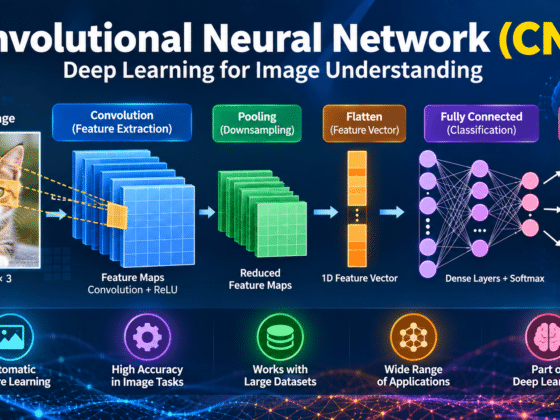
- Deep Learning Integration: Using cutting-edge AI methods, such as Convolutional Neural Networks (CNNs), to enhance image analysis and recognition.
- Edge computing: processing images on edge devices to improve real-time performance and lower latency.
- Quantum Image Processing: Investigating the use of quantum computing to more effectively manage intricate image processing jobs.
- 3D and 4D Imaging: Improving applications in virtual reality and medical imaging by developing technology for processing and interpreting 3D and 4D pictures.