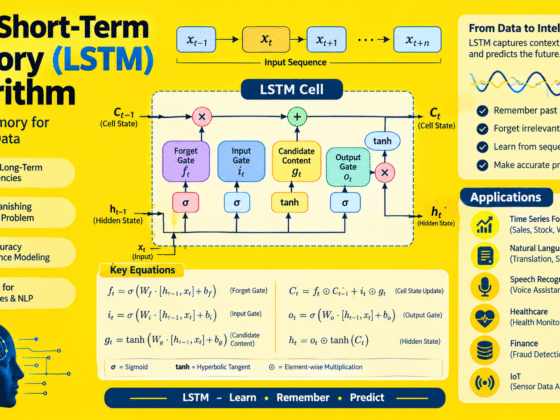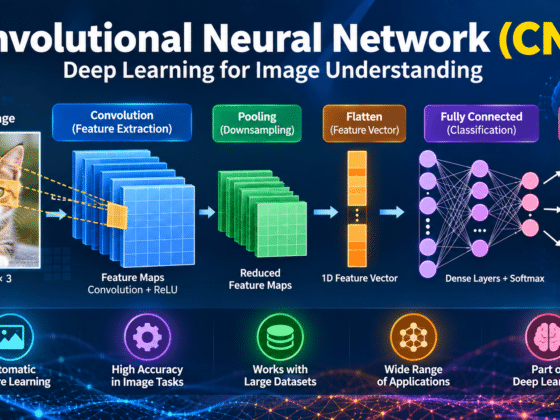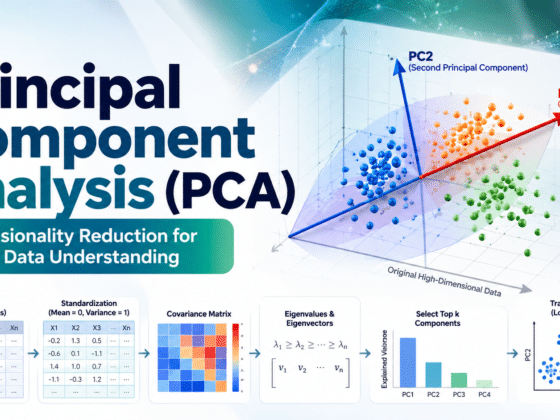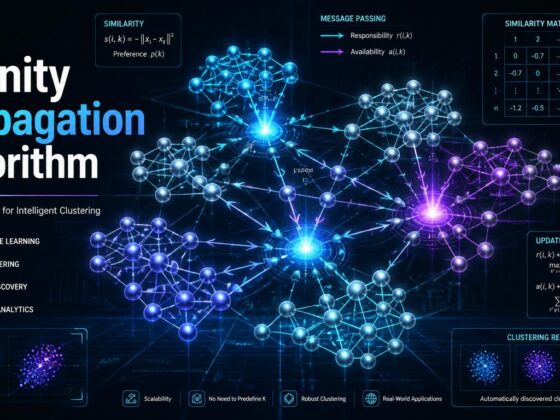
Without explicit programming, robots may learn from data and perform better thanks to the quickly developing discipline of machine learning (ML). An introduction to machine learning is given in this article, which covers its fundamental ideas, varieties, and significance in a range of sectors. It also highlights the revolutionary effects of machine learning (ML) on automation, decision-making, and personalization while examining important issues including data quality, model interpretability, and ethical considerations. To properly utilize machine learning’s potential as it develops, it is essential to comprehend its basic ideas and constraints.
Introduction
Machine Learning (ML) has become a key driver of innovation in a number of industries in today’s ever changing technology landscape. However, what is machine learning and why has it become so popular? Machine learning is fundamentally a branch of artificial intelligence (AI) that enables computers to learn from data, spot trends, and make judgments with little assistance from humans. Machine learning uses algorithms to comprehend and analyze large volumes of data, allowing systems to gradually improve their performance in contrast to traditional programming, where every step is dictated by explicit instructions.
Beyond merely advancing technology, machine learning has become essential to our everyday lives in ways that we frequently take for granted. Machine learning applications are used in everything from the voice assistants on our smartphones and the tailored suggestions on streaming services to the advanced fraud detection systems in banking and the predictive analytics in healthcare. These real-world examples show how machine learning (ML) not only improves user experiences but also promotes accuracy, efficiency, and creativity across a range of industries.
Anybody trying to navigate the modern digital world has to understand machine learning, whether they are a professional hoping to use ML in their line of work, a student hoping to work in the IT sector, or just an enthusiast interested in the technologies influencing our future. This article explains the basic ideas of machine learning, looks at its numerous forms, shows how it affects different industries, and talks about the difficulties and potential paths of this game-changing technology. By the end, you will have a thorough understanding of machine learning and its significance in the modern world.
What is Machine Learning?
A subfield of artificial intelligence known as machine learning (ML) allows computers to learn from and make decisions based on data without needing to be specifically programmed for each task. As more data is processed, machine learning algorithms naturally perform better rather than according to a set of preset rules. This makes them especially helpful for resolving complicated issues like identifying speech patterns, forecasting stock market movements, or diagnosing medical disorders where it is impractical or impossible to define rules.
Fundamentally, machine learning involves supplying data to an algorithm, which then uses the data to find patterns or relationships. Without human input, the computer makes predictions or conclusions based on these insights. The model basically learns from experience as it gains accuracy over time as it comes into contact with more data. What sets machine learning apart from conventional rule-based programming is its data-driven methodology.
Several crucial steps are involved in a typical machine learning process:
- Data collection: Compiling pertinent information so the machine may learn.
- Data preprocessing: preparing the data for learning by cleaning and altering it.
- Model Selection: Selecting the model or approach that best addresses the issue.
- Training: Introducing the model with the processed data so that it can learn by modifying internal parameters in response to trends.
- Evaluation: To gauge the model’s performance and accuracy, test it with data that hasn’t been seen yet.
- Prediction: Using fresh, real-world data to inform judgments or predictions made by the trained model.
Machine learning can be applied to a wide array of tasks, from classification and regression to more complex operations like language translation, image recognition, and game playing. By allowing computers to evolve and learn without constant reprogramming, machine learning is reshaping industries and revolutionizing how we solve problems.
Types of Machine Learning
Based on how algorithms learn from data, machine learning (ML) can be roughly divided into three types: reinforcement learning, supervised learning, and unsupervised learning. Each type has a certain function and works well with a variety of issues. Let’s take a closer look at these kinds.
Supervised Learning
The most popular type of machine learning is supervised learning. This approach uses labeled data to train the algorithm, which means that both the input and the associated output are given. In order to anticipate results for new, unseen data, supervised learning aims to teach the algorithm the relationship between inputs and outputs.
- How It Works: The model is trained on a dataset containing input-output pairs. Over time, the algorithm learns the mapping between the two. Once trained, it can predict the output for new data.
- Example Use Cases:
- Classification: Assigning labels to data (e.g., spam vs. not spam in emails).
- Regression: Predicting continuous values (e.g., house price prediction).
- Algorithms: Linear Regression, Decision Trees, Support Vector Machines (SVM), and Neural Networks.
Unsupervised Learning
The program receives data without labeled results in unsupervised learning. The algorithm finds patterns, structures, or correlations in the data itself rather than learning from labeled pairs. Finding hidden patterns in the data is the aim here, not making predictions.
- How It Works: The model analyzes the input data and tries to organize it based on similarities, differences, or underlying structure, without any specific guidance or labels.
- Example Use Cases:
- Clustering: Grouping similar items together (e.g., customer segmentation in marketing).
- Dimensionality Reduction: Reducing the number of variables in a dataset while retaining its key information (e.g., Principal Component Analysis (PCA)).
- Algorithms: K-Means Clustering, Hierarchical Clustering, and Principal Component Analysis (PCA).
Reinforcement Learning
An alternative method is reinforcement learning, where an agent gains decision-making skills through interaction with its surroundings. Based on its behaviors, the agent is rewarded or penalized, and it learns through trial and error how to optimize its cumulative reward over time. This kind of learning is frequently applied in situations when choices are made gradually.
- How It Works: An agent takes an action in a given environment and receives feedback in the form of a reward or punishment. It learns from this feedback to optimize future actions and maximize rewards.
- Example Use Cases:
- Robotics: Training robots to navigate environments or perform tasks.
- Game AI: Teaching AI to play games (e.g., DeepMind’s AlphaGo).
- Self-Driving Cars: Learning optimal driving strategies based on environmental feedback.
- Algorithms: Q-Learning, Deep Q-Networks (DQN), and Proximal Policy Optimization (PPO).
Other Types of Machine Learning
In addition to these three core types, there are hybrid methods and other approaches that combine aspects of the main types:
- Semi-Supervised Learning: A combination of supervised and unsupervised learning where the model is trained on a small amount of labeled data and a large amount of unlabeled data.
- Self-Supervised Learning: The model creates its own labels from the data, often used in natural language processing (NLP) and computer vision.
Every kind of machine learning has advantages and works well for particular kinds of issues. Reinforcement learning works well for sequential decision-making tasks where the system learns by interacting with its surroundings, supervised learning is best for tasks where we know the labels, and unsupervised learning is best when we need to find hidden patterns.
Why Does Machine Learning Matter?
Machine Learning (ML) has revolutionized daily interactions with technology and the way industries function. It has become a major force in the big data and artificial intelligence age due to its capacity to extract insights from massive datasets, generate forecasts, and automate decision-making procedures. Here are a few explanations on why machine learning is so crucial in the modern world:
Automation and Efficiency
The potential of machine learning to automate operations that were previously labor-intensive and time-consuming is one of its greatest benefits. Machine learning algorithms can complete a variety of activities more quickly and accurately, including data entry, analysis, and intricate decision-making. Businesses can increase operational efficiency by concentrating their resources on strategy and innovation by automating repetitive operations. An example would be chatbots that use natural language processing (NLP) algorithms to provide automated customer service.
Improved Decision Making
Large volumes of data can be processed and analyzed far more quickly by machine learning models than by humans. They can spot patterns, trends, and abnormalities that human analysts would miss. Businesses and organizations can make more accurate data-driven decisions and achieve greater results by utilizing these insights. For instance, financial machine learning algorithms can forecast stock market movements, assisting investors in making well-informed choices.
Personalization
In order to personalize user experiences across several platforms, machine learning is essential. ML models may customize content, product recommendations, and services to match user preferences and behavior. Businesses benefit from higher engagement and conversion rates in addition to increased user happiness. For instance, recommendation engines on websites such as Netflix, Amazon, and Spotify make content recommendations depending on the tastes of each user.
Enhanced Predictive Capabilities
Businesses are able to foresee future trends, consumer behavior, and market movements thanks to machine learning models’ prowess in predictive analytics. Businesses may anticipate demand, maximize resources, and reduce risks with the aid of this predictive power. For instance, in the medical field, machine learning models use patient data to forecast the likelihood of diseases, allowing for earlier treatments and more effective treatment plans.
Adaptability to Dynamic Data
Conventional systems find it difficult to adapt to shifting settings and evolving data streams. On the other hand, machine learning models can adjust to new data and keep getting better. Because of this, they are very adaptable and useful in real-time applications where things change all the time. For instance, machine learning algorithms in cybersecurity improve system security by identifying new threats and instantly adjusting to novel attack patterns.
Impact Across Industries
Machine learning has a broad impact on various sectors, revolutionizing industries by solving problems more effectively. From automating supply chain management to enabling autonomous vehicles, machine learning is driving innovation in ways previously unimaginable.
- Healthcare: Drug discovery, medical imaging, and disease diagnosis are all aided by machine learning.
- Finance: ML supports algorithmic trading, risk assessment, and fraud detection.
- Retail: ML improves inventory control, supply chain operations, and targeted advertising.
- Manufacturing: Quality control and predictive maintenance are two areas where machine learning is used.
- Transportation: Machine learning algorithms are essential to traffic prediction systems and self-driving automobiles.
Handling Complex and Unstructured Data
Text, photos, and audio are examples of unstructured data that machine learning models excel at managing. Deep learning advancements have made it possible for models to glean insightful information from intricate datasets, opening the door to uses like speech recognition, image recognition, and language translation. For instance, Google Photos’ machine learning algorithms are able to categorize and arrange photos according to object identification.
Fostering Innovation
Businesses and researchers are able to push the limits of innovation by utilizing machine learning. Advances in domains like autonomous systems, smart cities, and even space exploration are being propelled by the capacity to automate decision-making, identify novel patterns, and optimize procedures. For instance, by forecasting weather patterns, soil conditions, and pest threats, machine learning models are utilized in agriculture to maximize crop harvests.
Machine learning is important because it plays a major role in facilitating innovation, automation, personalization, and better decision-making in a variety of industries. Organizations gain a substantial competitive edge from its capacity to handle large datasets rapidly and effectively, adjust to new information, and generate precise predictions. Machine learning will further influence the future as technology develops, revolutionizing sectors and enhancing daily living in a myriad of ways.
Challenges and Limitations of Machine Learning
Despite being a major contributor to technological progress, machine learning (ML) has drawbacks and restrictions. Machine learning models have a number of challenges that could impair their effectiveness, applicability, and ethical issues despite their revolutionary promise. It is essential to comprehend these difficulties in order to create ML systems that are more dependable and efficient.
Data Quality and Availability
The caliber and volume of data utilized for training are critical components of machine learning models. Incomplete, noisy, or skewed datasets are examples of low-quality data that can result in poor performance and erroneous forecasts. Furthermore, acquiring substantial quantities of labeled data for supervised learning tasks is frequently costly and challenging, particularly in specialized fields like healthcare. For instance, models trained on incomplete or skewed patient data may produce inaccurate diagnoses in medical applications, which could have a negative effect on patient care.
Overfitting and Underfitting
- When a model performs remarkably well on training data but is unable to generalize to unknown or real-world data, this is known as overfitting. This occurs when the model learns the noise in the training dataset and grows overly complicated.
- Conversely, underfitting occurs when a model is overly basic and is unable to represent the underlying structure of the data, which results in subpar performance even on training data.
A typical problem in machine learning is balancing the model’s complexity to prevent both overfitting and underfitting. As an illustration, a deep neural network that has been trained to identify photos may overfit if it learns to remember particular aspects of the images, which will lead to subpar performance when classifying fresh, marginally different images.
Bias and Fairness
Biases in society that are present in the training data may be inadvertently reflected and reinforced by machine learning models. Unfair results result from this, especially in areas like law enforcement, lending, and employment. A crucial issue that necessitates rigorous evaluation of data sources and ethical standards is ensuring fairness in machine learning systems. For instance, employment decisions may be skewed if a hiring algorithm based on historical data favors some demographic groups over others.
Interpretability and Explainability
Since trust and accountability in high-stakes industries like healthcare and finance depend on understanding the reasoning behind predictions, many machine learning models, particularly deep learning models, are often referred to as “black boxes,” meaning their internal workings are difficult to interpret. For instance, in the healthcare industry, a doctor may be reluctant to trust a machine learning model’s diagnosis if they are unable to understand how the model arrived at its conclusion.
Ethical and Privacy Concerns
Ethical questions are brought up by the extensive usage of machine learning, especially in relation to data security and privacy. Large datasets, including private and sensitive data, are frequently needed for machine learning models. Models that learn from personal data may unintentionally reveal sensitive information, and improper treatment of this data may result in privacy violations. For instance, machine learning-powered facial recognition technology raises questions about privacy invasion, surveillance, and the possibility of abuse by businesses or governments.
High Computational Costs
It takes a lot of processing power, memory, and time to train sophisticated machine learning models, especially deep learning models. Because of this, machine learning is expensive and resource-intensive, particularly for smaller businesses that might not have access to high-performance computer equipment. For instance, it takes enormous computational resources to train large-scale natural language models like GPT, which are frequently only accessible by big tech firms with robust cloud infrastructure.
Dependence on Data Representativeness
When presented with data that is different from the training dataset, machine learning models frequently perform poorly. This is referred to as the domain shift problem. A model’s predictions could become inaccurate if it comes with data from a different distribution from the one it was trained on. For instance, a model that has been taught to identify cars on bright, sunny days would not be able to do so well in dimly lit or foggy environments.
Ethical Decision-Making in Autonomous Systems
Machine learning models must make decisions in real time, frequently involving moral conundrums, in applications like drones and autonomous driving. It is a constant challenge to design systems that can deal with these moral choices in a fair and reasonable manner.
For instance, ML models in self-driving cars must be able to make snap choices in the event of an accident that cannot be prevented, which raises moral questions about how the vehicle should put human lives first.
Security Vulnerabilities
Machine learning methods are vulnerable to attacks like adversarial instances, in which the model produces inaccurate predictions due to minute, well-planned changes in the input data. It is quite difficult to guarantee that machine learning models are secure and resilient to these kinds of attacks, particularly in delicate applications. For instance, if a stop sign image is slightly altered, the machine learning algorithm of an autonomous car may misclassify it, which could result in unsafe driving practices.
For machine learning to be genuinely successful and reliable, it must overcome certain obstacles and limits despite its enormous potential. Key areas of focus include ensuring the availability of high-quality data, eliminating bias and fairness, enhancing the interpretability of models, and overcoming technological obstacles such as computing costs. For machine learning to be implemented across industries in an ethical and sustainable manner, these issues must be resolved.
Conclusion
One of the 21st century’s most revolutionary technologies, machine learning (ML) has the ability to improve decision-making, restructure entire industries, and raise people’s standard of living. Machine learning (ML) creates new opportunities for automation, personalization, and innovation by empowering machines to learn from data, recognize patterns, and make decisions on their own. Machine learning has numerous and significant applications in fields ranging from healthcare and finance to transportation and entertainment. Machine learning is not without its difficulties, though. The difficulties of creating trustworthy and accountable machine learning systems is highlighted by issues including data quality, model interpretability, ethical considerations, and computing needs. It is crucial to handle these issues carefully as we continue to incorporate machine learning into more facets of our life, guaranteeing openness, privacy, and equity. To sum up, machine learning is important because it spurs innovation and makes previously unthinkable solutions to challenging issues possible. We can continue to push the limits of what is feasible in the digital age and open up new opportunities by carefully utilizing its potential.
Frequently Asked Questions (FAQs)
Q1. What is the difference between Artificial Intelligence (AI) and Machine Learning (ML)?
A more general term for computers or systems created to carry out operations that ordinarily call for human intelligence, like learning, thinking, and problem-solving, is artificial intelligence (AI). A branch of artificial intelligence called machine learning (ML) aims to let systems learn from data and get better over time without needing to be specifically designed for every task. In essence, not all AI is ML, but all ML is a type of AI.
Q2. What are some common applications of machine learning?
Numerous sectors and applications, including healthcare, use machine learning, including medical imaging analysis, individualized treatment, and disease prediction.
- Finance: Algorithmic trading, credit rating, and fraud detection.
- Retail: Inventory control and tailored product suggestions.
- Transportation: Route optimization and driverless cars.
- Entertainment: Netflix and Spotify’s content recommendation systems.
Q3. What are the key steps involved in a machine learning project?
The following crucial phases are involved in a typical machine learning project:
- Data Collection: Compiling pertinent information for the assignment.
- Preparing and cleaning the data (such as addressing missing values and standardization) is known as data preprocessing.
- Model Selection: Deciding which algorithm is most suited for the job.
- Training the Model: supplying the model with data and letting it pick up knowledge.
- Model Evaluation: Assessing the model’s performance by running it against unseen data.
- Model Deployment: Predicting fresh data using the trained model.
Q4. What is overfitting in machine learning and how can it be prevented?
When a machine learning model gets overly complicated and performs well on training data but poorly on unseen data, this is known as overfitting. This occurs as a result of the model learning specifics and noise in the training data instead of broad patterns. One way to avoid overfitting is to use simpler models rather than ones that are too complicated.
- Cross-validation: Testing the model on several data subsets to make sure it generalizes effectively.
- Regularization: During training, model complexity is penalized.
- Pruning is the process of eliminating extraneous branches from decision trees to reduce their complexity.
Q5. What is the difference between supervised and unsupervised learning?
The model is trained on labeled data in supervised learning, which means that every input has an appropriate output. In order for the model to forecast results for fresh data (such as classification and regression tasks), it must understand the link between inputs and outputs.
Unsupervised learning involves providing the model with label-free data and asking it to identify hidden patterns or structures (such clustering and dimensionality reduction) in the data.