Introduction
Billions of devices are being linked together as the Internet of Things (IoT) grows in order to gather, send, and process data instantly. But a lot of these gadgets, like sensors, meters, and embedded controllers, are resource-constrained, which means their memory, processing power, and battery life are all limited. As a result, there is an increasing demand for lightweight and effective communication protocols. A protocol called LwM2M (Lightweight Machine to Machine) was created expressly to deal with these issues. LwM2M, created by the Open Mobile Alliance (OMA), offers a standardized method for controlling and interacting with limited devices via cellular or wireless networks. With the least amount of network and device resources, it makes it possible to manage devices securely, effectively, and scalablely. This includes remote monitoring, firmware updates, and configuration. The LwM2M protocol is thoroughly examined in this blog post, along with its main functions, benefits and drawbacks, practical uses, and comparisons to other IoT communication protocols. Knowing LwM2M may help you make better decisions regarding your connected device strategy, whether you’re managing industrial IoT installations or creating smart city infrastructure.
What is LwM2M (Lightweight Machine to Machine)?
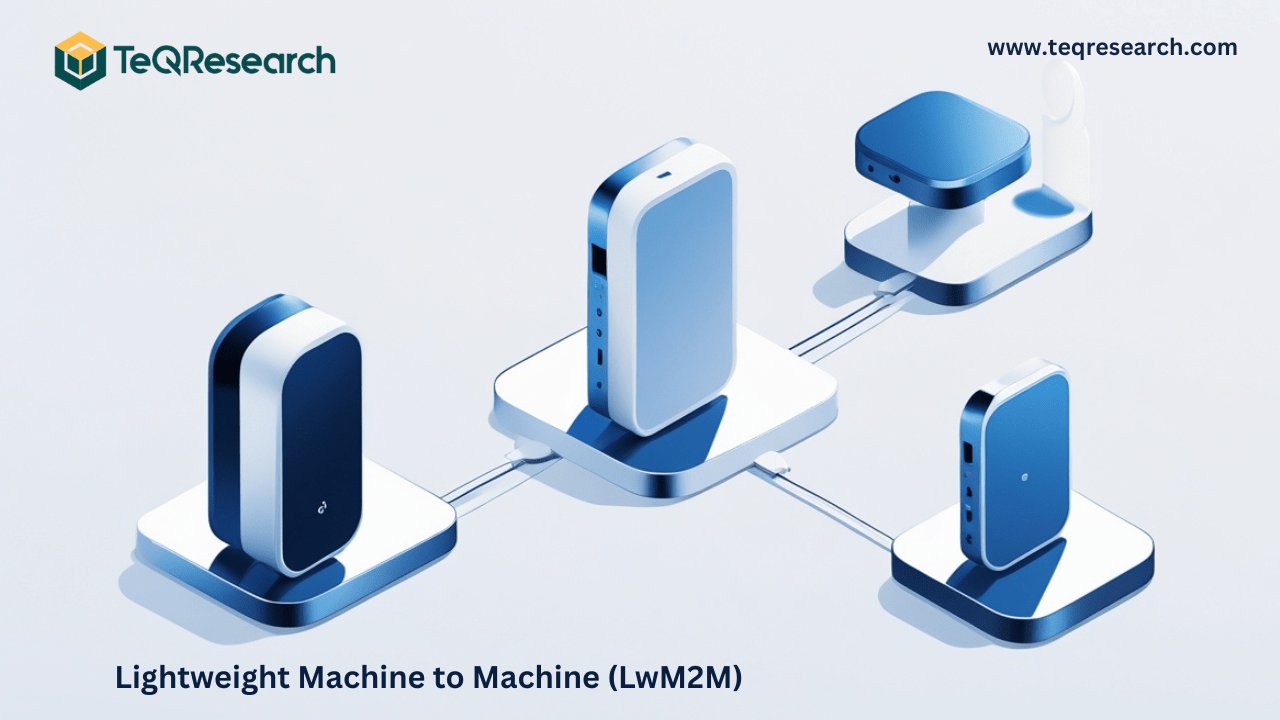
The Open Mobile Alliance (OMA) created the LwM2M (Lightweight Machine to Machine) communication protocol with the express purpose of managing and keeping an eye on Internet of Things devices with constrained memory, processing capacity, and network bandwidth. It offers a standardized architecture for data exchange and device control in settings with limited resources. Fundamentally, LwM2M facilitates communication between LwM2M servers (usually cloud platforms or management systems) and LwM2M clients (usually IoT devices). Built on top of CoAP (Constrained Application Protocol), the protocol is very effective for low-power and intermittently connected devices because it is optimized for use over UDP and SMS.
Devices provide their functions (such as temperature, battery level, and firmware version) as an organized collection of objects and resources, according to the resource-based data model defined by LwM2M. The server has the ability to remotely view, adjust, or update these. Among LwM2M’s primary features are:
- Remote device administration (such as firmware updates and reboots).
- Reporting of telemetry data, such as sensor readings.
- Datagram Transport Layer Security (DTLS) for encrypted communication provides security.
- It uses battery and bandwidth efficiently, which makes it perfect for extensive IoT deployments.
LwM2M is essentially a strong and expandable solution that makes it possible for dependable, lightweight communication and control of IoT devices in a variety of sectors, including utilities, smart cities, industrial automation, and agricultural.
How LwM2M (Lightweight Machine to Machine) Works?
Lightweight Machine to Machine, or LwM2M, has a client-server architecture. The LwM2M Server is usually housed in an enterprise system or the cloud, while the LwM2M Client is located on the Internet of Things device. The protocol’s use of CoAP (Constrained Application Protocol) instead of UDP allows for low-overhead, effective communication that is appropriate for environments with constraints. Here’s how LwM2M works in a typical scenario:
- Device Bootstrapping: It could be necessary for a device (LwM2M client) to bootstrap when it initially connects in order to obtain configuration data such server addresses, security credentials, and object settings. A Bootstrap Server can accomplish this by getting the device ready for continuous communication with the LwM2M Server.
- Device Registration: The LwM2M client registers with the LwM2M Server after startup. It transmits metadata, including resource instances, supported objects, and device details. The server can recognize and control the device thanks to this registration.
- Resource and Object Model: LwM2M uses a hierarchical object model, organizing device data and functions into: Objects (e.g., Device, Firmware, Temperature Sensor), Resources (e.g., Battery Level, Current Temperature). Each resource can be accessed via standard operations like READ, WRITE, EXECUTE, CREATE, DELETE, and OBSERVE.
- Remote Operations: The LwM2M Server has the following remote capabilities: o Read sensor readings. Write new configuration parameters o Perform operations like firmware updates or reboots. Track changes in resource values (much like a subscribe mechanism)
- Communication Efficiency: Devices can sleep and wake up on a regular basis to save power because to the protocol’s support for asynchronous communication. Low latency and tiny packet sizes are guaranteed by CoAP. Secure communication across erratic networks is made possible using DTLS, which is utilized for end-to-end encryption.
- Firmware Updates Over-the-Air (FOTA): The ability to remotely update firmware is one of LwM2M’s strong points. The client can receive instructions from the server to safely download and install firmware files.
In LwM2M makes it possible for servers and limited IoT devices to communicate effectively, securely, and systematically. Because of its design, it is very scalable and appropriate for a variety of Internet of Things applications with constrained processing, power, and bandwidth.
Example of LwM2M (Lightweight Machine to Machine)
Let’s consider a real-world example to understand how LwM2M functions in an IoT environment.
Scenario: Smart Agriculture – Soil Moisture Monitoring
Multiple soil moisture sensors are placed around a field in a smart agriculture setup to track the moisture levels in real time. A low-power wide-area network (LPWAN) connects these battery-operated sensors. The farm management platform hosts a central LwM2M server in the cloud, and each sensor device runs a LwM2M client.
Step-by-Step Workflow:
- Bootstrapping:
- When a sensor is turned on for the first time, it connects to the Bootstrap Server.
- It receives its LwM2M Server address, security credentials, and resource configuration.
- Registration:
- The sensor (LwM2M client) sends a registration message to the LwM2M Server.
- It informs the server about the resources it supports—such as moisture level, battery status, and location.
- Data Reporting:
- The server uses the READ operation to fetch real-time moisture data.
- Alternatively, the sensor is configured to OBSERVE mode, where it automatically sends updates when the moisture level changes.
- Remote Configuration:
- The farm operator wants to reduce the frequency of data reporting to conserve battery.
- The server sends a WRITE command to change the reporting interval from 10 minutes to 30 minutes.
- Firmware Update:
- A newer firmware version with enhanced calibration logic is available.
- The server performs a firmware-over-the-air (FOTA) update by sending the binary and triggering an EXECUTE command to apply the update.
- Security and Power Management:
- All communication is encrypted using DTLS to ensure data integrity and privacy.
- The device enters sleep mode between data transmissions to extend battery life.
Outcome:
Using LwM2M, the farm operator can efficiently:
- Monitor soil moisture across a wide area
- Update device configurations remotely
- Perform secure firmware updates
- Extend the device’s operational life by optimizing power use
This illustration demonstrates how LwM2M makes it possible for scalable, secure, and effective device administration and communication, which makes it perfect for practical IoT applications in smart cities, utilities, agriculture, and other fields.

Low-power soil moisture sensors placed throughout a sizable farming area are crucially managed by LwM2M in a smart agriculture setup. These sensors run on batteries and are linked together via NB-IoT or another low-bandwidth network. An LwM2M client that connects to a cloud-based LwM2M server is installed in each sensor. In order to obtain its server address, security credentials, and configuration settings, the sensor first establishes a connection with a Bootstrap Server when turning on. After bootstrapping, it registers with the primary LwM2M server and provides it with information about the resources that are available, such as device ID, battery life, and soil moisture level. In order to get updates only when values change, the server can either observe the resource or retrieve moisture data on a regular basis. In order to save power, the farmer can also remotely change the reporting interval (for example, from every 10 minutes to every 30 minutes) using a WRITE command. The LwM2M server can release a firmware update when it becomes available and give the sensor instructions on how to safely install it. To protect battery life, the gadget is built to go into sleep mode when not in use, and all communications are encrypted using DTLS. This illustration shows how LwM2M guarantees effective, safe, and expandable device management and communication in practical Internet of Things applications such as precision farming.
Key Features of LwM2M (Lightweight Machine to Machine)
The lightweight machine-to-machine (LwM2M) protocol was created especially for controlling Internet of Things devices with constrained memory, processing power, and network capacity. This objective is reflected in its feature set, which provides reliable, effective, and secure device administration. The following are the main characteristics that set LwM2M apart in limited IoT environments:
- Lightweight Protocol Stack: Perfect for devices with constrained memory and processing power, it is based on CoAP (Constrained Application Protocol) over UDP. optimized for networks with high latency and low bandwidth, including LTE-M, LoRaWAN, or NB-IoT.
- Effective Data paradigm: Makes use of a resource-object paradigm in which structured resources (such as temperature, battery level, and status) are exposed by every device. standardized object definitions from the OMA LwM2M object registry, such as Device, Firmware, and Location. CRUD (Create, Read, Update, Delete, and Execute) operations are supported.
- Device Management Capabilities
- Allows full lifecycle management of devices:
- Registration and de-registration
- Remote configuration
- Reboot and factory reset
- Firmware and software updates (FOTA/SOTA)
- Scalable management of thousands or millions of devices.
- Secure Communication: Uses Datagram Transport Layer Security (DTLS) to guarantee authentication, confidentiality, and data integrity. allows for flexible security provisioning by supporting X.509 certificates, Raw Public Key (RPK), and Pre-Shared Key (PSK).
- Observation and Notification: Allows for server-initiated device resource monitoring. Only when values change may devices transmit updates, cutting down on pointless data transfer and preserving battery life and bandwidth.
- Support for Low-Power and Sleepy Devices: Made for gadgets that aren’t always online. Queue mode is supported, enabling devices to go into sleep mode and react when they awaken.
- Interoperability and Standardization: The Open Mobile Alliance (OMA) developed interoperability and standardization with broad industry backing. uses defined objects and interfaces to guarantee compatibility across ecosystems and vendors.
- Flexibility in Transport and Network: Mostly operates over UDP, but in limited networks, it can also function via SMS and non-IP transports. both IPv4 and IPv6 compatible.
- Support for Bootstrap Mechanism: Before interacting with the LwM2M Server, devices can get initial setup and credentials via a Bootstrap Server. helpful for zero-touch, secure provisioning.
- Flexibility: Permits suppliers to design their own objects while still being compatible with the core protocol by allowing for bespoke object definitions.
These features make LwM2M a powerful, scalable, and flexible protocol for modern IoT deployments, especially where efficient use of resources and remote device control are critical.
Advantages and Disadvantages of LwM2M
For Internet of Things deployments, LwM2M (Lightweight Machine to Machine) provides a number of operational and technological advantages, particularly in situations when bandwidth, memory, and power are few. It does, however, have some restrictions, just like every protocol. Here is a fair summary of its benefits and drawbacks:
Advantages of LwM2M:
- Lightweight and Effective: Its CoAP over UDP architecture reduces overhead, which makes it perfect for low-power networks and devices with limited resources. For effective data transfer, compact binary encoding (such as TLV or CBOR) is used.
- Full Device Management: Facilitates firmware-over-the-air (FOTA) upgrades, diagnostics, configuration, and remote provisioning. gives complete control over the lifecycle of Internet of Things devices, from deployment to decommissioning.
- Low Power Consumption: Devices can sleep in between communications and save battery life thanks to support for asynchronous communication and queue mode.
- Secure Communication: DTLS (Datagram Transport Layer Security) is used to guarantee data integrity, encryption, and authentication. supports X.509, RPK, and PSK certificates, among other security options.
- Scalability: Ideal for extensive IoT deployments requiring effective monitoring and control of thousands or millions of devices.
- Open and Interoperable: Created by the Open Mobile Alliance (OMA) and backed by numerous vendors, this ensures compatibility and interoperability across multiple suppliers. Vendor lock-in can be avoided by standardized object representations.
- Event-Based Reporting: This feature reduces server load and network traffic by allowing devices to observe and inform when something changes.
Disadvantages of LwM2M
- Complexity for Simple Use Cases: For really simple telemetry applications (such basic temperature sensors) that don’t need device management, this may be excessive.
- Limited Uptake Compared to MQTT: Although LwM2M is becoming more popular, protocols such as MQTT are more widely used and have a larger development community, particularly in cloud platforms.
- Learning Curve: Some developers may not be familiar with the CoAP, DTLS, and LwM2M data models, which call for a deeper understanding.
- Limitations of UDP-Based Communication: CoAP (and thus LwM2M) normally employs UDP, which could cause problems in some network setups that are NATed or firewalled. less appropriate for networks that require no extra handling and rely on TCP-based dependability.
- Resource Modeling Overhead: OMA-defined object/resource models must be used by developers to structure data, which could result in early development overhead.
| Feature | Advantage | Disadvantage |
| Efficiency | Lightweight over CoAP/UDP | UDP limitations in some networks |
| Device Management | Full remote lifecycle control | Overkill for simple sensor use cases |
| Security | DTLS encryption and authentication | Complex to implement securely |
| Power Optimization | Sleep modes and queue handling | Requires careful timing management |
| Adoption | Backed by OMA and standardized | Less widely adopted than MQTT |
LwM2M is highly suitable for complex IoT systems requiring secure, efficient, and scalable device management. However, developers must weigh its benefits against the complexity and ensure it aligns with the specific needs of their IoT deployment.
Applications of LwM2M (Lightweight Machine to Machine)
LwM2M (Lightweight Machine to Machine) is a protocol designed for device management and service enablement in Internet of Things (IoT) environments, especially where network and power resources are limited. Its lightweight architecture, efficient communication model, and robust device management capabilities make it ideal for a wide range of applications across different sectors. Below are some of the key domains where LwM2M is particularly effective:
Smart Cities: In urban environments, LwM2M plays a crucial role in managing street lighting by enabling remote control of brightness levels, scheduling on/off times, and fault detection. It supports smart waste management by monitoring bin fill levels and optimizing collection routes. Additionally, LwM2M enhances parking systems by tracking occupancy and providing real-time availability updates to users, contributing to reduced traffic congestion and improved urban mobility.
Smart Agriculture: LwM2M enables efficient agricultural practices by facilitating remote soil moisture monitoring and automated irrigation control. It powers weather stations that collect and transmit real-time climate data such as humidity, temperature, and rainfall. Furthermore, it supports livestock management through low-power wearable devices that monitor animal health and location, enhancing farm productivity and safety.
Utilities and Smart Metering: In the utility sector, LwM2M is used for remotely reading electric, gas, and water meters, performing diagnostics, and delivering firmware updates. It aids in detecting leaks or faults in pipelines and equipment, allowing for quick response and reduced downtime. The protocol also supports demand response applications by enabling communication with smart meters to implement dynamic pricing and manage load distribution.
Industrial IoT (IIoT): LwM2M facilitates remote monitoring of industrial equipment, enabling tracking of machine performance, energy usage, and environmental conditions. It supports predictive maintenance by collecting sensor data that can forecast equipment failures, thus preventing costly downtimes. Real-time asset management is also made possible, with constant updates on inventory and asset location across industrial sites.
Smart Healthcare: In healthcare, LwM2M enables remote health monitoring by transmitting patient vital signs from wearable or home medical devices to healthcare providers. It also supports the secure configuration and updating of medical devices remotely, ensuring that critical health equipment remains functional and up to date without requiring manual intervention.
Logistics and Asset Tracking: LwM2M is widely applied in fleet management, where it monitors vehicle location, status, and performance metrics in real-time. It is crucial for cold chain monitoring, as it ensures that temperature-sensitive goods are transported under controlled conditions by tracking environmental parameters like temperature and humidity throughout the logistics chain.
Smart Buildings: Within smart building systems, LwM2M is used to manage HVAC systems, optimizing heating, ventilation, and air conditioning based on occupancy and usage patterns. It also facilitates energy management by monitoring and optimizing electricity consumption. Security systems benefit from LwM2M through remote control of access, surveillance, and alarm systems, ensuring safety and operational efficiency.
Environmental Monitoring: LwM2M enables the deployment of air and water quality sensors that measure pollution levels, trigger alerts, and maintain historical records. It also supports disaster detection systems by linking sensor networks that identify early warning signs of natural hazards like earthquakes, landslides, or floods, enhancing public safety and preparedness.
Why LwM2M is Chosen for These Applications,
- Low power consumption for long-life battery devices.
- Reliable operation over low-bandwidth and lossy networks.
- Secure and scalable device management.
- Interoperability through standardized data models.
LwM2M continues to evolve as a key enabler in IoT deployments where efficiency, scalability, and remote management are essential. Its real-world adoption spans from agriculture fields to bustling cities and industrial plants—showcasing its versatility and value in today’s connected world.
LwM2M (Lightweight Machine to Machine) Compare with Other Protocols
Among the various protocols utilized in Internet of Things communications is LwM2M (Lightweight Machine to Machine). Depending on variables including device capability, communication style, network dependability, and management requirements, each protocol offers unique advantages and best practices. A comparison of LwM2M with popular IoT protocols like MQTT, CoAP, and HTTP can be found below.
| Feature / Protocol | LwM2M | MQTT | CoAP | HTTP |
| Transport Protocol | UDP (via CoAP) | TCP (can work over WebSocket) | UDP | TCP |
| Communication Model | Client-Server | Publish-Subscribe | Client-Server | Client-Server |
| Device Management | Full lifecycle management | Limited (requires extensions) | Basic only | None |
| Message Overhead | Low | Very low | Very low | High |
| Security | DTLS | TLS | DTLS | TLS |
| QoS Support | Basic via CoAP (Observe) | QoS 0, 1, 2 | Basic (Confirmable/Non-confirmable) | Built-in |
| Power Efficiency | High (sleep modes supported) | Medium | High | Low |
| Ideal Use Case | Device management, firmware updates | Simple telemetry, pub-sub messaging | Constrained RESTful devices | High-resource applications |
| Standardization | OMA Spec | ISO Standard (via OASIS) | IETF Standard | W3C / IETF Standard |
1. LwM2M vs MQTT
- LwM2M is ideal for device lifecycle management, including configuration, firmware updates, and remote diagnostics.
- MQTT is a lightweight protocol using the publish-subscribe model, suited for real-time telemetry data.
- MQTT has broader adoption but lacks built-in management capabilities unless integrated with other layers (e.g., Sparkplug B).
2. LwM2M vs CoAP
- LwM2M is built on top of CoAP and adds structured object/resource modeling, security, and device management features.
- CoAP alone is suitable for simple RESTful communications in constrained environments.
- LwM2M is more feature-rich and standardized for full-scale device control.
3. LwM2M vs HTTP
- HTTP is heavy and not optimized for constrained devices—suitable for web-based applications or high-end IoT devices.
- LwM2M, with its small packet size and power efficiency, is better for low-power, intermittently connected devices.
- Unlike HTTP, LwM2M supports firmware updates, low-latency notifications, and sleep mode support.
Summary,
- Use LwM2M when you need secure, scalable remote device management, especially in low-power or large-scale IoT networks.
- Use MQTT for lightweight data transfer in real-time, especially where pub/sub is needed.
- Use CoAP for simple RESTful APIs in constrained devices without needing full management features.
- Use HTTP where resource constraints are minimal, and existing infrastructure is HTTP-based.
Conclusion
One notable example of a specially created protocol to address the particular requirements of limited IoT devices and networks is LwM2M (Lightweight Machine to Machine). It was created by the Open Mobile Alliance (OMA) and is a potent answer for contemporary IoT ecosystems because it combines the effectiveness of CoAP, the security of DTLS, and an organized method of remote device management. Its scalability, lightweight design, and extensive management features—from firmware updates to remote configuration and telemetry—are its main advantages. Whether in smart cities, smart utilities, smart agriculture, or industrial automation, LwM2M provides the resources required to effectively and safely operate, monitor, and control massive fleets of devices. The long-term advantages in power efficiency, dependability, and lifecycle control make LwM2M an attractive protocol for enterprise-grade and large-scale IoT deployments, even though it might have a steeper learning curve than more straightforward protocols like MQTT or HTTP. Protocols like LwM2M will become more and more important as the IoT environment develops to guarantee that linked devices stay safe, effective, and controllable over time.
Frequently Asked Questions (FAQs)
What is the main purpose of LwM2M in IoT?
The purpose of LwM2M is to oversee and control limited IoT devices. For applications like firmware updates, telemetry, and remote configuration via low-power, low-bandwidth networks, it offers a small and safe architecture.
How is LwM2M different from MQTT?
LwM2M is a comprehensive device management protocol that incorporates telemetry along with capabilities like firmware updates, remote configuration, and lifecycle management, whereas MQTT is a publish/subscribe messaging protocol primarily used for telemetry. MQTT usually uses TCP, whereas LwM2M uses CoAP/UDP.
Is LwM2M suitable for battery-powered devices?
Indeed. LwM2M was created especially for low-power gadgets. It helps extend the battery life of gadgets like wearables and sensors by supporting sleep modes and effective message handling.
Does LwM2M support secure communication?
Of course. Datagram Transport Layer Security, or DTLS, is used by LwM2M to guarantee authentication, data integrity, and confidentiality. It is compatible with PSK, RPK, and X.509 certificates, among other security measures.
Can LwM2M work with cellular networks like NB-IoT or LTE-M?
Indeed. Cellular IoT technologies including NB-IoT, LTE-M, and LoRaWAN are a good fit for LwM2M. It is perfect for these intermittent and bandwidth-constrained connectivity scenarios because of its lightweight design and usage of UDP.
Are there open-source implementations of LwM2M?
Indeed. A few well-known open-source LwM2M implementations include Anjay (client-side in C by AVSystem) and Eclipse Leshan (server based in Java). Wakaama, an Eclipse client/server in C. LwM2M-based systems can be developed or tested using these..
Is LwM2M only for industrial use?
No. LwM2M is widely utilized in smart cities, smart homes, utilities, asset tracking, and smart agriculture—anywhere effective, scalable device management is needed—even though it is most popular in the industrial Internet of things (IIoT).