Introduction
The way people communicate, share information, and access services has changed as a result of the development of mobile communication. Every generation of mobile technology has brought about a new milestone, from the first analog voice calls in 1G to the digital voice calls in 2G. The need for data-based services and mobile internet, however, marked the beginning of the true change. Because it filled the gap between the second-generation GSM (Global System for Mobile Communications) and the third-generation mobile networks, GPRS (General Packet Radio Service), also known as 2.5G technology, was created in response to this need. GPRS provided packet-switched communication, which allowed users to send and receive data more efficiently than 2G’s circuit-switched method. Multimedia messaging (MMS), early mobile internet browsing, and the basis for many of the mobile applications we use today were all made possible by GPRS, which at the time was a revolutionary development. In addition to improving user experience, it paved the way for later, more sophisticated technologies like 3G and EDGE.
What is GPRS?
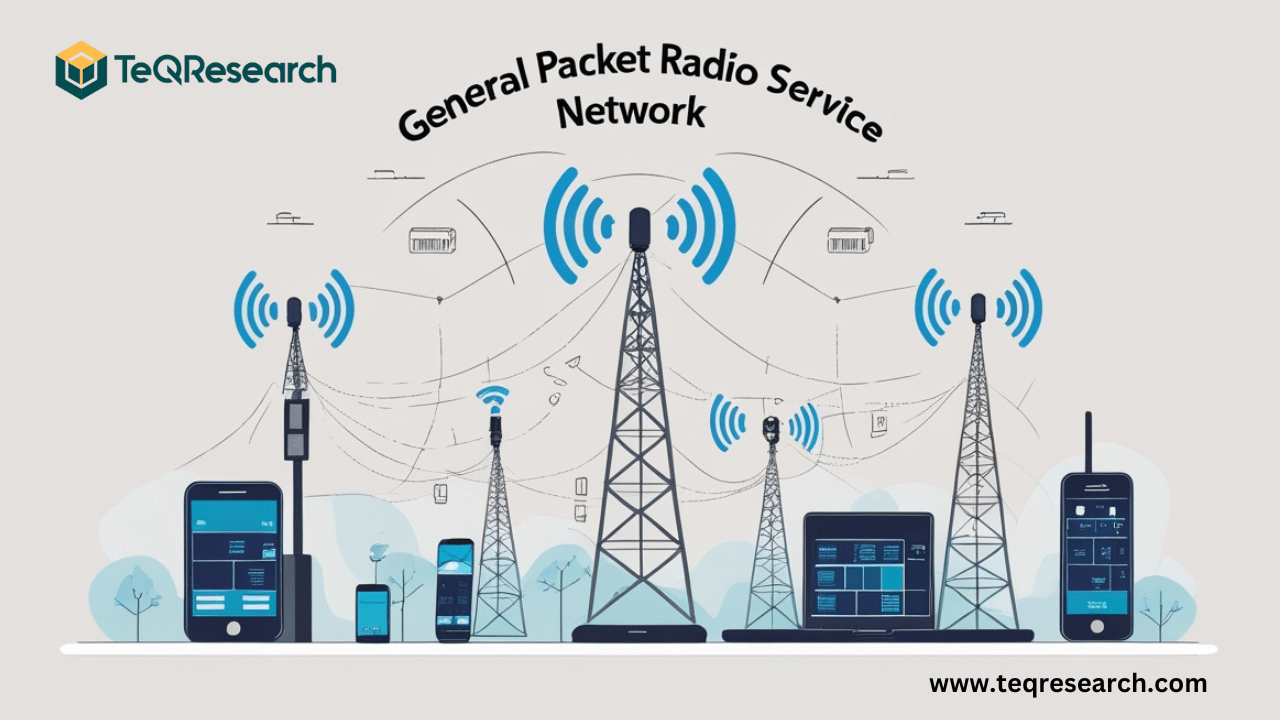
The packet-oriented mobile data service known as GPRS (General Packet Radio Service) operates on both 2G (GSM) and 3G (UMTS) networks. Because it fell between the second-generation (phone and SMS-focused) and third-generation (high-speed data-focused) networks, it was dubbed 2.5G when it was first introduced in the late 1990s as an upgrade to the GSM infrastructure. GPRS employs packet switching as opposed to circuit-switched networks, which create a dedicated line for the duration of a conversation or data session. This results in a more effective use of network resources since data is divided into packets and sent only when necessary. Unlike traditional GSM, multiple users can share the same channel at the same time, improving the efficiency of data transport.
Sending and receiving multimedia messages (MMS), using WAP-based services, and even supporting early mobile applications like email and instant messaging were all made possible via GPRS. Despite having moderate data speeds by today’s standards (usually between 30 kbps and 80 kbps, with a theoretical maximum of about 171 kbps), it was a milestone in making mobile data services accessible to the general public. More sophisticated mobile broadband technologies were made possible by GPRS, which was essentially the first significant step toward mobile internet connectivity.
How GPRS Works?
By integrating a packet-switched communication technology into the already-existing GSM network, GPRS operates. Unlike conventional circuit-switched GSM, which reserves a whole channel for a single user, GPRS divides data into discrete packets and sends them only when necessary. At the receiving end, these packets are put back together after passing through the network.
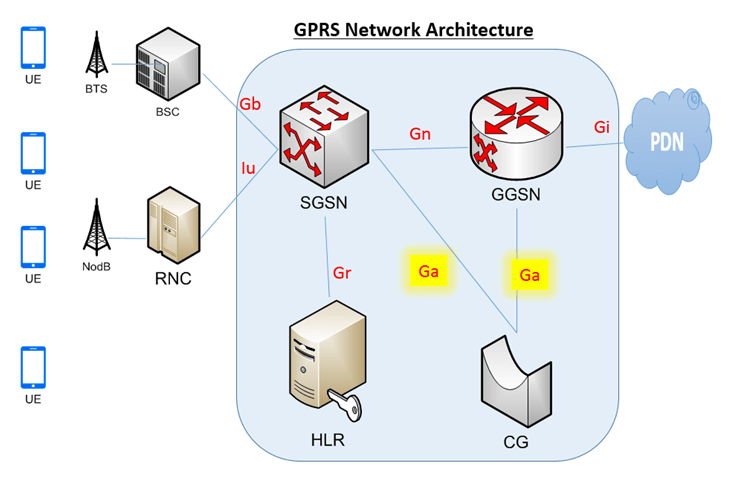
To enable this process, two new network elements were added to GSM infrastructure:
- SGSN (Serving GPRS Support Node):
- Handles data sessions for mobile devices.
- Manages mobility (location updates) and user authentication.
- Ensures that data packets reach the right mobile user.
- GGSN (Gateway GPRS Support Node):
- Acts as a gateway between the mobile network and external packet data networks (like the internet).
- Routes packets from the mobile device to the internet and vice versa.
- Provides IP addresses to mobile devices.
Step-by-step process of GPRS communication:
- A mobile device requests a data connection through the GSM network.
- The SGSN authenticates the user and sets up a session.
- The GGSN assigns an IP address and connects the device to external networks (like websites or apps).
- Data is split into packets and sent over the shared radio channels.
- At the receiving end, the packets are reassembled into the original message or file.
Because GPRS uses packet switching, users benefit from “always-on” connectivity—you don’t need to dial or reconnect each time. Billing is usually based on the amount of data transferred, not the time spent online, which made it cost-effective.
Example of GPRS in Action
To better understand GPRS, let’s look at how it was used in real-world scenarios when it first became available:
- Web browsing on mobile devices: GPRS was used in the early 2000s to visit basic WAP (Wireless Application Protocol) websites. These websites were streamlined versions of web pages made to load rapidly at low data speeds on small displays.
- Sending Multimedia Messages (MMS): GPRS enabled MMS, which enables users to send small video files, audio clips, and photos in addition to text, unlike traditional SMS. One of the initial stages of rich mobile communication was this.
- Email and Instant Messaging: For the first time, business executives could use GPRS to check their emails on their mobile devices. In a similar vein, early messaging applications such as ICQ and Yahoo! Messenger included GPRS-enabled mobile versions.
- Location-Based Services: GPS-enabled applications such as fleet management, car tracking systems, and early navigation tools were also made possible via GPRS. For instance, delivery services began employing GPRS to track cars in real time.
- Mobile Banking and E-Commerce: The emergence of mobile financial services was signaled by the adoption of GPRS in certain areas for simple online transactions including checking bank balances, making mobile payments, and purchasing tickets.
Imagine sending a photo from your phone to a friend in the early 2000s. With GPRS:
- The image is broken into small data packets.
- These packets travel over the mobile network to the internet via SGSN and GGSN.
- At the receiving end, the packets are reassembled, and your friend gets the photo as an MMS.
This demonstrated the practical power of GPRS—turning a voice-and-SMS-only phone into a device capable of internet access and multimedia communication.
Let’s consider GPRS’s function in the early 2000s to get a sense of how it operated in reality. Voice calls and SMS were the main uses for mobile phones at the time, but GPRS opened up new possibilities for multimedia communication and mobile internet. For instance, the phone would split the picture into tiny data packets using GPRS if the user wished to transmit a picture to a buddy. After being sent via the GSM network, these packets were routed to the internet via the GGSN (Gateway GPRS Support Node) and SGSN (Serving GPRS Support Node). The friend would receive the picture as an MMS (Multimedia Messaging Service) when the packets were reassembled at the receiving end.
In addition to texting, GPRS allowed users to check their emails while on the go, surf the internet via WAP-enabled websites, and even use early instant messaging apps. Companies used it for services like logistics management and fleet tracking, where GPS data sent over GPRS allowed real-time vehicle monitoring. To put it briefly, GPRS was the initial development that enabled mobile phones to be used as internet-capable devices, providing consumers with an initial taste of the potential benefits of mobile networking.
Key Features of GPRS
GPRS introduced several breakthrough features that set it apart from traditional GSM (2G) services. These features made it a stepping stone toward modern mobile data services:
- Packet-Switched Technology: Data is divided into small packets and transmitted only when needed. Unlike circuit switching, it allows multiple users to share the same channel efficiently.
- Always-On Connectivity: Users didn’t need to “dial up” every time they wanted to access the internet. Provided continuous connectivity, paving the way for mobile apps and instant messaging.
- Variable Data Rates: Typical speeds ranged from 30 kbps to 80 kbps, with a maximum theoretical rate of about 171 kbps. Though slow by today’s standards, it was a major improvement over SMS-only networks.
- Volume-Based Billing: Charges were based on amount of data transferred, not the time spent online. This model made mobile internet access more affordable and practical.
- Compatibility with GSM: Built on existing GSM infrastructure. No need for a complete network overhaul—operators could upgrade their systems easily.
- Support for Multimedia Services: Enabled services like MMS (Multimedia Messaging Service), email, mobile browsing, and early mobile apps.
- Efficient Use of Network Resources: Radio channels were dynamically allocated based on demand. This allowed operators to serve more users without requiring extra spectrum.
These features made GPRS revolutionary for its time, transforming mobile phones from simple communication tools into basic internet-enabled devices.
Advantages and Disadvantages of GPRS
Like any technology, GPRS came with both strengths and limitations. While it was revolutionary at the time, its drawbacks became more apparent as mobile internet evolved.
Advantages of GPRS
- Always-On Connectivity: Without constantly dialing in, users could maintain an internet connection.
- Cost-Effective: Mobile internet was more reasonably priced because billing was determined by data amount rather than connection time.
- Effective Spectrum Usage: Several users could share a single channel thanks to packet-switched communication.
- Improved Services: MMS, email, push-to-talk, WAP surfing, and simple mobile apps were supported.
- Worldwide Coverage: Due to its GSM foundation, it was extensively accessible across nations and networks.
- Simple Network Upgrade: Without requiring significant infrastructure modifications, operators could include GPRS functionality into already-existing GSM networks.
Disadvantages of GPRS
- Slow Data Speeds: In comparison to contemporary 4G/5G networks, typical speeds (30–80 kbps) were extremely slow.
- High Latency: It was practically impossible to use real-time applications, such as online gaming or video calls.
- Unstable Connections: Signal strength and network congestion affected performance.
- Limited Bandwidth: Due to the shared nature of the channels, high traffic volumes may further lower data rates.
- Battery Drain: In early mobile devices, always-on connectivity used more energy.
Applications of GPRS
GPRS transformed mobile phones from simple voice-and-SMS devices into tools for data-driven communication. It enabled a wide range of applications that laid the foundation for today’s mobile services:
- Mobile Internet Browsing: WAP (Wireless Application Protocol) websites, which were condensed versions of the internet tailored for small screens and slow speeds, were accessible to users via GPRS.
- Multimedia Messaging Service (MMS): This service let users to send short movies, audio clips, and photos in addition to standard SMS. This was among the first ways to communicate via rich media.
- Email Access: By enabling business users to send and receive emails straight from their mobile devices, productivity while on the go could be increased.
- Instant Messaging & Chat Services: GPRS gave users access to early iterations of chat programs like Yahoo! Messenger, ICQ, and AOL.
- Location-Based Services (LBS): GPS tracking, fleet management, and navigation tools powered by GPRS were extensively used in the transportation and logistics sectors.
- Mobile Banking & E-Commerce: This opened the door for mobile financial services by enabling users to complete basic operations like booking tickets, paying bills, and checking balances.
- Push-to-Talk Services: GPRS enabled voice communication over mobile networks in the walkie-talkie style, which was helpful in fields like field operations and security.
- IoT and Telematics (Early Stage): GPRS played a part in the early stages of the Internet of Things (IoT) by being utilized in gadgets like smart meters, car tracking systems, and point-of-sale terminals.
GPRS in Compare with Other Protocols
GPRS marked a significant improvement over traditional GSM, but it was quickly succeeded by faster technologies like EDGE and 3G. Below is a comparison of GPRS with other mobile communication protocols:
| Feature | GSM (2G) | GPRS (2.5G) | EDGE (2.75G) | UMTS/3G |
| Technology | Circuit-switched | Packet-switched (on GSM) | Enhanced GPRS (packet-switched with higher modulation) | Packet-switched (new infrastructure) |
| Data Speed | 9.6–14.4 kbps | 30–80 kbps (max ~171 kbps) | 120–200 kbps (max ~384 kbps) | 384 kbps – 2 Mbps |
| Connectivity | No internet browsing (only SMS & voice) | Always-on data connection | Faster always-on connection | Broadband-like mobile internet |
| Services Supported | Voice calls, SMS | MMS, WAP browsing, Email, Basic apps | Better multimedia, faster downloads | Full multimedia, video calls, high-speed internet |
| Latency | Very high | High | Moderate | Lower (better for real-time apps) |
| Billing Model | Time-based | Volume-based | Volume-based | Volume-based |
| Introduction Timeline | Early 1990s | Late 1990s | Early 2000s | Early-mid 2000s |
- Compared to GSM (2G): GPRS was revolutionary, enabling mobile internet and data services for the first time.
- Compared to EDGE: GPRS was slower but paved the way for EDGE, which offered faster speeds on the same infrastructure.
- Compared to 3G: GPRS was much slower, but it was essential as a bridge technology toward modern high-speed mobile broadband.
Conclusion
In the development of mobile communication, GPRS (General Packet Radio Service) was a revolutionary development. The first true mobile internet experience was made possible by the introduction of packet-switched technology onto GSM networks, which supported early mobile applications, email, WAP surfing, and MMS. Despite having slower speeds than current standards, GPRS was a significant advancement that turned cell phones from basic texting and calling devices into data-driven communication gateways. It paved the way for EDGE, UMTS, 4G, and the current 5G networks by bridging the gap between 2G and 3G. Essentially, GPRS was more than simply a service; it was a turning point in the history of mobile technology, laying the groundwork for the connected world we live in today.
Frequently Asked Questions (FAQs)
Q1. When was GPRS introduced?
GSM networks were upgraded with GPRS in the late 1990s. In many parts of the world, it became commercially available in 2000–2001.
Q2. Why is GPRS called 2.5G?
Because it served as a transitional phase between 2G (GSM) and 3G, it is known as 2.5G. Without necessitating a complete infrastructure update, it integrated data services (internet and MMS) with GSM.
Q3. What is the maximum speed of GPRS?
Although the theoretical maximum speed is approximately 171 kbps, most users actually reported speeds ranging from 30 to 80 kbps, depending on the network circumstances.
Q4. Is GPRS still used today?
3G, 4G, and 5G have supplanted GPRS in many developed regions. Nonetheless, it continues to be utilized in certain rural regions and for Internet of Things devices such as tracking systems, smart meters, and point-of-sale equipment.
Q5. How is GPRS different from GSM?
- GSM (2G): Mainly focused on circuit-switched voice and SMS calls.
- GPRS (2.5G): Enhanced data capabilities through packet-switching, allowing multimedia and internet access.
Q6. What were the main applications of GPRS?
MMS, email, instant messaging, GPS tracking, mobile banking, mobile internet surfing, and early e-commerce services were all supported by GPRS.
Q7. How was GPRS billed?
Users found GPRS to be more cost-effective because it was usually billed according to the amount of data utilized, as opposed to 2G voice calls (which had time-based charging).