
What is Deep Belief Networks (DBN) Algorithm?
One kind of deep learning model is called a Deep Belief Network (DBN), which is composed of several layers of unsupervised learning models called Restricted Boltzmann Machines (RBMs). By stacking these RBMs one on top of the other, DBNs are intended to learn hierarchical representations of incoming data. With the lower layers recording low-level patterns (such as edges in photos) and the top layers catching more abstract notions (such as object components or categories), each RBM in the network learns to extract features from the data at a distinct degree of abstraction. Key Characteristics of DBNs are:
- Generative model: Acquires knowledge of the combined probability distribution of hidden features and input data.
- Hybrid training: combines supervised fine-tuning (often by backpropagation) with unsupervised pretraining (using RBMs).
- Layer-wise learning: Deep network training is more reliable and effective when each RBM is trained one layer at a time.
- Used for: Feature extraction, classification, dimensionality reduction, and data generation.
In short, DBNs are powerful tools for modeling complex, high-dimensional data by learning multiple layers of abstraction, and they laid foundational work for many of today’s deep learning models.
Introduction of DBN Algorithm
A type of probabilistic generative models called Deep Belief Networks (DBNs) is made todevelop hierarchical and meaningful data representations. In 2006, Geoffrey Hinton and his associates presented them as a way to overcome the difficulties in deep neural network training. Multiple Restricted Boltzmann Machines (RBMs), each of which learns characteristics from the output of the preceding layer, are stacked to build a DBN. Each layer may gradually capture higher-level abstractions of the data thanks to this layer-wise, greedy training methodology. While supervised learning methods such as backpropagation can be used to refine the final network, the first layers are trained unsupervised to simulate the distribution of input data.
Structure of a DBN:
- Input Layer: Raw input data.
- Hidden Layers: Composed of multiple RBMs; each layer captures more complex features.
- Output Layer: Used for classification or regression tasks (e.g., softmax for classification).
Key Concepts:
- DBNs use energy-based models to define probabilities.
- Training involves Contrastive Divergence (CD) to approximate gradients.
- DBNs address issues like vanishing gradients by using pretraining, which provides a good initialization for deep networks.
By making it possible to train deep architectures efficiently, DBNs were essential in revitalizing interest in deep learning prior to the extensive adoption of convolutional and attention-based models. By showing how unsupervised learning can enhance the stability and performance of deep models, they paved the road for contemporary deep learning systems. In Deep Belief Networks are a fundamental idea in the development of deep learning since they provided a potent and useful method of training deep neural networks by fusing supervised and unsupervised learning.
Detailed DBN Algorithm
The Deep Belief Network (DBN) algorithm involves a two-phase process:
- Unsupervised pretraining using Restricted Boltzmann Machines (RBMs)
- Supervised fine-tuning using Backpropagation
Let’s break this down step-by-step:
Step 1: Train the First RBM (Unsupervised Pretraining)
An RBM is a two-layer neural network:
- Visible layer v: observed data
- Hidden layer h: latent features
- No intra-layer connections
a) Energy Function
Defines the energy of a configuration (v,h):

- b : biases for visible units
- c: biases for hidden units
- W: weight matrix between layers
b) Probability Distributions
- Joint probability:
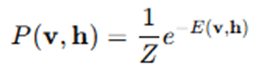
where Z is the partition function:
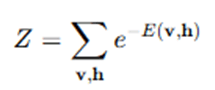
- Conditional probabilities:
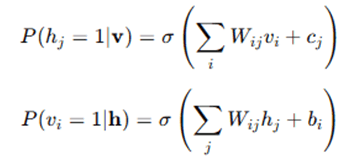
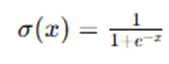
is the sigmoid function.
c) Contrastive Divergence (CD-k) Algorithm
- Positive phase: Compute ⟨vihj⟩ data
- Negative phase:
- Reconstruct v’h′
- Compute ⟨vihj⟩ recon
- Weight update rule:

- η: learning rate
Also update biases:

Step 2: Stack Another RBM
- Take the hidden activations h(1) from the trained RBM as input for the next RBM.
- Train the next RBM the same way (unsupervised, CD-k).
- Continue stacking as needed, creating a deep hierarchical structure.
Step 3: Fine-Tuning the DBN (Supervised Learning)
After stacking RBMs, the DBN can be used for tasks like classification.
a) Add Output Layer
- For classification, add a softmax output layer.
b) Feedforward Pass
- Forward propagate input through all RBM layers to the output.
c) Calculate Loss (Cross-Entropy for Classification)
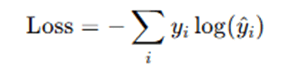
- yi: true label
- y^i: predicted probability from softmax
d) Backpropagation
- Use gradients of the loss to fine-tune all weights in the network using gradient descent:
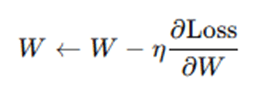
DBN Training Process
| Phase | Objective | Method |
| Unsupervised Pretraining | Learn hierarchical features | Train each RBM layer-wise using CD |
| Supervised Fine-Tuning | Optimize task-specific performance | Use backpropagation on full network |
Advantages and Disadvantages of DBN Algorithm
Advantages
- Unsupervised Pretraining: DBNs use unsupervised layer-wise pretraining (typically using Restricted Boltzmann Machines), which helps initialize weights effectively, especially when labeled data is scarce.
- Efficient Feature Extraction: DBNs can learn hierarchical representations of data and extract meaningful high-level features automatically from raw input.
- Good Performance with Small Datasets: Due to pretraining, DBNs perform well even when only limited labeled data is available, compared to purely supervised deep networks.
- Avoids Vanishing Gradient (Partially): Layer-wise pretraining helps mitigate the vanishing gradient problem during the early training phases.
- Transfer Learning Capability: Features learned by a DBN in one task can often be transferred to other similar tasks, making them reusable across domains.
- Useful for Dimensionality Reduction: DBNs can act as a dimensionality reduction tool, similar to PCA but with non-linear capabilities.
- Flexible Architecture: DBNs can be adapted for classification, regression, and even generative tasks by modifying the output layer.
Disadvantages
- Training Complexity and Time: Training DBNs, especially with multiple layers of RBMs, is computationally expensive and time-consuming.
- Outdated Compared to Modern Architectures: DBNs have largely been replaced by more powerful and easier-to-train architectures like CNNs, LSTMs, and Transformers.
- Difficult to Tune: Performance is highly sensitive to hyperparameters like the number of hidden units, learning rate, number of layers, etc.
- Lack of Scalability: DBNs are not as scalable to large datasets or very deep networks as modern deep learning frameworks.
- Limited Support in Modern Frameworks: Deep learning libraries like TensorFlow and PyTorch focus more on CNNs, RNNs, and Transformers, making DBNs less supported.
- Poor Performance on Sequential Data: DBNs are not designed for time-series or sequential data tasks (unlike RNNs or LSTMs).
- Overfitting Risk: Without regularization techniques, DBNs can easily overfit, especially in low-data scenarios.
Applications of Deep Belief Networks (DBNs)
- Medical Diagnosis and Healthcare: Deep Belief Networks (DBNs) have shown significant potential in the healthcare domain, particularly for disease classification, patient monitoring, and medical image analysis. For instance, DBNs have been used to diagnose diseases such as diabetes, cancer, and heart disease by analyzing medical records or physiological signals like ECG and EEG. The strength of DBNs lies in their ability to learn complex, high-level representations from raw medical data, even when labeled samples are scarce, making them highly effective in clinical decision support systems.
- Image and Pattern Recognition: DBNs have been widely utilized in image and pattern recognition tasks, including object detection, face recognition, and handwritten digit classification. A notable example is their application in early versions of the MNIST digit recognition task, where DBNs demonstrated impressive accuracy. Their hierarchical learning capability allows them to extract visual features directly from raw pixels, making them a powerful tool for identifying and understanding visual patterns.
- Speech and Audio Recognition: In the field of speech and audio processing, DBNs have been used for phoneme recognition, voice activity detection, and speech emotion recognition. They have proven useful in modeling acoustic features for speech-to-text systems, offering a compelling alternative to traditional Hidden Markov Model (HMM)-based approaches. DBNs excel at learning temporal patterns in audio data with fewer parameters, improving both performance and efficiency.
- Financial Forecasting: DBNs are employed in financial forecasting tasks such as stock price prediction, credit scoring, and fraud detection. By analyzing financial time series data, DBNs can predict market behavior and identify anomalies. Their ability to capture nonlinear dependencies within financial datasets enables more accurate modeling of complex market dynamics and risk factors.
- Sensor and Signal Processing: In industrial applications, DBNs are used for sensor and signal processing tasks like fault detection, sensor fusion, and predictive maintenance. For example, DBNs analyze signals from machinery in industrial IoT settings to detect early signs of equipment failure. Their capability to learn from noisy, high-dimensional signals with minimal preprocessing makes them highly suited for real-time monitoring systems.
- Natural Language Processing (NLP): DBNs have also contributed to natural language processing tasks, including text classification, sentiment analysis, and topic modeling. In early experiments, DBNs were utilized for document representation and spam detection. They are capable of learning deep semantic representations of words and documents, providing a strong foundation for various NLP applications.
- Game AI and Reinforcement Learning: In the realm of game AI and reinforcement learning, DBNs have been used for unsupervised feature learning from environment observations. Before the advent of Deep Q-Networks (DQNs), DBNs were applied for value function approximation in simulated reinforcement learning environments. Their effectiveness in extracting meaningful features from raw input makes them valuable for decision-making in complex scenarios.
- Bioinformatics: DBNs are applied in bioinformatics for tasks such as gene expression analysis and protein classification. For example, they have been used to classify microarray data and predict protein-protein interactions. DBNs can model intricate patterns and hidden relationships in biological data, offering insights into genetic and molecular mechanisms.
- Video Analysis and Surveillance: In video analysis and surveillance, DBNs are used for recognizing human activities and detecting anomalies in video feeds. They have been integrated into surveillance systems to monitor and flag unusual behaviors. Their ability to capture both spatial and temporal dependencies across video frames enhances their effectiveness in real-time video monitoring.
- Cognitive Modeling and Brain-Computer Interfaces (BCI): Finally, DBNs play a role in cognitive modeling and brain-computer interfaces, where they are used for emotion recognition and estimating mental workload using EEG data. DBNs have been employed to decode brain signals and classify mental states, demonstrating their robustness in handling high-dimensional, noisy data common in EEG recordings. Their capacity to interpret subtle neural patterns makes them a valuable tool in neuroscience and assistive technologies.
Conclusion
A fundamental method in the development of deep learning, Deep Belief Networks (DBNs) combine the advantages of supervised and unsupervised learning via a methodical, layer-by-layer training procedure. DBNs may learn hierarchical representations of data by utilizing layered Restricted Boltzmann Machines (RBMs). This allows them to capture intricate and abstract patterns that are challenging to model with shallow architectures. Because of this, they work especially well on jobs involving high-dimensional, unstructured data, like text, audio, and photos. Although more sophisticated architectures such as Transformers and Convolutional Neural Networks (CNNs) have steadily overtaken DBNs in recent years, DBNs have been instrumental in reviving interest in deep neural networks. Their versatility across domains and their capacity to function well with sparsely labeled data highlight their ongoing significance in scholarly research and particular real-world applications. DBNs continue to provide important insights for properly developing and training deep architectures, serving as a link between traditional machine learning and contemporary deep learning.
Frequently Asked Questions (FAQs)
What is the main purpose of a Deep Belief Network (DBN)?
A DBN’s main objective is to learn high-level, hierarchical data representations in an unsupervised way. These representations can subsequently be refined for supervised tasks like prediction or classification. DBNs are very helpful when handling high-dimensional, complicated input data.
How does a DBN differ from a traditional neural network?
In contrast to conventional neural networks, which are trained exclusively by supervised learning, DBNs employ a two-stage methodology: supervised fine-tuning comes after unsupervised pretraining with Restricted Boltzmann Machines (RBMs). This prevents problems like vanishing gradients and aids in better weight initialization.
Why are RBMs important in the structure of a DBN?
The fundamental components of DBNs are RBMs. A DBN captures progressively abstract information by stacking RBMs, each of which learns to mimic the input’s probability distribution. Performance is enhanced and deep network training is made easier with this modular approach.
Can DBNs be used for both classification and generation tasks?
Indeed, DBNs are generative models, which means that fresh data samples that are similar to the training data can be produced using them. They can also be quite successful at classification and other discriminative tasks when refined through supervised learning.
Are DBNs still used in modern machine learning applications?
DBNs are still useful in certain research fields, for unsupervised feature learning, and in situations where there is a surplus of unlabeled data but a shortage of labeled data, even though they have been mostly supplanted in common applications by architectures like CNNs and Transformers. Additionally, their conceptual contributions still have an impact on more recent models and training techniques.