Introduction
A network of physically connected things that can communicate and share data online is referred to as the “Internet of Things” (IoT). These devices could be anything from ordinary household items like thermostats and refrigerators to highly advanced industrial gear. What makes IoT unique is its capacity to collect, analyze, and act upon data to build more intelligent, efficient systems. In today’s technologically evolved culture, the Internet of Things is transforming how we live, work, and interact with the outside world. From smart homes that offer greater convenience to medical devices that monitor patient health in real-time, the Internet of Things is setting the foundation for innovations that improve productivity, security, and quality of life. As the number of linked devices increases dramatically, understanding the basics of the Internet of Things becomes increasingly important. This article aims to provide beginners a comprehensive grasp of the Internet of Things. Whether you’re a professional looking to learn more or just interested in the direction of technology, this post will introduce you to the fundamental concepts of IoT, as well as its uses, challenges, and real-world applications.
What is the Internet of Things (IoT)?
A network of networked devices that communicate with one another online is known as the Internet of Things, or IoT. Because these devices are often coupled with sensors, software, and other technologies, they can collect and share data. Because of their connectivity, they can perform tasks, automate processes, and provide insights without requiring human participation. Key Concepts of IoT are,
- Connectivity: Because Internet of Things (IoT) devices are online, they may communicate with one another and with centralized systems. The link at the heart of the Internet of Things allows data to flow between devices and be analyzed immediately.
- Sensors and Data Collection: Sensors are integrated into Internet of Things devices to gather environmental data. This might include recording temperature and humidity readings, tracking the location of a car, and measuring heart rate.
- Automation and Intelligence: Machine learning and artificial intelligence (AI) are widely used by Internet of Things (IoT) devices to assess the data they collect. Today’s devices are more effective and efficient because they can make decisions, predict outcomes, and execute tasks automatically.
- User Interaction: Although many IoT devices are self-contained, they usually have interfaces (like smartphone apps) that allow people to monitor, control, and modify their behavior. For example, a smart thermostat can be remotely changed using a smartphone.
In essence, the Internet of Things is a network of linked systems, gadgets, and items that cooperate to make our environment more intelligent, responsive, and effective.
How Does IoT Work?
In order to carry out operations and make decisions, the Internet of Things (IoT) creates a network of interconnected devices that collect, share, and analyze data. To enable IoT systems, a number of essential components must be included in the process. Here’s a summary of how IoT works:
A. Components of IoT Systems:
- Sensors and Devices: Internet of Things devices come equipped with sensors that collect data from their surroundings. Numerous attributes, such as motion, light, temperature, humidity, and even more intricate data like heart rate or air quality, can be measured by these sensors. For example, a smart thermostat uses temperature sensors to monitor the temperature in a home.
- Connectivity: Following collection, data needs to be transmitted to further devices or a central repository. This is achieved by a variety of communication protocols, including as cellular networks, Bluetooth, Wi-Fi, Zigbee, and more specialized IoT networks like LoRaWAN. For example, you can use Wi-Fi to stream video footage from a smart home security camera to your smartphone.
- Data processing: The cloud or the device itself are often used to manage the raw data collected by sensors (edge computing). In order to provide useful insights or draw significant findings, this study may involve filtering, combining, and analyzing the data. A fitness tracker that uses heart rate data to recommend workouts and provide information about the user’s activity level is an example of this.
- User Interface: Most Internet of Things systems have an interface that enables users to interact with the devices, change their settings, and monitor their performance. This can be done using mobile apps, web dashboards, and voice commands. For example, a smart lightbulb can be turned on or off using a smartphone app.
B. Data Flow Process:
- Step 1: Data Collection: IoT devices’ sensors gather data from the surroundings on a constant basis.
- Step 2: Data Transmission: For processing and storage, the gathered data is transmitted to cloud servers or other devices.
- Step 3: Data Processing and Analysis: In this step, the data is evaluated to produce actionable insights or to set off particular events.
- Step 4: Action or Output: The system acts (e.g., activates the heating) or gives the user feedback in response to the analysis.
C. Technologies Enabling IoT:
Wireless Communication Protocols:
- Wi-Fi: Common for home automation and personal devices.
- Bluetooth: Used for short-range communication, often in wearables.
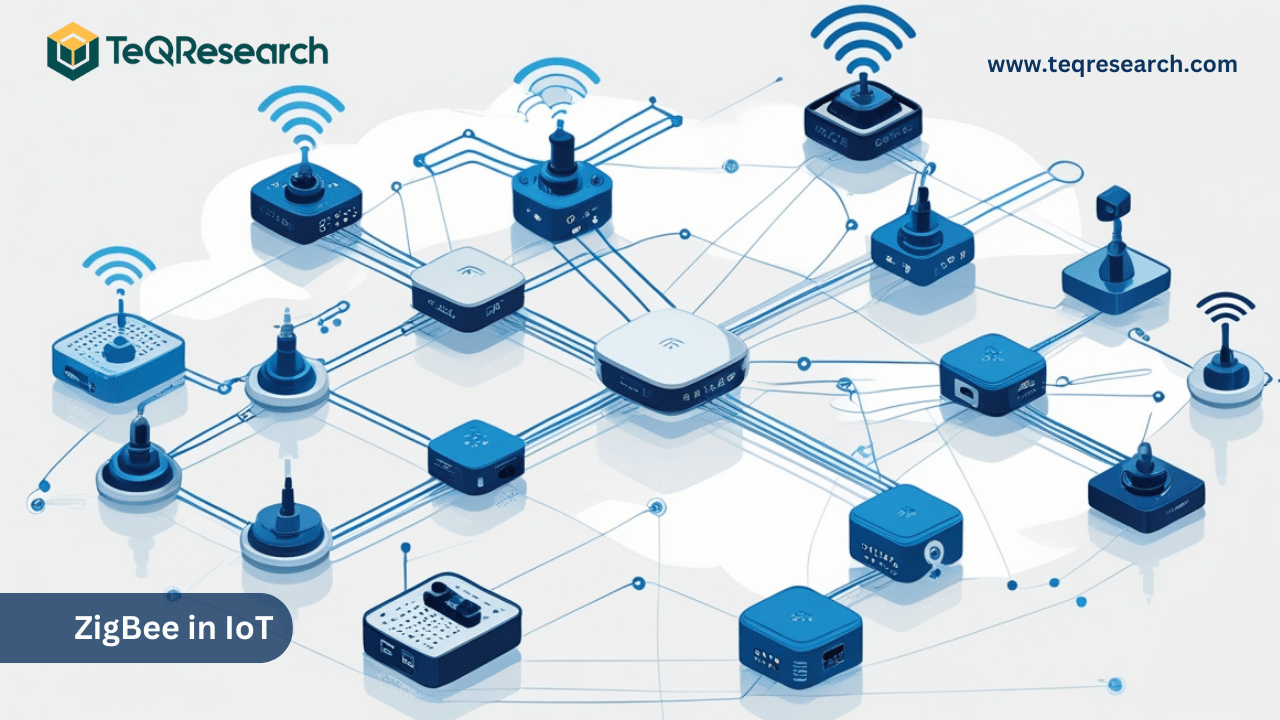
- Zigbee/Z-Wave: Low-power protocols used in smart home devices.
- Cellular Networks: Used in applications requiring wide coverage, such as smart meters.
- Data Processing and Storage: The Internet of Things generates enormous volumes of data, which are frequently processed and stored on the cloud. This enables real-time analysis and scalable data management.
Artificial Intelligence and Machine Learning:
- Smart Decisions: Internet of Things (IoT) systems commonly incorporate artificial intelligence and machine learning algorithms to facilitate data-driven decision-making, task automation, and even the prediction of future events based on patterns identified in the data.
The Internet of Things (IoT) builds an ecosystem where devices can communicate, analyze data, and make decisions on their own to create smarter environments that can adapt to human needs. Sensors, connections, data processing, and human interaction are the cornerstones of any Internet of Things system.
Real-World Applications of IoT
The Internet of Things, or IoT, is being used in many different sectors and industries, changing both simple daily routines and intricate procedures. Here are some significant IoT uses in the actual world:
A. Smart Homes:
- Home Automation: A few examples of Internet of Things (IoT) gadgets that provide homeowners with automation and control over their living area are smart locks, lights, and thermostats. For example, smart lights can be programmed to turn on or off based on the time of day, and smart locks can be remotely opened to let guests in.
- Security Systems: IoT-enabled security cameras and alarm systems allow homeowners to monitor their properties in real time from any location. When these gadgets detect suspicious activity, they can send alerts to your phone to increase home security.
- Smart Appliances: Washing machines, refrigerators, and other appliances are becoming networked so that they can be controlled by smartphone apps. For example, a smart refrigerator may alert you when you’re running low on items or suggest recipes based on what’s in it.
B. Wearables:
- Fitness trackers: Fitbits and Apple Watches are two examples of gadgets that monitor heart rate, calories burned, and steps taken. By providing information about your present level of fitness and health, they assist you in achieving your wellness goals.
- Health Monitoring: Wearables can also be used for serious health monitoring. Devices that track vital indicators like blood pressure, glucose levels, and ECGs can provide consumers and medical professionals with valuable information that could aid in the early detection of health issues.
C. Smart Cities:
- Traffic Management: By using IoT technologies to monitor and regulate traffic flow in real-time, road safety is improved and congestion is reduced. Smart traffic lights adjust their timing based on traffic conditions, and sensors in parking lots direct vehicles to open spots.
- Environmental Monitoring: Cities use IoT devices to monitor environmental issues like air quality and noise levels. With the help of these technology, municipalities can respond to environmental hazards like pollution more quickly.
- Public Safety: Internet of Things (IoT) gadgets like smart lamps and security cameras that keep an eye on public areas and enhance illumination make people safer. Some technology can detect gunfire or other emergencies and quickly alert the appropriate authorities.
D. Industrial IoT (IIoT):
- Manufacturing Automation: The Internet of Things (IoT) is transforming manufacturing with intelligent machinery that can monitor its own performance, spot issues before they become failures, and adjust procedures for maximum effectiveness. Consequently, output increases and downtime decreases.
- Supply Chain Management: IoT sensors track goods in real time along the supply chain, from production to delivery. This helps companies optimize their logistics, reduce waste, and improve inventory management.
- Predictive Maintenance: Sensors on industrial machinery monitor operations and predict when repairs are required. This approach prevents unanticipated breakdowns, reduces maintenance costs, and extends the life of machines.
E. Healthcare:
- Remote Patient Monitoring: IoT devices provide ongoing patient health monitoring outside of a clinical environment. For example, wearable technology can track vital signs like heart rate and blood pressure and transmit the data to medical experts for evaluation.
- Smart Medical Devices: Pacemakers and insulin pumps are examples of devices that can automatically adjust their operation based on real-time data when connected to IoT networks. This enables more timely and tailored care to be given.
- Telemedicine: By allowing physicians to video chat and remotely monitor patients, the Internet of Things makes telemedicine feasible. The quality of care given remotely is improved by doctors receiving real-time data from connected equipment.
F. Agriculture:
- Precision Farming: Precision farming tracks crop health, soil properties, and weather patterns using the Internet of Things. Farmers can use this information to optimize the use of pesticides, fertilizer, and irrigation to boost yields while consuming less resources.
- Livestock Monitoring: By tracking the whereabouts and well-being of their animals with IoT devices, farmers can better manage their herds. Sensors can monitor vital signs, track breeding cycles, and spot illnesses early.
- Automatic Irrigation Systems: By using sensors to monitor soil moisture and meteorological information, these systems adjust irrigation schedules automatically to ensure crops get the right amount of water, reducing waste and improving crop health.
G. Transportation and Logistics:
- Fleet Management: Companies can monitor driver behavior, optimize routes, and save fuel expenses thanks to real-time vehicle tracking made possible by IoT. This results in lower costs and more efficient operations.
- Route Optimization: By recommending the best routes for vehicles based on traffic patterns and other factors, IoT systems can reduce travel times and improve delivery effectiveness.
- Autonomous Vehicles: Self-driving automobiles must be able to communicate with other vehicles, traffic signals, and road infrastructure in order to enable safer and more efficient driving. The Internet of Things is useful in this situation.
IoT has many useful applications that impact almost every aspect of our daily lives. IoT is bringing about significant innovations in a wide range of fields, from improving homes and cities to revolutionizing healthcare and business. As technology develops, IoT has the ability to further transform the globe.
Conclusion
The Internet of Things, or IoT, is a revolutionary technology that is altering how we interact with the world. By connecting everyday objects and enabling them to collect, share, and act upon data, IoT dramatically increases intelligence, efficiency, and convenience across a variety of businesses. Wearables, smart homes, smart cities, and industrial automation are just a few of the many and varied applications of the Internet of Things. These advancements have several benefits, such as enhanced safety, lower costs, more efficiency, and a higher standard of living. It is anticipated that IoT will continue to advance and provide even more innovative solutions and improvements to everyday living and business operations.
Looking ahead, the following traits are expected to define the IoT future:
- Improved Connectivity: IoT devices will become more networked and capable of processing larger volumes of data as 5G networks proliferate, creating opportunities for new and more complex applications.
- AI Integration: Smarter systems that can make decisions on their own and swiftly adapt to changing conditions will be produced by fusing artificial intelligence with the Internet of Things.
- Stronger Security Measures: To protect against cyberattacks and ensure user privacy, the Internet of Things will require more robust security measures as it grows.
- Sustainability and Efficiency: Improving sustainability, making the best use of the resources at hand, and addressing environmental problems will all be made possible by IoT.
In summary, the Internet of Things is a transformative force that will impact business, urban living, and personal convenience in the years to come. It is more than just a technological advancement. IoT has the potential to significantly improve quality of life, increase productivity, and develop a number of industries. As technology advances and becomes increasingly integrated into our daily lives, this potential will only grow. Accepting and adapting to these advancements will be essential to achieving the Internet of Things’ full potential and building a smarter, more connected world.