
I. Introduction
Overview of MANET (Mobile Ad Hoc Networks)
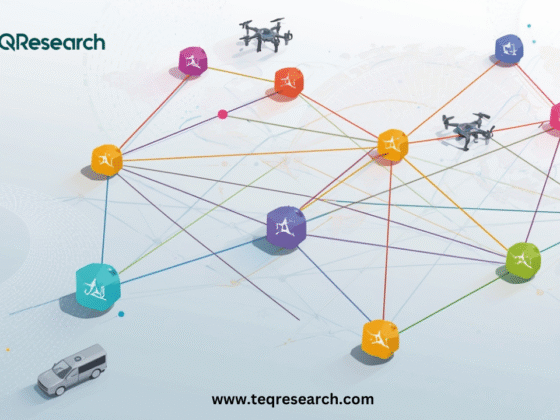
Definition and Basic Concept of MANET: Mobile Ad Hoc Networks, or MANETs, are self-organizing, decentralized networks made up of wirelessly connected mobile devices. In contrast to conventional networks, which depend on stationary components such as switches and routers, MANETs are created dynamically when nodes, or connected devices, come into contact with one another. Every node in a MANET has the ability to forward data to other nodes in the network by acting as a host and a router. Because nodes move around on the network, the topology of the network is very dynamic; this allows MANETs to adapt to changing circumstances.
Importance of MANET in Modern Communication: In current communication systems, MANETs are essential, especially when setting up a fixed infrastructure is neither feasible nor feasible. They are crucial in situations requiring quick deployment and adaptability, such as military operations, disaster relief, and remote sensing. Because MANETs don’t require centralized management, they are perfect for applications where traditional networks are either too expensive to set up or unavailable. Furthermore, because MANETs may facilitate smooth communication between a large numbers of networked devices, they are becoming more and more relevant as the Internet of Things (IoT) and smart gadgets grow in popularity.
II. Understanding MANET Protocols
What are MANET Protocols?
Definition and Role of Protocols in MANET: The set of guidelines that control how nodes interact with one another in a Mobile Ad Hoc Network (MANET) is known as the MANET protocols. These protocols are necessary to ensure effective and dependable communication in a network where node mobility causes the topology to change often. These protocols’ major responsibility is to create and maintain routes between nodes so that information can flow through the network even when nodes come and go.
Because there is no set infrastructure in a MANET, nodes must work together to forward packets for one another. Robust protocols that can manage the difficulties caused by dynamic topology, constrained bandwidth, erratic network quality, and energy limitations are necessary for this cooperation. Because MANET protocols are specifically created to deal with these problems, they are essential to the network’s efficient operation.
Classification of MANET Protocols
MANET protocols can be broadly classified into three main categories based on how they establish and maintain routes:
- Proactive Protocols: By routinely exchanging routing tables, proactive protocols—also referred to as table-driven protocols—maintain current routing information for every node in the network. These protocols make sure that all viable routes are available well in advance of the demand for them.
- Reactive Protocols: Routes are only created by reactive protocols, commonly referred to as on-demand protocols, when data transfer requires them. A node starts a route discovery process that determines the path dynamically when it needs a route to a target.
- Hybrid Protocols: To maximize the benefits of each, hybrid treatments incorporate elements of both proactive and reactive regimens. These protocols usually find routes to faraway nodes on demand and maintain routes to close nodes proactively.
Each of these classifications serves different use cases within a MANET, and the choice of protocol depends on factors like network size, mobility patterns, and application requirements.
Why Protocols Matter in MANET
Challenges in MANET
Mobile Ad Hoc Networks (MANETs) present several unique challenges that make effective communication difficult without specialized protocols. These challenges include:
- Dynamic Topology: Because nodes in MANETs are mobile, the network topology is quite dynamic. Nodes can enter and exit the network regularly, and the relationships between them can shift quickly. Impact: Because of this continuous shift, it is challenging to keep reliable pathways for data transmission; as a result, there are frequent route interruptions and urgent reconfigurations required.
- Limited Bandwidth: The limited bandwidth of wireless communication channels in metropolitan area networks (MANNETs) can be further diminished by environmental variables such as fading and interference. Impact: Reduced network performance can result from congestion and delays caused by the restricted bandwidth, particularly when numerous nodes try to connect at the same time.
- Energy Constraints: Since MANET nodes frequently run on batteries, the energy needed for data transmission and reception can quickly deplete these finite power supplies. Impact: In MANETs, energy economy is essential for extending the network’s operating life, but achieving it without sacrificing communication dependability can be difficult.
- Scalability Issues: Maintaining network paths and guaranteeing effective communication become more difficult as a MANET’s node count rises. Impact: In order to manage the increasing traffic and preserve performance, larger networks need more complex routing techniques.
- Security Vulnerabilities: Because MANETs are open and decentralized, they are vulnerable to a number of security risks, such as denial-of-service attacks, spoofing, and eavesdropping. Impact: In the absence of strong security mechanisms, protecting data and preserving safe communication channels in a MANET can be difficult.
How Protocols Address These Challenges
MANET protocols are specifically designed to tackle the challenges posed by the dynamic and resource-constrained environment of these networks. Here’s how they address the key issues:
- Dynamic Topology: Route discovery and maintenance are done on-demand by MANET protocols, especially hybrid and reactive protocols. To lessen the effects of topology changes, the Ad hoc On-Demand Distance Vector (AODV) protocol, for instance, dynamically creates routes only when necessary. Routing tables are constantly updated by proactive protocols, such as OLSR, to reflect the most recent network architecture, guaranteeing that routes are always available.
- Limited Bandwidth: Many MANET protocols reduce the amount of control traffic needed to maintain routes in order to save bandwidth. Reactive protocols such as DSR minimize overhead by creating routes only when required and eschewing frequent updates. Proactive and reactive strategies are combined in hybrid protocols like ZRP, which lessens the requirement for frequent network-wide broadcasts.
- Energy Constraints: Energy-efficient algorithms are frequently incorporated into MANET protocols in order to reduce power usage. For instance, in order to save energy on retransmissions, several protocols give priority to shorter or more reliable paths. Others, such as Power-Aware Routing (PAR), choose network routes in a way that minimizes energy usage.
- Scalability Issues: Hybrid protocols such as ZRP use a zonal approach to address scalability; inside a zone, local routing is managed proactively, while inter-zone routing is handled reactively. By taking this technique, the protocol becomes more scalable to bigger networks and lowers the overall routing overhead.
- Security Vulnerabilities: Secure routing protocols, which incorporate security features like encryption, authentication, and secure key management, improve network security in MANETs. These characteristics are included in protocols such as safe AODV (SAODV) and Ariadne to guarantee safe data transmission and defend against different types of assaults.
MANET protocols provide dependable, effective, and secure communication in situations where standard network infrastructures are unfeasible or unsuitable by tackling these issues. They maximize the use of scarce resources like bandwidth and energy while making sure the network can adjust to changing circumstances.
III. Key Features of MANET Protocols
A. Proactive Protocols
Table-driven protocols commonly referred to as proactive protocols, keep routing information constant and up to current across all nodes in a MANET. These protocols try to always have a route available, no matter how urgently data needs to be transmitted, by constantly analyzing possible routes. Every node in the network maintains a routing table with entries for every other node, guaranteeing fast data transmission without requiring a route discovery procedure.
Examples of Proactive Protocols:
- Optimized Link State Routing (OLSR): OLSR is a well-known proactive routing technology that builds a comprehensive network topology map using link-state data. It employs a method known as Multipoint Relays (MPRs) to maximize the transmission of link-state information. MPRs are chosen nodes that, by minimizing the amount of transmissions and so conserving bandwidth, propagate broadcast messages throughout the flooding process.
- Destination-Sequenced Distance-Vector (DSDV): DSDV is based on the classic Bellman-Ford algorithm, but it has been modified to cope with dynamic networks such as MANETs. In order to avoid routing loops and guarantee that the most current route is always taken, each node in the network has a routing table that lists the shortest paths between each node and every other node. The routes are also tagged with sequence numbers.
Key Features:
- Table-Driven Approach: Routing tables are maintained at each node in proactive protocols. All potential destinations and the routes to get there are included in the table. The network always has up-to-date routing information since the data is updated often through the exchange of routing updates between nodes.
- Frequent Updates: Routing tables are constantly updated by proactive protocols, even in the absence of any data transmission. This is accomplished by sending out broadcast messages on a regular basis, which support the network’s efforts to keep routing data accurate. For instance, link-state data is routinely shared in OLSR to guarantee the accuracy of the topology map.
- Low Latency in Route Availability: Without having to wait for a route discovery procedure, data transmission can start right away because routes are pre-established and kept up to date in the routing database. Because of the extremely low latency that this produces, proactive protocols are appropriate for real-time applications where timely data delivery is essential.
Advantages and Disadvantages:
Advantages:
- Immediate Route Availability: The fact that routing information is kept up to date beforehand means that routes are always available when needed, reducing transmission delays. Applications that need real-time communication, like VoIP or video conferencing, will especially benefit from this.
- Consistency in Network Connectivity: Even in the face of node movement, proactive methods guarantee that network connectivity is continuously maintained. This guarantees consistent network connectivity and lessens the possibility of network fragmentation.
- Reduced Latency: Due to the pre-established routes, packet delivery is delayed less because reactive protocols usually require a route discovery phase.
Disadvantages:
- High Overhead: Routing information is constantly exchanged, which adds a lot of overhead and uses up computing power and bandwidth. When frequent updates are required, such as in large networks or networks with considerable node mobility, this burden is most apparent.
- Scalability Issues: When the network gets bigger, proactive protocols can have trouble growing. As the network grows, maintaining current routing information for each node becomes more difficult and resource-intensive.
- Inefficient Use of Resources: The resources used to maintain routing tables can be squandered in situations where the network is comparatively static or where data transfer occurs infrequently, resulting in inefficient usage of energy and bandwidth.
In general, proactive protocols function well in settings where low latency communication is essential, but because of their resource-intensive nature, they might not be the ideal option for big, dynamic networks.
B. Reactive Protocols
On-demand protocols, sometimes referred to as reactive protocols, don’t change their routes frequently or keep up a comprehensive routing database. Rather, they create routes only as needed for the transfer of data. A route discovery procedure is started by a source node in order to determine the best way for sending data to a destination. Once formed, the route is only kept up to date for as long as is required before being abandoned either after use or when topology changes render it invalid.
Examples of Reactive Protocols:
- Ad hoc On-Demand Distance Vector (AODV): AODV is among the reactive protocols in MANETs that is most frequently utilized. Only when the originating node requests it does it create routes between nodes. A route request (RREQ) packet is broadcast by a node in order to establish communication with another node. A route reply (RREP) is returned to the source if a route is discovered. Sequence numbers are another tool used by AODV to guarantee route freshness and prevent loops.
- Dynamic Source Routing (DSR): DSR is yet another well-liked reactive protocol that does not rely on a routing database at each intermediary node, but rather use source routing. The sequence of nodes through which a route request passes determines the route when one is needed, which is broadcast by the originating node. The packet header for the next data transmission then contains the entire path.
Key Features:
- On-Demand Routing: Routes are only established by reactive protocols when they are required for communication. As demonstrated by proactive protocols, this on-demand method reduces the overhead related to keeping up-to-date routing data for every potential destination.
- Route Discovery Process: When the source node needs to interact with a destination, it starts the route discovery process. Broadcasting a route request (RREQ) packet across the network is usually the technique involved. When a node receives an RREQ, it is sent until it reaches the destination or a legitimate intermediate node. The route is then established by the destination or intermediary node responding with a route reply (RREP) packet that is delivered back to the source.
- Route Maintenance: The protocol maintains a route after it is created for as long as it is required or until a link failure is noticed. The protocol notifies the source node of the breakage in the event of a link failure by sending a route error (RERR) message, and if required, a new route discovery procedure may start.
Advantages and Disadvantages:
Advantages:
- Lower Overhead: By doing away with the requirement for frequent route modifications, reactive protocols cut down on overhead. Because routing information is only produced when needed, it uses less processing power and bandwidth, which is especially useful in big or dynamic networks.
- Scalability: Reactive protocols are more scalable than proactive protocols since they are on-demand. Because only active routes’ routing information is kept up to date, the network can grow more readily without seeing a noticeable rise in overhead.
- Efficient Resource Use: Reactive protocols save resource use by not maintaining needless paths. Reduced energy usage is important for mobile and battery-powered devices, and this efficiency can help.
Disadvantages:
- Higher Latency: The source node must wait for a route to be established before it can start transmitting data, which adds latency to the route discovery process. This could be a drawback for apps that need real-time communication.
- Route Maintenance Complexity: It can be difficult to maintain routes when topology changes frequently. The protocol has to start over when a route breaks while data is being transmitted, which can cause delays and even cause data loss.
- Broadcast Storms: A broadcast storm problem, in which a high number of broadcast packets overwhelm the network, generating congestion and lowering overall network performance, can result from the broadcasting of route requests (RREQs).
In situations where it is not required to maintain routes to every node at all times and when network topology changes often, reactive protocols like AODV and DSR are well suited. Although they provide a productive method of resource management in dynamic networks, they might not be the best choice for low-latency communication applications.
C. Hybrid Protocols
In order to provide a more balanced approach to routing, hybrid protocols in MANETs combine the advantages of proactive and reactive protocols. When communication happens between certain sections of the network, these protocols transition from using proactive methods to reactive ones. By eliminating the latency usually associated with reactive routing and reducing the overhead associated with proactive routing, hybrid protocols aim to maximize the utilization of network resources.
Example of a Hybrid Protocol:
- Zone Routing Protocol (ZRP): ZRP is among the most used protocols for hybrid routing. It separates the network into overlapping zones, each of which uses a protocol such as OLSR to proactively maintain routes to other nodes inside its own zone. Similar to AODV, ZRP employs a reactive strategy for communication with nodes beyond the zone, starting a route discovery process only when necessary. Because of this combination, ZRP is still able to offer fast route access within zones while lowering the overall routing overhead.
Key Features:
- Combination of Proactive and Reactive Approaches: Hybrid protocols combine the best features of reactive and proactive routing techniques. In order to keep routes inside local zones and provide prompt access to neighboring nodes, proactive routing is employed. For distant nodes, reactive routing is employed, which minimizes the requirement to keep up-to-date records of every potential path throughout the network.
- Zonal Structure: Every node in the network has a predetermined zone radius, and the network is divided into zones. Proactive routing is used within this radius, and reactive routing is used outside of it. The proactive updates are localized to a smaller portion of the network thanks to this zonal structure, which facilitates effective routing.
- Scalability and Flexibility: Hybrid protocols, which combine proactive and reactive techniques, have lower latency and more scalability than pure reactive protocols. Their versatility in varied MANET contexts stems from their ability to adjust to varying network sizes and mobility patterns.
Advantages and Disadvantages:
Advantages:
- Optimized Resource Use: Hybrid protocols guarantee that routes to neighboring nodes are always available while lowering the overhead involved in maintaining global routing databases. More economical use of energy, computing power, and bandwidth is the result of this optimization.
- Improved Scalability: Hybrid protocols scale better than pure proactive procedures because of their zonal strategy. Large networks can benefit from this protocol since it can adapt to changing network conditions, such as zone size, to maintain optimal performance.
- Balanced Latency: Hybrid protocols provide a balance between the lower overhead of reactive protocols and the low-latency route availability of proactive protocols by merging proactive and reactive techniques. This equilibrium is especially helpful in networks with different traffic patterns and degrees of mobility.
Disadvantages:
- Increased Complexity: The protocol becomes more complex when two distinct routing algorithms are combined. It can be difficult to control how proactive and reactive components interact, particularly in a dynamic setting, and more complex algorithms can be needed.
- Potential for Suboptimal Routing: If the network topology changes quickly or the zones are not clearly defined, the split of the network into zones may result in less-than-ideal routing choices. Due to the way the protocol divides the proactive and reactive sections, it may select a less effective path.
- Overhead from Zonal Maintenance: Because hybrid protocols require proactive maintenance of up-to-date routing information, they incur overhead inside each zone even though they reduce it globally. Resources may be used up during this zonal maintenance, particularly in highly active networks where nodes enter and exit zones regularly.
ZRP and other hybrid protocols combine the best features of proactive and reactive routing to manage the intricacies of big, dynamic MANETs. They present a scalable and adaptable solution for networks with fluctuating traffic patterns and node mobility, but they also come with added complexity and certain difficulties in preserving good routing performance.
Conclusion
When traditional network infrastructure is unavailable or unfeasible, Mobile Ad Hoc Networks (MANETs) offer a dynamic and adaptable method of communication. In order to ensure effective, dependable, and secure communication across a range of applications, from military operations to smart cities and emergency rescue missions, the protocols that regulate MANETs are essential.
Proactive protocols, such as OLSR, are appropriate for situations demanding instantaneous route availability because they provide low-latency communication by keeping up-to-date routing information at the expense of increased overhead. In contrast, reactive protocols like AODV and DSR offer a more resource-efficient method by creating routes on demand, making them perfect for dynamic contexts where network topology changes often. ZRP and other hybrid protocols combine the best features of reactive and proactive strategies to provide a well-rounded solution that can adjust to different network sizes and conditions. Because of its adaptability, MANET protocols can be used for a variety of purposes, including IoT deployments, vehicle communications, and military networks. The role that MANETs play in facilitating infrastructure-free, decentralized communication will only become more significant as technology develops, opening up new avenues for connection and interaction in dynamic situations.
In conclusion, selecting the best method for a given application requires an awareness of the salient characteristics, benefits, and drawbacks of various MANET protocols. In an increasingly mobile and interconnected world, MANET protocols offer the basis for effective and efficient networked communication, whether it’s for enabling smart transportation systems or guaranteeing quick communication in a disaster area.