
1. Introduction: What is a Wireless Ad Hoc Network?
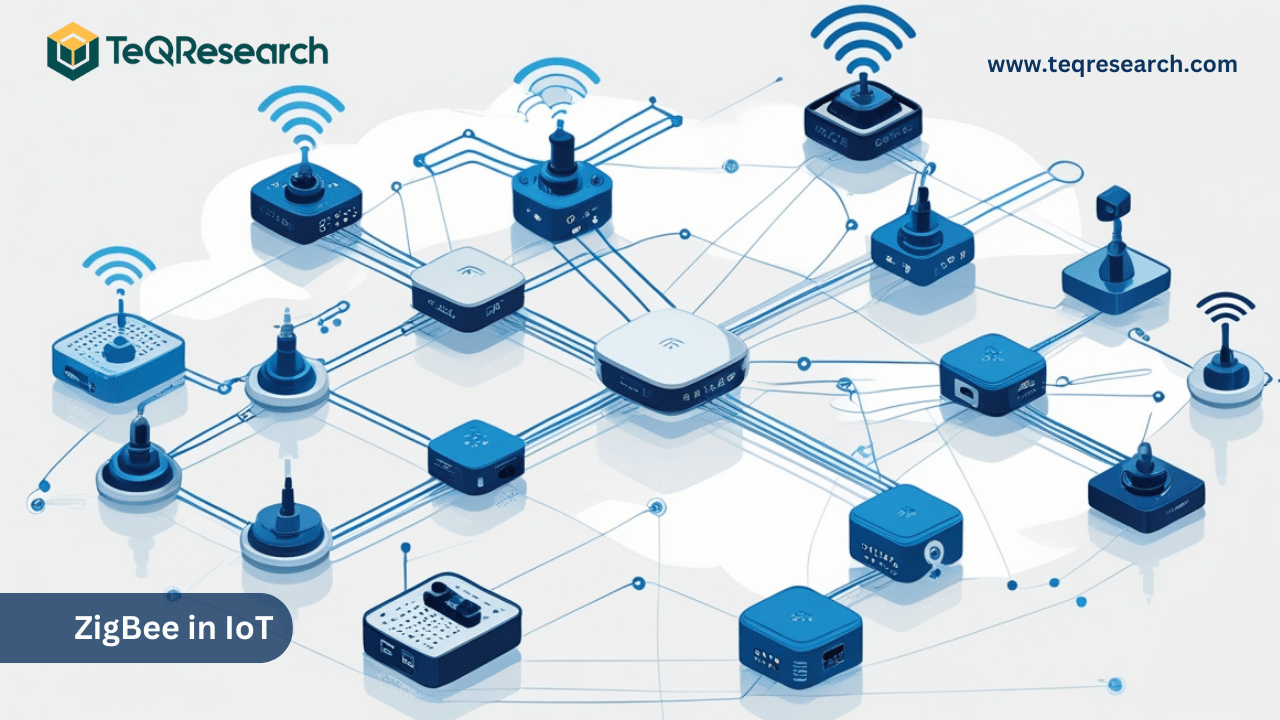
A wireless ad hoc network (also called a mobile ad hoc network or MANET) is a decentralized, infrastructure-less network formed dynamically by wireless nodes.
In such a network:
- There is no fixed base station or centralized router; each node acts both as a host and a router.
- Nodes may join, leave, or move arbitrarily, so network topology is dynamic and unpredictable.
- Communication is typically multi-hop: data travels via intermediate nodes to reach distant nodes beyond direct wireless range.
These properties make ad hoc networks ideal for scenarios like disaster relief, military operations, vehicular networks, sensor networks, and temporary event setups.
Why is the Routing Problem Unique Here?
In wired or infrastructure networks, routing is relatively stable and centralized. But in ad hoc environments:
- Links can break frequently (nodes move or power off).
- Nodes have constrained resources (battery, computation).
- Wireless channels suffer from interference, collisions, hidden/exposed terminal problems.
- There is no central coordinator to maintain global topology.
Therefore, routing in ad hoc networks requires protocols that are:
- Adaptive and responsive to topology changes
- Lightweight in control overhead
- Robust to link breakages
- Energy-efficient
- Scalable
2. Why Routing in Ad Hoc Networks is Challenging
Before diving into protocols, it’s critical to understand the core challenges that any routing solution must address:
2.1 Dynamic Topology & Node Mobility
Nodes may move arbitrarily, causing frequent link failures and reconfiguration needs. A route that was valid a moment ago may become invalid seconds later.
2.2 Limited Bandwidth & Shared Wireless Medium
Wireless links have limited bandwidth and share the medium. Routing control traffic must be minimized, or it will consume much of the bandwidth.
2.3 Power / Energy Constraints
Nodes often run on batteries. Excessive routing overhead, frequent packet forwarding, or route maintenance drains battery quickly, reducing network lifetime.
2.4 Unreliable Links & Error-Prone Channels
Wireless links are more error-prone (due to fading, interference, noise) than wired ones. Packets may get lost or delayed. Routing must be resilient and possibly use link-quality metrics.
2.5 Hidden / Exposed Terminal Problems & Interference
Because nodes share the same wireless medium, simultaneous transmissions can interfere. Hidden terminal (node A and C both transmit to B but cannot sense each other) and exposed terminal (unnecessary suppression of transmissions) are classic issues.
2.6 Scalability
As node count grows, routing overhead and state maintenance grow. Protocols must scale without collapse of performance.
2.7 Security Threats & Misbehavior
Because nodes cooperate in routing, malicious or selfish nodes can mislead or disrupt routing (e.g. blackhole, wormhole attacks). Secure routing is a key extra dimension.
3. Classification of Routing Protocols
Routing protocols for ad hoc networks are typically classified based on how and when they maintain routing information.
3.1 Proactive (Table-Driven) Protocols
Also called table-driven protocols, these protocols continuously maintain routes to all (or many) destinations, even if not currently needed.
- Each node maintains routing tables with routes to all possible destinations.
- Periodic updates (full or incremental) are exchanged across the network to keep tables fresh.
- Advantages: Low latency for route lookup (since route information is ready).
- Disadvantages: High control overhead, which can waste bandwidth and energy, especially in large or highly dynamic networks.
Example protocol: DSDV (Destination-Sequenced Distance Vector)
3.2 Reactive (On-Demand) Protocols
Reactive protocols discover routes only when needed (i.e., when a source wants to send data).
- The source initiates a route discovery via broadcasting (flooding) a Route Request (RREQ) packet.
- When the destination (or intermediate with route) receives it, a Route Reply (RREP) is sent back.
- Route maintenance is done when links break (via Route Error (RERR)).
- Advantages: Lower control overhead when traffic is sparse.
- Disadvantages: Delay in route discovery, and flooding can still cause network overhead.
Famous reactive protocols: AODV (Ad hoc On-Demand Distance Vector), DSR (Dynamic Source Routing)
3.3 Hybrid Protocols
Hybrid protocols try to combine the advantages of proactive and reactive approaches.
- Typically, a node maintains proactive routes within a limited region (zone), and uses on-demand beyond that zone.
- This hybridization reduces overhead for nearby paths and avoids long delays for distant nodes.
- Example: ZRP (Zone Routing Protocol)
3.4 Other / Specialized Approaches
Beyond these broad categories, numerous specialized routing types exist:
- Geographic / Location-based routing: use node positions (via GPS or localization services) to guide forwarding (e.g., greedy forwarding).
- Hierarchical / Cluster-based routing: nodes form clusters, with cluster heads managing intra-cluster and inter-cluster routing.
- Multipath routing: maintaining multiple alternative routes to increase reliability and load-balancing.
- Energy-aware routing: incorporating residual energy or power metrics into route selection.
- Directional / beamforming‐aware routing: leveraging directional antennas or directional metrics.
4. Key Routing Protocols: Deep Dive
Let’s analyze a few of the most influential routing protocols in ad hoc networking in depth.
4.1 DSDV (Destination-Sequenced Distance Vector)
- Introduced early (by Perkins & Bhagwat) as an adaptation of distance vector routing to ad hoc contexts.
- Each route entry maintains a destination sequence number generated by the destination to avoid routing loops.
- Updates occur periodically (full dumps) and incrementally.
- Advantages: Routes are always available (no discovery delay).
- Drawbacks: High overhead, not suitable for rapidly changing networks due to constant updates. Also battery and bandwidth consumption is high.
- In highly dynamic scenarios, the overhead becomes prohibitive.
4.2 AODV (Ad hoc On-Demand Distance Vector)
- One of the most widely studied reactive routing protocols.
- Operation:
- Route Discovery: If a source has no route to destination, it broadcasts a RREQ with a unique ID. Intermediate nodes forward it if they don’t know a route.
- Route Reply (RREP): when RREQ reaches destination or intermediate with a valid route, RREP is unicast back to source.
- Route Maintenance: On link failures, nodes send RERR to affected upstream nodes.
- Uses sequence numbers to ensure freshness and avoid loops.
- Pros: Lower overhead compared to proactive in sparse traffic, supports both unicast and multicast.
- Cons: Discovery latency, floods propagation of RREQ can cause overhead, outdated route reuse can cause errors.
- To harden security, variants like AODVSEC have been proposed to defend against insider attacks.
4.3 DSR (Dynamic Source Routing)
- A pure source-routing approach: the entire route (list of hops) is included in the packet header.
- Route discovery is similar to AODV (broadcast RREQ). Intermediate nodes can reply if they know the route.
- Route maintenance: uses route error messages and possibly route repair.
- Pros: No need for routing tables at intermediate nodes, supports multiple route caching.
- Cons: Header overhead large when path length grows, stale route cache can cause issues.
- In highly dynamic networks, route caches may become invalid quickly.
4.4 OLSR (Optimized Link State Routing)
- A proactive link-state protocol tailored for ad hoc networks.
- Key idea: reduce overhead by Multipoint Relays (MPRs) — only selected nodes retransmit control messages, reducing broadcast redundancy.
- Nodes exchange HELLO messages (for neighbor detection) and TC (Topology Control) messages (for route computation).
- Pros: Always-available routes, efficient flooding via MPRs.
- Cons: Overhead even if traffic is low; scalability may suffer in very dynamic or large networks.
4.5 ZRP (Zone Routing Protocol)
- Hybrid design: each node defines a routing zone (radius in hops). Within zone, routes are proactively maintained. Beyond zone, on-demand discovery is used.
- This allows a balance: low latency to near nodes, lower overhead for distant nodes.
- However, choosing zone radius optimally is nontrivial. If zone is too large, overhead; too small, many on-demand queries.
4.6 Cluster-based / Hierarchical Routing (e.g. CBRP)
- Nodes group into clusters; each cluster elects a cluster head. Cluster heads coordinate routing between clusters.
- CBRP (Cluster Based Routing Protocol) is a classic example.
- Benefits: reduced routing overhead, more scalable.
- Tradeoffs: cluster maintenance overhead, possible bottleneck at cluster heads.
4.7 Multipath / Energy-Aware Variants
- MOR (Multipath On-Demand Routing): keeps multiple routes to a destination, switching in a round-robin fashion or when one fails.
- AOMR-LM (Ad hoc On-demand Multipath Routing with Lifetime Maximization): uses residual energy to choose among multiple possible routes to extend network lifetime.
- Such schemes improve resilience and load balancing, at the cost of extra routing state or overhead.
5. Metrics & Design Goals for Routing
When choosing or designing a routing protocol for wireless ad hoc networks, the following metrics and objectives are crucial:
- End-to-end Delay — Time taken for a packet to reach its destination.
- Packet Delivery Ratio (PDR) — Fraction of data packets successfully delivered.
- Routing/Control Overhead — The percentage of extra control traffic (RREQ, RREP, HELLO etc.).
- Energy Consumption — Battery usage by routing operations and forwarding traffic.
- Scalability — Ability to perform well as node count grows.
- Route Stability / Lifetime — How long a selected route remains valid.
- Load Balancing — Distributing forwarding load across nodes to avoid draining a few.
- Fault Tolerance / Resilience — Ability to adapt to link/node failures.
- Security — Resistance to attacks or misbehavior.
A “good” protocol is a trade-space among these metrics, optimized for the target scenario (mobility, density, traffic pattern).
6. Security and Attacks in Ad Hoc Routing
Because routing in ad hoc networks depends on cooperation, routing protocols are vulnerable to attacks. A secure routing design is a critical extension.
6.1 Common Attacks & Misbehaviors
- Blackhole Attack: malicious node falsely advertises optimal route, then drops traffic.
- Wormhole Attack: a tunnel is created between two colluding malicious nodes that distort route discovery.
- Replay Attacks: old routing messages replayed to mislead the network.
- Routing Table Poisoning: injecting false routing info to cause misrouting.
- Denial of Service (DoS): flooding control messages to exhaust resources.
- Sybil Attack: a node presents multiple identities to influence routing.
6.2 Secure Protocols / Extensions
- SAR (Security-aware Ad Hoc Routing Protocol): includes trust or security levels into routing decision.
- ARAN (Authenticated Routing for Ad Hoc Networks): uses cryptographic certificates to authenticate routing messages.
- AODVSEC: an extension to AODV to defend against insider attacks targeting RREP forging etc.
- Many secure routing designs add digital signatures, hash chains, or intrusion detection into routing, but must balance security overhead vs resource constraints.
7. Advanced / Recent Trends & Enhancements
The field of routing in wireless ad hoc networks continues evolving. Below are some promising directions.
7.1 Energy-Aware & Lifetime-Maximizing Routing
Routing decisions incorporate residual energy, energy metrics, or battery-aware constraints to avoid overusing weak nodes.
Multipath and load-balancing techniques also help spread energy consumption.
7.2 Multipath & Redundant Routing
Maintaining alternate routes improves reliability and helps with quick failover in case of link breaks.
However, keeping too many routes increases overhead and state complexity.
7.3 Machine Learning / AI-Assisted Routing
Emerging work uses learning techniques to predict link stability, mobility patterns, or traffic likelihood to make smarter routing decisions (reduce flooding, pre-empt route breaks, etc.).
7.4 Radio-Aware or Cross-Layer Routing
Protocols that integrate physical or MAC layer metrics (signal strength, interference, link quality) into routing decisions lead to more robust paths. Cisco’s “Radio Aware Routing” is one such example. Similarly, directional antenna models can be used to route in a way that reduces interference.
7.5 Optimizing Standard Protocols (e.g. OLSR tuning in VANETs)
Recent research focuses on parameter optimization of classical routing protocols to better adapt to specific scenarios. For example, optimizing OLSR parameters in vehicular networks via metaheuristics.
8. Comparative Analysis & Use-Case Suitability
Here’s a comparative lens to help choose or design routing protocols for specific contexts:
| Scenario / Requirement | Preferred Routing Style / Protocols |
| Low mobility, dense network | Proactive (e.g. OLSR, DSDV) |
| High mobility, sporadic traffic | Reactive (e.g. AODV, DSR) |
| Large scale, mixed traffic | Hybrid (e.g. ZRP) |
| Energy-constrained environments | Energy-aware / multipath variants |
| Security-critical networks | Secure routing variants (SAR, ARAN, AODVSEC) |
| Vehicular or highly dynamic | Optimized OLSR, cross-layer, ML-assisted routing |
Use-case examples:
- Disaster recovery / emergency networks: dynamic, unpredictable nodes => reactive or multipath secure routing
- Vehicular ad hoc networks (VANETs): high speed, predictable road topology => tuned link-state or geographic routing
- Wireless sensor networks (WSNs): strict energy constraints => specialized energy-aware multipath protocols
- Military tactical networks: mobility + security => robust, secure, cross-layer protocols
9. Challenges & Open Research Areas
Despite decades of work, many challenges remain open in ad hoc routing:
- Scalability to very large node counts
- Fast adaptation in highly turbulent mobility
- Efficient secure routing with low overhead
- Integration with 5G / 6G / IoT networks (hybrid architectures)
- Context-aware / pedestrian-aware / environmental-aware routing
- Real-world deployment and cross-layer optimization
- Machine-learning based predictive routing (mobility, link stability)
- Energy harvesting / battery recharge-aware routing
Researchers are actively exploring hybrid, cognitive, and adaptive routing mechanisms to meet the evolving demands.
10. Best Practices for Implementation
If you or your team are implementing routing in wireless ad hoc networks, here are practical tips:
- Choose right protocol for scenario — don’t pick a one-size-fits-all.
- Limit flooding scope — use TTL, restricted broadcast zones, MPRs.
- Use route caching wisely, but validate freshness to avoid stale routes.
- Incorporate link quality / signal metrics, not just hop count.
- Balance energy usage across nodes — avoid draining few nodes.
- Detect and mitigate misbehavior (blackhole, selfish nodes).
- Tune control intervals (HELLO, TC messages) to trade off freshness vs overhead.
- Hybrid or cross-layer design — collaborate with MAC or physical layers.
- Simulate before deployment — use NS-3, OMNeT++, or other tools to evaluate.
- Plan for fallback / robustness — multiple routes, quick recovery.
11. Conclusion
Routing in wireless ad hoc networks is a rich, evolving domain at the intersection of distributed systems, wireless communication, and algorithmic design. A good routing protocol must balance latency, overhead, energy, scalability, robustness, and security.
Over the years, proactive, reactive, and hybrid protocols (DSDV, AODV, DSR, OLSR, ZRP) have laid the foundational landscape. But modern challenges — from vehicular networks to AI-aided adaptability — push further advances in multipath, energy-aware, machine learning–based, and radio-aware routing.
If you’re building or researching in this space, aligning the routing strategy with your use-case (mobility, density, traffic, energy constraints) is crucial. By combining classical insights with modern techniques, you can design protocols that remain robust in dynamic wireless environments.
References