Introduction
In today’s digital age, mobile computing has emerged as a transformative force across nearly every sector — and academic research is no exception. With the rapid proliferation of smartphones, tablets, and wireless connectivity, scholars now have unprecedented access to data, collaboration tools, and computational resources, all from the palm of their hands. For research scholars, mobile computing opens doors to new methodologies, faster data collection, real-time collaboration, and enhanced accessibility, especially in field-based and interdisciplinary studies. However, the opportunities come with their share of challenges — from data security concerns to connectivity limitations and ethical considerations. This guide aims to provide research scholars with a clear understanding of mobile computing fundamentals, explore its practical applications in academic work, highlight key challenges, and offer a forward-looking view of its evolving role in research. Whether you’re conducting fieldwork in remote locations or analyzing big data on the go, understanding mobile computing is crucial for staying relevant and effective in a fast-changing research landscape.
Understanding Mobile Computing
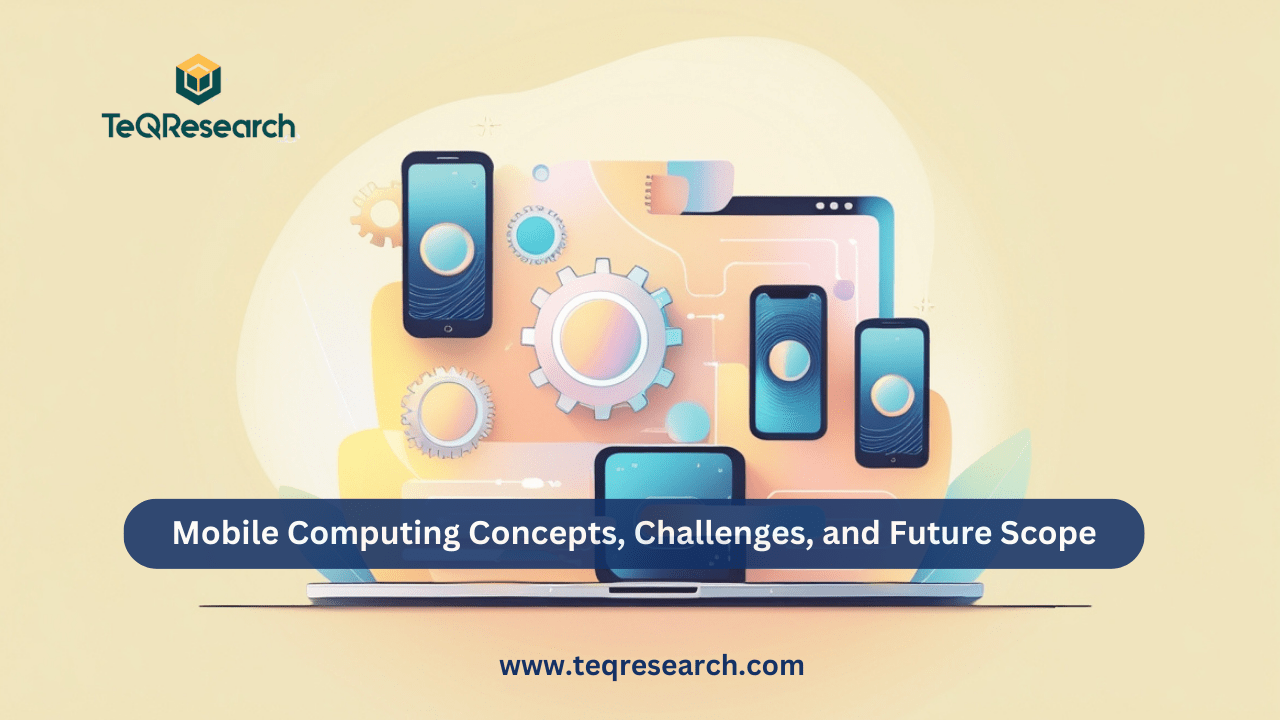
Mobile computing refers to the ability to use computing devices — such as smartphones, tablets, laptops, and wearable technology — wirelessly and on the move. Unlike traditional computing systems that are tethered to a fixed location, mobile computing enables real-time access to information, communication, and computing power regardless of physical location.
At its core, mobile computing is built upon three key elements:
- Mobile Devices: These include smartphones, tablets, laptops, and other portable electronics used for accessing and processing data.
- Wireless Communication: Technologies like Wi-Fi, Bluetooth, 4G/5G, and satellite networks allow devices to connect to the internet or each other without physical cables.
- Cloud and Edge Computing Services: These enable data processing and storage to happen remotely, reducing the need for heavy local computing power and enabling seamless synchronization across devices.
Together, these components create a flexible, scalable, and responsive computing environment.
The concept of mobile computing has evolved dramatically over the past few decades:
- 1980s–1990s: Introduction of early mobile devices like PDAs (Personal Digital Assistants) and basic mobile phones.
- 2000s: The rise of smartphones and laptops with mobile internet access.
- 2010s: Expansion of mobile applications, cloud computing, and improved mobile operating systems (Android, iOS).
- 2020s and Beyond: The integration of AI, 5G, edge computing, and Internet of Things (IoT) devices has accelerated the capabilities of mobile computing, making it an essential tool in research and development.
For research scholars, this evolution means not only more tools but also more possibilities — from conducting remote experiments to analyzing massive datasets on-the-go.
Core Concepts Every Scholar Should Know
To effectively leverage mobile computing in academic research, scholars need to understand the foundational concepts that drive its functionality. These concepts are not just technical terms — they shape how mobile technologies are designed, used, and integrated into research workflows.
- Ubiquitous Computing: Also known as pervasive computing, this concept refers to the seamless integration of computing into everyday environments. For scholars, this means access to data, tools, and communication platforms anytime and anywhere, allowing for continuous research activity — whether in the lab, classroom, or remote field sites.
- Context Awareness: Mobile devices are equipped with sensors (GPS, accelerometers, cameras, microphones) that enable context-aware computing. This means systems can adapt based on location, activity, or environment. For researchers, this allows for smarter data collection and interaction — for example, triggering surveys when a participant enters a specific location.
- Cloud and Edge Integration: Cloud computing allows scholars to store, process, and access data from remote servers, reducing the need for powerful local hardware. Edge computing, on the other hand, processes data closer to the source (on the device or nearby servers), enabling faster response times and offline capabilities. Together, they support mobile applications in real-time research and data-heavy analysis.
- Security and Privacy: In mobile computing, safeguarding sensitive data is critical. Research scholars often deal with proprietary, personal, or ethically sensitive information. Key security concepts include:
- Data encryption (protecting data in transit and at rest)
- User authentication and access control
- Compliance with privacy laws (like GDPR or HIPAA, depending on your field and region)
Understanding these principles is essential to ensure ethical and legal use of mobile technologies in research.
Applications of Mobile Computing in Research
Mobile computing is revolutionizing the way research is carried out across various academic disciplines. It enables researchers to collect data in the field, collaborate in real time with teams around the world, and leverage new technologies for more efficient and flexible workflows. Below are some of the key applications of mobile computing in academic research.
- Mobile Data Collection: One of the most significant applications of mobile computing in research is the facilitation of data collection. Researchers can now use smartphones and tablets to conduct surveys, interviews, and experiments more easily than ever before. Mobile applications allow the recording of various types of data including textual responses, images, audio recordings, and even biometric measurements. Platforms such as Google Forms, KoboToolbox, and Survey123 are especially valuable, as they support offline data collection, which is critical in remote or low-connectivity areas. This capability has proven indispensable in fields such as social sciences, environmental studies, and healthcare research, where real-time, on-site data gathering enhances the quality and immediacy of the research.
- Real-Time Collaboration: Mobile computing also plays a vital role in enabling real-time collaboration among research teams, regardless of their geographical locations. Through shared cloud-based documents like Google Docs and Microsoft OneDrive, researchers can simultaneously write, edit, and review their work. Video conferencing tools such as Zoom and Microsoft Teams facilitate virtual meetings, while messaging platforms like Slack and WhatsApp ensure rapid communication and coordination. This seamless connectivity helps accelerate project timelines and fosters interdisciplinary collaboration, allowing researchers to pool expertise and resources more effectively.
- IoT and Sensor-Based Research: Another exciting application of mobile computing is its integration with Internet of Things (IoT) devices and sensors, which enables automated and continuous data collection at scale. Mobile devices often act as hubs to gather environmental data such as air quality, temperature, and soil moisture levels. In healthcare research, wearable sensors connected to mobile platforms monitor physiological indicators like heart rate and sleep patterns. Additionally, mobile computing supports urban studies and smart city projects by collecting and analyzing sensor data in real time. This synergy between IoT and mobile technology opens new possibilities for large-scale, detailed, and ongoing data acquisition that would be difficult to achieve otherwise.
- Enhanced Accessibility and Inclusion: Mobile computing also helps bridge digital divides, making research more inclusive and accessible to marginalized or hard-to-reach populations. Mobile apps can be localized into multiple languages, and include audio and visual prompts to accommodate participants with different literacy levels. Moreover, mobile technology enables remote participation for individuals unable to travel to study sites, thus expanding the pool of potential participants. This increased accessibility helps ensure that research outcomes are more representative and inclusive of diverse populations, which is especially important for social science, public health, and community-based studies.
Key Challenges Faced by Researchers in Mobile Computing
While mobile computing offers numerous advantages for academic research, it also introduces a range of challenges that researchers must carefully address to ensure their projects are effective, ethical, and reliable. Understanding these obstacles is essential for planning and executing mobile-based research successfully.
- Limited Battery Life and Performance: Despite their increasing power, mobile devices are still constrained by battery life and hardware limitations. Long fieldwork sessions can be interrupted when batteries run low, especially in locations without easy access to charging infrastructure. Additionally, mobile devices may struggle with heavy data processing tasks such as running machine learning models or analyzing video data unless support from cloud computing is available. Issues like device overheating or slow performance can further delay research activities and frustrate participants or researchers. To mitigate these problems, researchers can rely on portable power banks, design energy-efficient applications, and offload intensive computations to cloud servers, ensuring smoother and longer-lasting mobile research sessions.
- Network Dependence and Connectivity Issues: Many mobile research tools depend heavily on stable internet connections, which may be unreliable or unavailable in rural or remote areas where much data collection often takes place. This can cause delays in syncing data to cloud storage and disrupt real-time collaboration or GPS tracking functions. Additionally, public Wi-Fi networks can pose significant security risks to sensitive research data. To overcome these challenges, it is crucial to use apps capable of operating offline with local data storage, allowing uninterrupted data collection and synchronization when connectivity is restored. This approach enhances the resilience of mobile research tools in challenging environments.
- Security and Data Privacy Concerns: Mobile devices are inherently more vulnerable to loss, theft, or cyberattacks, placing sensitive research data at risk. If devices are not properly secured, personal or confidential information can be exposed. Moreover, third-party applications installed on devices may access data without the researcher’s consent, potentially leading to ethical violations. Failure to protect data adequately can result in legal repercussions and damage the trust between researchers and participants. To address these concerns, researchers must implement strong security measures such as data encryption, secure login protocols, and remote wipe capabilities. Compliance with relevant data protection regulations is also critical to safeguarding participant information.
- Device Compatibility and Standardization: The diversity of mobile devices and operating systems—ranging from various versions of iOS and Android to different hardware specifications—poses a significant challenge in ensuring consistent app performance. Applications may behave differently across devices, potentially impacting data accuracy and the participant experience. Managing updates and troubleshooting across a large number of devices can also be complicated, especially in extensive studies. Researchers should consider using cross-platform development tools, rigorously test applications on multiple devices before deployment, and clearly communicate technical requirements to participants to minimize compatibility issues.
- Ethical and Regulatory Challenges: The use of mobile computing in research introduces new ethical considerations that require careful attention. Obtaining informed consent digitally may be more complex, as researchers must ensure participants fully understand what they are agreeing to. Location tracking and passive data collection raise additional privacy concerns, particularly regarding how data is stored, shared, and used. Furthermore, conducting international research means navigating varying legal frameworks, such as GDPR in Europe or HIPAA in the United States, which govern data privacy and protection. Researchers must develop clear ethical protocols, engage with institutional review boards (IRBs), and maintain transparency with participants about how their data will be handled to uphold ethical standards.
Future Scope of Mobile Computing in Academia
As mobile computing technology continues to advance, its influence on academic research is set to expand, bringing with it exciting new opportunities for how scholars conduct, share, and apply their work. The future of mobile computing promises enhanced connectivity, smarter tools, and greater inclusivity, all of which have the potential to significantly enrich the research experience.
- Integration with AI and Machine Learning: Mobile devices are increasingly capable of running AI-driven applications locally, enabling real-time data analysis, natural language processing, and image recognition directly on the device. This evolution means mobile computing is no longer just a tool for accessing information but is becoming an active collaborator in the research process. AI-powered mobile applications can assist researchers by organizing field notes, tagging data automatically, and even generating preliminary insights without needing to transfer data to external servers. This shift towards intelligent mobile tools will help streamline research workflows and make data processing more immediate and context-aware.
- Use of 5G and Beyond for High-Speed Research Applications: The widespread rollout of 5G networks will dramatically enhance mobile computing by offering higher speeds and lower latency. This will enable researchers to upload and download large files such as videos and extensive datasets almost instantaneously. The low-latency capabilities of 5G will support real-time remote collaboration and monitoring, making virtual laboratories and simulations more feasible on mobile platforms without lag. These advancements are expected to drive new forms of mobile-enabled experiments, telepresence, and augmented reality applications, broadening the scope and scale of mobile research activities.
- Mobile Virtual Reality (VR) and Augmented Reality (AR): Immersive technologies like VR and AR are becoming increasingly accessible through mobile devices, opening new frontiers in academic research and teaching. Augmented reality apps can overlay contextual information onto real-world environments, which is particularly useful in disciplines such as archaeology, architecture, and medical training. Mobile VR, on the other hand, can simulate complex environments for behavioral studies, remote instruction, and collaborative experimentation. These immersive tools offer innovative ways to visualize data and engage in interactive learning experiences that were previously limited to specialized equipment.
- Decentralized Research Through Blockchain and Mobile Nodes: Blockchain technology holds promise for enhancing data integrity and transparency in mobile research. By securely timestamping and storing data collected via mobile devices on decentralized ledgers, researchers can ensure tamper-proof records, which is especially important in collaborative and longitudinal studies. In the future, mobile devices may function as secure nodes within larger distributed research networks, contributing to a decentralized infrastructure that increases trust and accountability in data handling and sharing.
- Greater Personalization and Accessibility: The future of mobile computing in academia will emphasize personalization and inclusivity, adapting to the unique preferences, learning styles, and accessibility needs of researchers. Mobile platforms will increasingly feature adaptive interfaces, voice assistants, and accessibility tools designed to support a diverse range of users. Research applications are expected to become more modular and customizable, allowing scholars to create personalized mobile workflows tailored to their specific requirements. This evolution promotes a more inclusive and efficient research environment where mobile computing adapts to the researcher’s needs rather than forcing users to conform to rigid technology standards.
In the future of mobile computing in academia looks poised to transform research practices profoundly. With smarter devices, faster networks, immersive technologies, secure data systems, and personalized tools, mobile computing will continue to expand its role as an indispensable asset in advancing knowledge and discovery.
Tips for Research Scholars Using Mobile Computing
To maximize the benefits of mobile computing in academic research, it is crucial for scholars to adopt a strategic approach. The following practical tips can help researchers integrate mobile technologies effectively and securely into their research workflows.
- Choose the Right Tools and Platforms: Selecting the appropriate tools is fundamental to successful mobile research. Researchers should prioritize reliable and research-friendly applications and services that work seamlessly across different devices and operating systems. It is important to choose tools that support offline data collection, cloud synchronization, and data export in widely accepted formats such as CSV or JSON. Additionally, opting for open-source or institutionally approved tools helps ensure transparency, data integrity, and trustworthiness, which are essential for scholarly work.
- Protect Your Data and Devices: Data security is paramount when using mobile devices for research. Scholars should employ strong passwords, enable two-factor authentication, and utilize device encryption to safeguard sensitive information. Regular backups of data to secure cloud storage or external drives are necessary to prevent data loss. Keeping devices updated with trusted security software, as well as regularly updating operating systems and applications, is essential to protect against malware, hacking attempts, and other security breaches.
- Plan for Connectivity Issues: Network disruptions can seriously impact mobile research, especially in fieldwork or remote environments. To mitigate this, researchers should always prepare backup plans, such as using offline modes and locally storing data until synchronization is possible. Downloading important documents, survey forms, or research materials in advance ensures uninterrupted workflow when internet access is limited. Carrying portable power banks and considering mobile hotspots can also provide reliable internet access when continuous connectivity is critical to the research.
- Maintain Ethical and Legal Compliance: Ethical considerations and legal compliance must be central to mobile computing research. Researchers should ensure that their use of mobile technology aligns with institutional review board (IRB) standards and adheres to data protection laws like GDPR or HIPAA. Clear communication with participants about consent and data use is essential, especially when data is collected via mobile applications. Anonymizing and encrypting sensitive or personal data wherever possible helps protect participant privacy and maintain the ethical integrity of the study.
- Stay Updated and Adaptive: Mobile technologies are rapidly evolving, and staying current is vital for leveraging their full potential. Researchers should regularly monitor new tools, software updates, and best practices relevant to mobile research in their field. Participating in workshops, webinars, or online courses focused on mobile research methods can provide valuable knowledge and skills. Collaborating with tech-savvy colleagues or IT departments can also open doors to innovative mobile applications and ensure researchers remain adaptable and effective in their use of mobile computing.
By following these tips, research scholars can harness the power of mobile computing safely and efficiently, enhancing the quality, reach, and impact of their academic work.
Conclusion
Mobile computing is no longer just a convenience — it’s a powerful enabler of modern academic research. From collecting data in real time to collaborating across continents, it empowers research scholars to work faster, smarter, and more flexibly. However, as with any technology, its benefits come with challenges, such as security risks, connectivity issues, and ethical concerns. By understanding the core concepts, leveraging the right tools, and staying mindful of best practices, research scholars can harness mobile computing to enhance both the quality and reach of their work. As we look ahead to advancements in AI, 5G, and immersive mobile technologies, the opportunities for mobile-enabled research will only continue to grow. For scholars willing to adapt and innovate, mobile computing is not just a tool — it’s a gateway to the future of academic research.
Frequently Asking Questions
1. What is mobile computing, and why is it important for researchers?
Mobile computing refers to the use of portable computing devices connected wirelessly to enable data access and processing anytime, anywhere. It’s important for researchers because it allows flexible data collection, real-time collaboration, and access to resources beyond the traditional lab or office setting.
2. How can mobile computing improve data collection in field research?
Mobile devices with apps and sensors enable researchers to collect diverse types of data (text, audio, images, GPS) efficiently and accurately, even in remote or hard-to-reach areas. Offline capabilities and cloud syncing ensure data integrity and ease of management.
3. What are common security concerns when using mobile computing for research?
Researchers must be aware of risks like device theft, data breaches, unauthorized access, and insecure network connections. Protecting data through encryption, secure authentication, and compliance with privacy laws is essential.
4. Can mobile computing be used in disciplines beyond computer science?
Absolutely. Mobile computing applications span social sciences, healthcare, environmental studies, engineering, and more. It enables innovative methods like remote monitoring, participant engagement, and real-time data analysis across various fields.
5. What future trends in mobile computing should research scholars watch?
Key trends include integration of AI and machine learning on mobile devices, widespread adoption of 5G for faster connectivity, mobile VR/AR for immersive research, and the use of blockchain for secure, decentralized data management.