Introduction
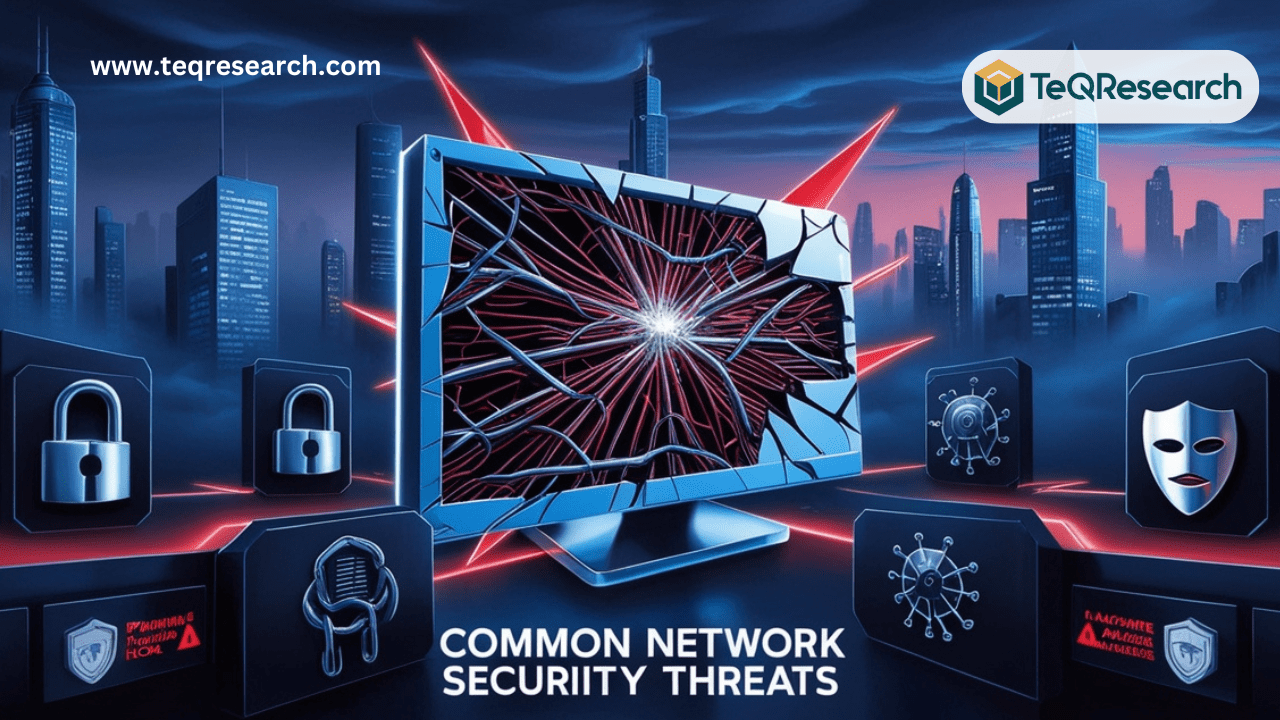
Network security is becoming a major concern for everyone in today’s digitally connected world, including individuals, corporations, and governments. Due to the internet’s explosive growth and our growing reliance on digital communication, networks are always at risk from a variety of security threats that have the potential to compromise confidential information, interfere with daily operations, and result in large financial losses. It is more crucial than ever to comprehend the common dangers that target networks as cyberattacks become more frequent and sophisticated. There are a wide range of possible risks, ranging from malware and phishing assaults to insider threats and zero-day vulnerabilities, and they are always changing. However, effective defense against these risks is achievable with the correct information and proactive tactics. The purpose of this post is to explain some of the most common risks to network security and offer doable countermeasures. You may improve network security and lower the chance of a security breach by being aware of these dangers and putting the suggested security procedures into practice.
Common Network Security Threats
a. Malware (Viruses, Worms, Trojans, Ransomware)
Malware, which stands for malicious software, is a general word for a variety of dangerous software programs intended to harm, interfere with, or obtain unauthorized access to computer systems and networks. Malware frequently takes the form of ransomware, worms, Trojan horses, and viruses. Although many malware varieties function differently from one another, they all aim to compromise the availability, integrity, and confidentiality of network resources.
- Viruses attach themselves to legitimate files or programs and execute when the host program is run, spreading from one device to another.
- Worms are self-replicating programs that spread independently across networks, exploiting vulnerabilities in software to infect multiple systems without user intervention.
- Trojans disguise themselves as legitimate software but carry hidden malicious code that, once executed, can steal data, install other malware, or create backdoors for remote access.
- Ransomware encrypts a victim’s files, making them inaccessible until a ransom is paid to the attacker, often in cryptocurrency.
Numerous techniques, including phishing emails, malicious websites, infected downloads, portable media (like USB drives), and taking advantage of security flaws in out-of-date software, are used by malware to penetrate networks. Malware has the ability to propagate quickly once it enters a network, resulting in extensive harm.
b. Phishing and Social Engineering Attacks
Phishing Attacks: Phishing is a kind of cyberattack in which perpetrators try to trick victims into divulging private information, such as credit card numbers, usernames, and passwords. Usually, to do this, one poses in electronic communications as a reliable party. Phishing attacks are very successful because they take use of psychological manipulation and human trust instead of technological weaknesses.
Types of Phishing Attacks:
- Email Phishing: This is the most prevalent type of phishing, in which criminals send phony emails purporting to be from banks, social media sites, or well-known businesses. These emails frequently contain urgent messages urging the recipient to download attachments, click on harmful links, or enter personal information on phony websites that appear authentic.
- Spear Phishing: Spear phishing, as opposed to general email phishing, targets particular people or companies. Attackers personalize their emails by researching the target, which gives the messages a more authentic and pertinent appearance. For instance, including a coworker’s name or bringing up recent business dealings in a spear-phishing email can make the target more likely to fall for the con.
- Vishing (Voice Phishing): Vishing is the practice of deceiving people into disclosing sensitive information by using phone calls or voicemails. Attackers often assume the identities of technical support personnel, customer service reps, or reputable company representatives. Fake calls purporting to be from banks requesting account verification or tech support scams alleging that the victim’s machine is infected with a virus are examples of common vishing scams.
How Attackers Manipulate Human Psychology to Gain Unauthorized Access
Phishing and social engineering attacks succeed primarily because they exploit human emotions and psychological triggers, rather than relying solely on technological means. Attackers carefully craft their messages and approaches to manipulate human behavior, often using the following tactics:
- Creating Urgency or Fear: Many phishing messages create a sense of urgency or fear to prompt quick, irrational actions. Examples include warnings about suspicious account activity, missed payments, or threats of account suspension. The pressure to act quickly can lead victims to click on malicious links or provide sensitive information without careful consideration.
- Exploiting Trust and Authority: Attackers often impersonate figures of authority, such as executives, government officials, or customer service representatives, to gain the victim’s trust. This tactic is especially effective in spear-phishing attacks where the message seems to come from someone the victim knows or respects, such as a boss or colleague.
- Playing on Curiosity and Reward: Phishing emails may entice victims with promises of rewards, such as winning a prize, receiving a refund, or gaining access to exclusive content. The allure of a potential benefit can prompt individuals to click on links or enter personal information on fraudulent sites.
- Masquerading as Routine Business Requests: Phishers often disguise their communications as routine business transactions, such as invoices, delivery notices, or meeting invitations. These seemingly ordinary requests are designed to lower the victim’s guard and encourage compliance without suspicion.
- Leveraging Social Connections: Social engineering attacks often exploit social relationships by posing as friends, family, or colleagues. For example, attackers may hack a person’s email or social media account and then use it to send phishing messages to their contacts, who are more likely to trust the communication.
c. Denial-of-Service (DoS) and Distributed Denial-of-Service (DDoS) Attacks
Attacks known as denial-of-service (DoS) and distributed denial-of-service (DDoS) aim to maliciously interfere with a targeted server’s ability to operate normally by flooding it with an excessive number of unauthorized requests. These attacks are designed to deplete the target’s memory, processing power, and bandwidth, leaving it unable to process or handle valid traffic and thus stopping its operations.
- DoS Attacks: In a traditional DoS attack, a single computer or internet connection is used to send an overwhelming amount of traffic or requests to a target, making its services unavailable to legitimate users.
- DDoS Attacks: DDoS attacks are a more advanced and powerful form of DoS attacks. They involve multiple compromised computers, often part of a botnet (a network of infected devices), that simultaneously flood the target with traffic. Because the attack originates from many different sources, DDoS attacks are much harder to mitigate and block compared to DoS attacks.
How DoS and DDoS Attacks Overwhelm Systems
DoS and DDoS attacks overwhelm systems by exploiting weaknesses in network protocols, software, or infrastructure. Common methods include:
- Traffic Flooding: Attackers send an overwhelming number of requests, packets, or connections to a target, consuming all available bandwidth and resources. This can cause network congestion, slow down services, or completely shut them down.
- Exploiting Protocol Vulnerabilities: Some attacks take advantage of specific weaknesses in network protocols. For example, SYN Flood attacks exploit the handshake process in the TCP protocol, sending numerous SYN requests to initiate a connection but never completing the handshake, tying up server resources.
- Application Layer Attacks: These attacks target the application layer (Layer 7 of the OSI model), aiming to disrupt specific services, such as web servers, by sending malicious requests designed to exhaust the application’s capabilities. Examples include HTTP flood attacks that bombard a server with seemingly legitimate HTTP requests.
- Amplification Attacks: In amplification attacks, attackers use publicly accessible servers (like DNS or NTP servers) to send large responses to the victim’s server. A small request can result in a large response, amplifying the attack’s effect and making it more difficult to defend against.
d. Man-in-the-Middle (MitM) Attacks
Explanation of MitM Attacks and How Attackers Intercept Communication
Attackers that surreptitiously intercept and potentially modify communication between two parties that think they are speaking with each other directly are known as man-in-the-middle (MitM) assaults. With this kind of assault, the attacker can secretly listen in on conversations, steal confidential data, or insert harmful stuff. MitM attacks compromise the confidentiality and integrity of data being conveyed by taking advantage of weak encryption standards or unsecure communication links.
MitM attacks can occur in a number of situations, including data interception between a user’s device and a website, in between two programs that are talking, or even inside a local network. Because these attacks can happen covertly and victims are frequently unaware that their communication has been compromised, they are very harmful.
Common Methods of MitM Attacks
- Session Hijacking: Session hijacking is the act of an attacker taking control of a user’s active session with a web application, usually by obtaining the session token or cookie that the user used to authenticate themselves. This enables the attacker to take control of the user’s account without authorization, assume the user’s identity, and carry out tasks—like completing transactions or gaining access to private data—on the user’s behalf. How Operates: Session tokens can be obtained by hackers via a number of techniques, such as phishing emails, spyware, or the capture of unencrypted network traffic. Without requiring the user’s credentials, the attacker takes control of the active session by injecting the obtained session token into their own browser.
- SSL Stripping: A MitM attack called SSL stripping, or HTTPS lowering, involves downgrading a secure HTTPS connection to an unsecured HTTP connection. The attacker can intercept and alter data being communicated between the user and the website by disabling the encryption. How Operates: An attacker can cause a user to switch from HTTPS to HTTP when they attempt to connect to a secure website by intercepting the initial request and sending a response. While the attacker intercepts all transferred data, including login passwords and personal information, the victim keeps using the website, thinking the connection is secure.
- Wi-Fi Eavesdropping: In order to obtain unencrypted traffic, hackers might deploy rogue Wi-Fi hotspots or intercept data from public, unprotected Wi-Fi networks. Users that connect to these networks run the risk of having their financial transactions, passwords, and email correspondence captured. How It Operates: Cybercriminals can create a phony wireless network that mimics a real one, such “Free Airport Wi-Fi,” to entice others to connect. All data sent over the network can be seen or altered by an attacker once it is linked.
- DNS Spoofing: A MitM attack called DNS spoofing, commonly referred to as DNS cache poisoning, involves the attacker manipulating the DNS (Domain Name System) cache in order to divert visitors from trustworthy websites to phony ones. Attackers can distribute malware or intercept data using this technique. How Operates: When malicious DNS entries are injected into the DNS cache, the DNS resolver returns the wrong IP address for the domain name, which is the result of an attack. Users that seek to access a genuine website are therefore sent to a malicious website under the attacker’s control.
e. Insider Threats
Insider threats are security hazards that come from inside an organization. These threats usually come from contractors, business partners, or current or former workers who have access to the systems, data, or networks of the organization. Because insiders frequently have authorized access to sensitive data, it can be challenging to identify their activities with conventional security procedures, making them a serious threat. Two primary categories can be used to broadly classify insider threats:
- Malicious Insiders: These are individuals who intentionally harm the organization by stealing data, sabotaging systems, or sharing confidential information for personal gain, revenge, or under the influence of external pressures (e.g., bribery or coercion). Malicious insiders may sell sensitive information to competitors, leak data to the public, or carry out acts of sabotage.
- Negligent Insiders: These individuals do not intend to cause harm but inadvertently put the organization at risk through carelessness, lack of awareness, or failure to follow security protocols. Common examples include employees who fall victim to phishing attacks, mishandle sensitive data, or fail to secure their devices properly.
Mitigating Insider Threats
Insider threats are particularly challenging because they often bypass external defenses, making traditional security tools less effective. To mitigate the risk of insider threats, organizations should:
- Implement Access Controls: Use the principle of least privilege, ensuring employees only have access to the data and systems necessary for their roles.
- Monitor User Activity: Deploy monitoring and logging solutions that detect unusual behavior, such as unauthorized data access or transfers.
- Conduct Regular Security Training: Educate employees about the importance of data security, recognizing phishing attempts, and following best practices to avoid negligence.
- Establish a Strong Security Culture: Foster an environment where employees feel valued, supported, and understand the consequences of both intentional and unintentional security breaches.
Insider threats demonstrate that security is not just a matter of defending against external attacks but also involves managing internal risks through a combination of technology, policies, and a proactive approach to employee management and education.
f. Zero-Day Exploits
Zero-day exploits profit from unidentified flaws in firmware, hardware, or software that the vendor has not yet identified or fixed. Because they are not aware of the vulnerability, developers have had zero days to address it, which is why the phrase “zero-day” is used. These vulnerabilities can be used by attackers to run malicious code, obtain unauthorized access, steal data, or interfere with systems once they’ve been identified.
Why Zero-Day Vulnerabilities Are Difficult to Defend Against:
- Unknown Nature: Zero-day vulnerabilities are not known to the software developers or security teams, making it impossible to create patches or defenses against them in advance. Without prior knowledge, traditional security measures such as firewalls, intrusion detection systems, and antivirus software often fail to detect or block zero-day attacks.
- Sophisticated Exploitation: Zero-day exploits are often highly sophisticated, designed to bypass existing security measures by exploiting flaws that have not yet been recognized. Attackers typically leverage these exploits to achieve stealth, maintaining access to compromised systems without being detected.
- High Value in the Cybercriminal Market: Zero-day exploits are highly prized in the cybercriminal marketplace, often sold on the dark web for substantial sums. They are used in targeted attacks against high-profile organizations, governments, and critical infrastructure, making them a preferred tool for cybercriminals, state-sponsored actors, and hacktivists.
- Delayed Detection and Response: Once a zero-day attack occurs, it can take days, weeks, or even months before the vulnerability is discovered, analyzed, and patched. During this time, attackers can exploit the flaw multiple times, causing significant damage.
- Rapid Deployment and Automation: Attackers often deploy zero-day exploits using automated tools that can scan for vulnerable systems and deliver the payload quickly, making widespread attacks possible in a short time frame. This rapid deployment leaves little time for defenders to respond effectively.
Defending Against Zero-Day Exploits
Defending against zero-day exploits requires a proactive approach that goes beyond traditional security measures:
- Implement Threat Intelligence: Use threat intelligence services to stay informed about emerging threats and potential zero-day vulnerabilities.
- Adopt Endpoint Detection and Response (EDR) Solutions: EDR solutions help detect unusual behavior on endpoints that could indicate a zero-day exploit.
- Regular Security Updates and Patching: While zero-days are unknown, keeping systems updated reduces the attack surface by eliminating other known vulnerabilities that attackers may chain together with zero-day exploits.
- Use Intrusion Prevention Systems (IPS): Deploy IPS solutions capable of detecting abnormal traffic patterns associated with zero-day attacks.
- Conduct Security Awareness Training: Educate employees on recognizing potential phishing attempts and other social engineering tactics that could deliver zero-day exploits.
Zero-day exploits are among the most challenging threats in cybersecurity, requiring organizations to maintain a vigilant, layered defense strategy that emphasizes proactive threat detection and rapid response capabilities.
Conclusion
Threats to network security are ever-changing and pose serious risks to individuals, businesses, and even entire nations. Every threat type, from malware and phishing to complex zero-day vulnerabilities, presents different difficulties that call for a thorough comprehension of attack techniques and practical mitigation tactics. Critical services can be rendered inoperable by denial-of-service attacks, and private conversations can be surreptitiously intercepted by man-in-the-middle assaults. Zero-day exploits draw attention to the ongoing competition between attackers seeking to find new vulnerabilities and defenses trying to fix them, while insider attacks serve as a reminder that security concerns frequently originate from within.
A multi-layered strategy that incorporates strong security mechanisms, ongoing monitoring, user education, and a proactive attitude toward threat intelligence and vulnerability management is needed to mitigate these dangers. To remain ahead of developing threats, organizations need to invest in cutting-edge defense technologies, update their security procedures on a regular basis, and encourage staff to be security-aware. In an increasingly digital and linked world, companies may lower their risk exposure and better safeguard their assets, data, and reputation by comprehending the nature of these prevalent network security threats and putting in place complete defenses. Network security is more than just fending off known attacks; it’s also about planning ahead, being ready for the unexpected, and always adjusting to the dynamic world of cyberthreats.