
What is Blowfish Algorithm?
A symmetric key block cipher called Blowfish was created to offer a quick, safe, and open encryption technique. It uses a variable-length key that ranges from 32 bits to 448 bits to encrypt data in fixed-size blocks of 64 bits. Bruce Schneier created Blowfish in 1993 with the goal of replacing outdated encryption protocols such as DES (Data Encryption Standard). It is secure and flexible enough to meet different encryption requirements since it makes use of a Feistel network topology with 16 processing rounds and mainly depends on key-dependent S-boxes and a P-array. Known for its effectiveness, ease of use, and resilience to numerous known threats, Blowfish is especially helpful in settings where unpatented encryption and high performance are crucial.
Introduction of Blowfish Algorithm
Bruce Schneier first presented the Blowfish algorithm in 1993 as a public domain encryption method that was quick, safe, and unrestricted by patents. At the time, developments in processing power were making widely used encryption techniques like DES (Data Encryption Standard) more susceptible, while alternatives like IDEA were protected by patents. In order to overcome these restrictions, Blowfish provided a robust, adaptable, and unrestricted encryption method.
Key Characteristics:
- Symmetric Block Cipher: Encrypts and decrypts data using the same secret key.
- Block Size: Works with 64-bit ciphertext and plaintext blocks.
- Key Size: Enables users to strike a balance between security and efficiency by supporting keys with varying lengths ranging from 32 to 448 bits.
- Structure: Using repeated substitution and permutation operations, this 16-round Feistel network creates confusion and diffusion.
Design Goals:
- To give a safe substitute that is impervious to linear, differential, and brute-force cryptanalysis;
- To enable quick encryption and decryption in software, especially on 32-bit microprocessors.
- To remove licensing issues by granting everyone free access to the algorithm.
Because of its simplicity and efficiency, Blowfish is still relevant for some use cases even if newer algorithms like AES have become the standard in many systems. Blowfish has been used extensively in password protection, file encryption, VPNs, and embedded devices.
Detailed Blowfish: Step-by-Step Explanation
The Blowfish algorithm works in two major phases:
- Key Expansion (Subkey Generation)
- Data Encryption and Decryption (Using a 16-round Feistel Network)
It operates on 64-bit blocks and uses a Feistel structure, which means the process is nearly identical for encryption and decryption, except that subkeys are used in reverse order for decryption.
- Step 1: Key Expansion (Subkey Generation)
Blowfish uses:
- A P-array: 18 subkeys (P[0] to P[17])
- Four S-boxes: S1, S2, S3, and S4 each with 256 entries of 32-bit values.
Initialization:
- The P-array and S-boxes are initialized with hex digits of π (pi).
Key Incorporation:
- The user-supplied key (32 to 448 bits) is divided and XORed with the P-array:
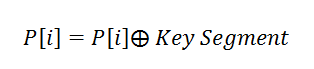
This ensures the key influences all rounds of encryption.
Final Key Expansion Step:
- A 64-bit block of all zeros is encrypted using the current P and S-boxes.
- The result replaces P[0] and P[1].
- The new block is encrypted again; output replaces P[2] and P[3].
- Repeat this for all P-array and S-box entries.
- Step 2: Encryption Process
Input: 64-bit plaintext block split into two 32-bit halves:
Let L = Left half, R = Right half
Rounds (1 to 16): For i = 1 to 16:
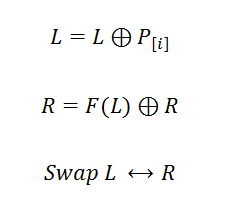
After 16 Rounds:
- Swap L and R back (to undo the final swap)
- Final transformation:
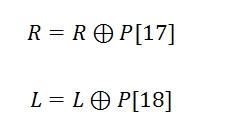
Output: Concatenate L and R → Ciphertext
- Step 3: Function F(x)
Blowfish’s non-linear function F(x) is key-dependent and uses S-boxes.
Given a 32-bit input x, divide it into four 8-bit values: a, b, c, d
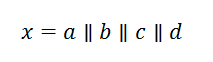
Then:

This complex mixing provides confusion and diffusion—core principles of secure cryptography.
- Step 4: Decryption
The decryption process is identical to encryption, but the P-array is used in reverse order.
Advantages and Disadvantages of Blowfish Algorithm
The Blowfish algorithm is a symmetric-key block cipher that has gained popularity due to its balance of speed, security, and open-source availability. It has been widely adopted across various domains, especially where lightweight and efficient encryption is required. However, like any cryptographic solution, Blowfish comes with both advantages and limitations depending on the context of use.
Advantages
- High Speed and Efficiency: Blowfish is renowned for its encryption and decryption speed, particularly on 32-bit processors. The algorithm relies on simple operations such as addition, XOR, and table lookups, which require minimal computational resources. This makes it highly effective in systems where performance and low latency are critical, such as embedded devices and mobile platforms.
- Strong Security Mechanisms: Blowfish implements key-dependent S-boxes and a complex key schedule, which significantly enhances its resistance to common cryptanalytic techniques like differential and linear cryptanalysis. Additionally, the ability to configure key lengths anywhere from 32 bits to 448 bits provides users with flexibility to set security levels that align with specific application needs.
- Open-Source and Unpatented: One of the standout features of Blowfish is its free availability without patent restrictions. At a time when many encryption algorithms were under licensing constraints, Blowfish offered a powerful alternative with no legal or financial barriers to use. This helped drive its widespread adoption in both academia and the open-source community.
- Lightweight and Easy Integration: Thanks to its compact codebase and low memory footprint, Blowfish is especially well-suited for environments with limited hardware resources. It can be easily integrated into firmware, embedded systems, and lightweight applications where memory and processing power are at a premium.
- Versatility in Applications: Blowfish has proven useful in a variety of use cases, including password hashing (e.g., bcrypt), file encryption, and secure communications. Its versatility makes it a go-to choice for developers seeking a balance between performance and adequate security.
Disadvantages
- Slow Key Setup Time: While Blowfish encrypts and decrypts data quickly once the key is set, the initial key setup process can be time-consuming, especially with longer keys. This makes it less practical in scenarios where encryption keys must be changed frequently, such as dynamic session management.
- 64-bit Block Size Limitation: Blowfish uses a 64-bit block size, which is considered inadequate by modern encryption standards. Algorithms like AES use 128-bit blocks, which offer greater resistance to birthday attacks and perform better when encrypting large datasets or high-throughput data streams. As a result, Blowfish is less suited for large-scale or high-performance applications.
- Lack of Standardization: Blowfish has not been officially standardized by major bodies like NIST, which affects its adoption in compliance-driven or government-related projects. In contrast, algorithms like AES are widely recognized, audited, and endorsed, making them preferred choices in many regulated environments.
- No Built-In Authenticated Encryption: Blowfish does not natively support authenticated encryption, meaning it lacks integrated mechanisms to ensure both confidentiality and integrity of data. Developers must implement additional cryptographic layers to verify authenticity, which can introduce complexity and increase the risk of improper implementation.
- Superseded by Modern Algorithms: Although Blowfish remains useful in certain legacy and lightweight systems, it has largely been replaced by newer, more robust algorithms like AES or its own successor, Twofish. These newer options offer improved performance, larger block sizes, and support for authenticated encryption—all critical features in today’s security landscape.
Blowfish remains a fast, flexible, and open encryption algorithm with strong appeal for legacy systems and lightweight applications. Its simplicity, performance, and open-source nature make it a reliable option for tasks like password protection, file encryption, and embedded system security. However, due to its older design, 64-bit block limitation, and lack of standardization, it is less suitable for modern, high-security, and compliance-oriented environments. For long-term cryptographic needs, especially those involving large datasets or evolving security standards, algorithms like AES are generally preferred.
Applications of Blowfish Algorithm
The Blowfish encryption algorithm, known for its speed, simplicity, and robust security, has found widespread use in numerous domains despite being developed in the early 1990s. Due to its efficiency and adaptability, Blowfish remains relevant in scenarios where resource constraints, ease of deployment, and strong encryption are key requirements. Below are the primary application areas where Blowfish continues to be effectively utilized.
- Password Security and Hashing: One of the most prominent applications of Blowfish is in password hashing and storage. Its ability to resist brute-force attacks, particularly when combined with key stretching techniques, makes it ideal for securely storing user credentials. Blowfish is integrated into several UNIX and Linux password management tools, including implementations of the bcrypt algorithm, which is derived from Blowfish. By safely converting passwords into non-reversible hashes, it helps prevent unauthorized access even if the hash database is compromised.
- File and Disk Encryption: Blowfish is widely used in file and disk encryption due to its speed and ability to handle large volumes of data. It is particularly effective in scenarios requiring fast, symmetric encryption for backup archives or secure storage solutions. Various software utilities employ Blowfish to encrypt files, folders, or entire disks, thereby protecting sensitive information from unauthorized access during storage or transfer. Its performance and ease of implementation make it a popular choice for lightweight encryption needs.
- Secure Communications (SSH and VPN): In the realm of secure communications, Blowfish has been employed in protocols such as SSH (Secure Shell) and Virtual Private Networks (VPNs) to encrypt session data. Its fast encryption rate and configurable key length (up to 448 bits) make it suitable for ensuring real-time confidentiality in data exchange across unsecured networks. Although newer algorithms like AES have taken precedence in modern implementations, Blowfish continues to be an efficient option for securing connections in legacy systems or customized security protocols.
- Embedded Systems and Hardware Security: Blowfish is particularly valuable in embedded systems and hardware security modules (HSMs), where resources such as CPU power and memory are often limited. Its compact design allows it to perform strong encryption without burdening the device. Applications include smart cards, mobile phones, microcontrollers, and IoT devices, where Blowfish helps secure device communications and stored data without requiring significant processing overhead.
- Internet of Things (IoT) Applications: In the fast-growing IoT landscape, Blowfish is used for securing data transmission and device authentication. The algorithm’s lightweight architecture makes it suitable for deployment in constrained environments like sensors and low-power nodes. Blowfish helps protect against eavesdropping, replay attacks, and unauthorized access in smart environments such as smart homes, industrial IoT systems, and wearable devices.
- Legacy Software and License-Free Use: Another major factor behind Blowfish’s ongoing relevance is its license-free and open-source availability, which encourages its inclusion in legacy and custom-built systems where cost, flexibility, and ease of integration are priorities. While many modern applications have transitioned to more advanced algorithms like AES, Blowfish remains a trusted option for older software or where minimal regulatory compliance is required but basic encryption is necessary.
In Blowfish continues to be a reliable and versatile encryption algorithm suitable for a wide range of applications—from password security and file encryption to embedded systems and IoT devices. Though newer standards like AES have become the default in high-security environments, Blowfish remains valuable in cases where performance, ease of use, and low resource consumption are essential. Its continued usage in niche and legacy systems attests to its strong design and practical utility in the evolving landscape of cybersecurity.
Conclusion
Because it strikes a great mix between speed, security, and flexibility, Blowfish is still one of the most reputable and popular symmetric encryption algorithms. Blowfish, created by Bruce Schneier to rectify the flaws in previous encryption standards, provides a dependable and effective way to safeguard private data in a variety of applications. Its appeal has also been boosted by the fact that it is freely available and uncontrolled by patents, particularly among open-source communities and industries that want unfettered encryption solutions. Blowfish is still relevant even with the advent of more recent algorithms like AES, especially in settings where quick and lightweight encryption is crucial. It is a reliable choice for data security because of its adjustable key length and strong resilience against numerous known cryptanalytic attacks. Modern alternatives, however, might be better appropriate for applications that require 128-bit block sizes or involve very big datasets. To sum up, Blowfish has significantly influenced contemporary cryptography by providing a solid basis for safe communications and data security. Systems that prioritize performance, ease of use, and established security yet bear the scars of its history.
Frequently Asked Questions (FAQs)
Q1. Why was the Blowfish algorithm developed?
Answer: Bruce Schneier created Blowfish in 1993 as a quick, safe, and open-source substitute for well-known encryption algorithms like DES, which were growing weak and frequently subject to patent restrictions.
Q2. Is Blowfish still secure to use today?
Answer: Indeed, Blowfish is still regarded as safe for a lot of uses. It may not be the best option for encrypting very large amounts of data, though, as newer methods like AES (which has a 128-bit block size) are advised.
Q3. What makes Blowfish faster than many other encryption algorithms?
Answer: Using basic operations like XORs, additions, and database lookups, Blowfish is built for speed. Very quick encryption and decryption are made possible by this simplicity, particularly on 32-bit computers.
Q4. Where is Blowfish most commonly used?
Answer: Blowfish is frequently used in embedded devices where quick, low-power encryption is required, file encryption tools, secure communications (such as SSH and VPNs), and password hashing.
Q5. What is the main limitation of Blowfish?
Answer: Blowfish’s 64-bit block size is its main drawback, which leaves it open to some attacks (such as birthday assaults) when encrypting very large volumes of data. Larger block size methods, like AES, are recommended in these situations.